The InterMaths Erasmus Mundus Scholarship 2027 is open. InterMaths is a two-year Erasmus Mundus Joint Master in Interdisciplinary Mathematics, and for the 2027 edition it offers 18 EMJM scholarships worth €1,400 a month, with all participation costs waived. At least three of those scholarships are reserved for students from targeted regions, which include Sub-Saharan Africa. The deadline is 17 February 2027 at 1 pm CET.
There’s also another detail that makes InterMaths unusually accessible: you don’t pay anything to apply, and you don’t need a separate scholarship application. Instead, one online form puts you in the running for admission, for the EMJM scholarship and for two sister programmes run by the same network.
In this guide, you’ll find what the scholarship covers, the fees if you don’t win it, the eligibility rules, the documents, how the committee scores you and the signing step that catches many applicants out. Above all, everything comes from the official InterMaths website and the University of L’Aquila’s 2027 call for applications.
InterMaths Erasmus Mundus Scholarship 2027 at a Glance
| Programme | Erasmus Mundus Joint Master “InterMaths – Interdisciplinary Mathematics” |
| Duration | 2 years, starting in September 2027 |
| Partner universities | L’Aquila (Italy), TU Hamburg (Germany), TU Wien (Austria), Universitat Autònoma de Barcelona (Spain), Université Côte d’Azur (France) |
| EMJM scholarships | 18 (at least 3 for targeted regions) |
| Scholarship amount | €1,400 per month, plus a full waiver of participation costs and insurance |
| Participation costs (no scholarship) | €18,000 for two years |
| Application fee | None |
| English | B2 level at least |
| Deadline | 17 February 2027, 1 pm CET |
| Reference letters | By 3 March 2027, 1 pm Italian time |
What Is the InterMaths Erasmus Mundus Joint Master?
InterMaths is a two-year Erasmus Mundus Joint Master in mathematical modelling and simulation, with applications across science and engineering. It’s run by a consortium of five European universities:
- University of L’Aquila, Italy
- Hamburg University of Technology (TUHH), Germany
- TU Wien, Austria
- Universitat Autònoma de Barcelona (UAB), Spain
- Université Côte d’Azur, France
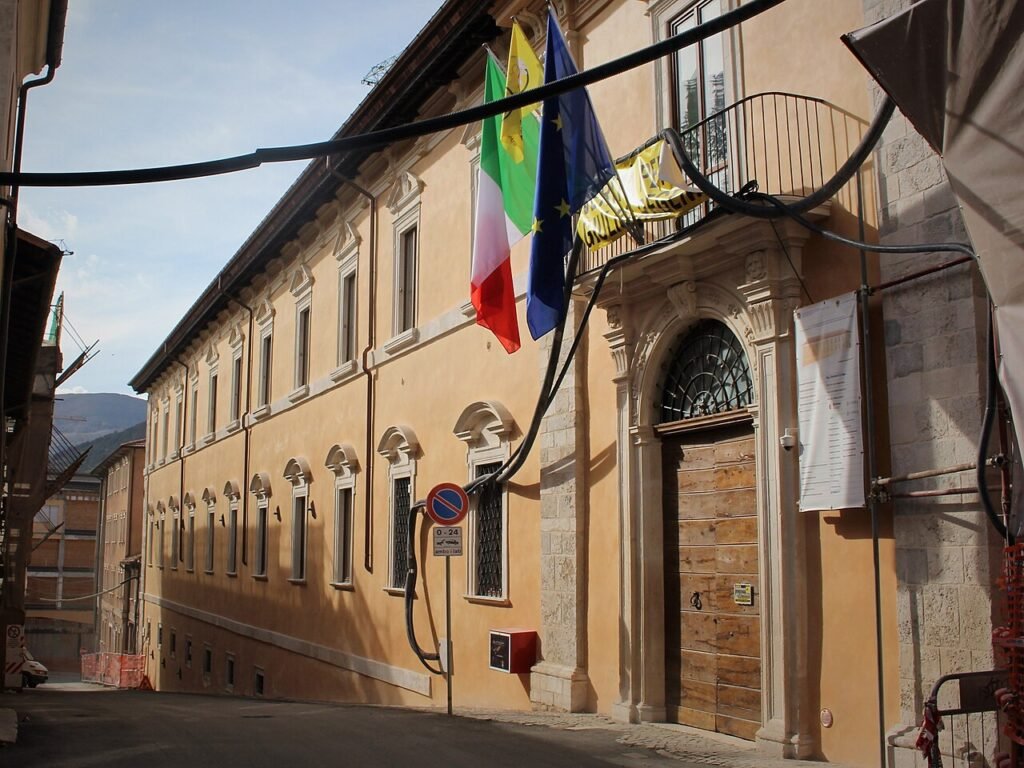
Meanwhile, the University of L’Aquila signed the EU grant agreement for the programme and manages the 2027 application call. The partner universities describe the master’s as having a special focus on biomedical sciences and industrial engineering, so it suits mathematicians who want their work to solve real problems.
One Application, Three Programmes
The InterMaths Network manages three programmes, and its application form covers all of them at once:
- InterMaths – Erasmus Mundus Joint Master in Interdisciplinary Mathematics
- MathMods – European Joint MSc in Mathematical Modelling in Engineering
- RealMaths – International MSc in Mathematics for Real World Applications
In the form, you therefore state how interested you are in each programme. Then, after the evaluation, a single ranking shows which programmes you reached the minimum admission score for. This is a real advantage, because even if you miss an EMJM scholarship, you may still be admitted to MathMods or RealMaths, where fees are much lower.
InterMaths Scholarship 2027: What It Covers
Specifically, for the 2027 edition, InterMaths offers 18 EMJM scholarships to the most talented candidates of any nationality who enrol full time. Each scholarship holder receives:
- €1,400 per month
- A full waiver of participation costs, meaning tuition, registration and every other mandatory cost of the course
- Full insurance coverage
Even so, scholarship holders pay their own accommodation, living, travel, equipment and other personal expenses out of the monthly allowance. In addition, a contribution for special needs, such as certified long-term physical, mental, intellectual or sensory impairments, may be awarded during the programme, so mention any disability in your application form.
Places Reserved for Africans and Other Targeted Regions
At least three of the 18 scholarships are reserved for students from targeted regions of the world, and the application procedure is exactly the same. The targeted regions are the Western Balkans (Region 1), Neighbourhood South (Region 3), Asia (Region 5), Central Asia (Region 6), the Middle East (Region 7), the Pacific (Region 8), Sub-Saharan Africa (Region 9), Latin America (Region 10) and the Caribbean (Region 11).
For example, Region 9 lists Cameroon, Nigeria, Ghana, Kenya, Ethiopia, South Africa and the other Sub-Saharan African countries. So if you’re applying from Cameroon, you compete for the general scholarships and, at the same time, for the reserved places.
Who Can’t Get the EMJM Scholarship?
However, if you’ve already held an Erasmus Mundus Joint Master (EMJM) scholarship, you can’t receive another one, although you can still apply to InterMaths as a self-funded student. Holders of the older EMJMD scholarship, on the other hand, remain eligible.
InterMaths Fees and Consortium Scholarships
Without an EMJM scholarship, however, the participation costs are €18,000 for the two years, charged as €4,500 per semester. These cover tuition, registration and other mandatory course costs, but not living expenses.
That’s not the end of the story, though. For 2027, the consortium will also award a number of Consortium Scholarships once the selection is complete:
| Type | What you pay |
|---|---|
| EMJM scholarship | Nothing; costs are fully waived, plus €1,400 a month. |
| Consortium Scholarship Type A | Only the €344 non-refundable deposit |
| Consortium Scholarship Type B | €3,000 in total (€750 at the start of each of the four semesters) |
| No scholarship | €18,000 for two years |
In both cases, Type A and Type B holders must pay the €344 deposit within 30 days of being notified. Type B holders then pay the remaining €406 of their first instalment before Semester 1 begins. Note that Consortium Scholarships reduce fees only, so you’d still need to fund your living costs yourself.
Other Funding Opportunities
Besides these, the InterMaths website lists other funding options, such as the PreMaster bonus, travel and installation support, mobility grants, regional grants, MAECI and GSSI. However, all of these are yet to be confirmed for 2027, and they don’t apply to EMJM scholarship holders. For example, in past editions students who attended the PreMaster Program received €100 for each ECTS credit they passed, up to €1,500 for the first 15 credits.
InterMaths Eligibility Requirements
Academic Requirements
First of all, you need a bachelor’s degree in mathematics, applied mathematics, physics, engineering or a similar field with a very strong mathematical background. In addition, the degree must be at least three years long, or 180 ECTS in the European system, and it must qualify you for master’s study.
Can Final-Year Students Apply?
Yes. According to the official 2027 call, you can apply if you expect to graduate:
- by 15 August 2027 to compete for an EMJM scholarship, or
- by 31 October 2027 for admission only.
As soon as you graduate, send proof of your degree to apply.intermaths@univaq.it within 10 days. Similarly, if you haven’t finished yet, attach the list of exams you still have to pass along with your transcript.
English Language Requirements
You must show at least B2-level English. In particular, the call asks for an advanced certificate at the B2 or C1 level, either uploaded with your application or sent through ETS using code 3676 (University of L’Aquila). However, certificates older than four years aren’t accepted.
Here’s good news for many African applicants: if you studied in English for one or more years, during your bachelor’s or even in secondary school, or if you’re a native speaker, you can prove this with a self-declaration instead.
Is There an Age Limit?
The official materials don’t set an age limit. In fact, the only age reference is a tie-breaker: if candidates still have equal scores after gender and geographical balance are considered, the younger candidate goes first.
Documents Required for InterMaths 2027
Upload all documents as PDF files through the online application tool:
- Photo
- CV, preferably in Europass format
- Passport or ID card
- English certificate
- Transcript of records
- Course description of your relevant university modules or the self-declaration form from the InterMaths downloads page
- Intent (motivation) letter
- Two reference letters, submitted by your referees through the system
Also, if a document isn’t in English, upload an official English translation or one provided and signed by the institution that awarded your degree. There’s no need to send paper copies by post, either.
Even if your passport has expired or you don’t have one yet, you can attach a valid ID from your country of residence for now. In that case, you must email a valid identity document to apply at intermaths@univaq.it by 15 August 2027.
Reference Letters
You appoint two referees in the application tool, and the system then invites them once you’ve finally submitted your application. Each referee fills in the online reference form personally by 3 March 2027, 1 pm Italian time. Note that letters you upload yourself won’t be considered, so brief your referees early.
How InterMaths Selects Scholarship Winners
Overall, selection is based on your documents only, and the official call doesn’t mention an interview. The Evaluation Committee scores each application using these weights:
| Criterion | Weight |
|---|---|
| Academic record and quality of your home institution | 60% |
| CV and professional experience | 20% |
| Motivation letter | 10% |
| English proficiency | 5% |
| Recommendation letters | 5% |
In other words, your grades and your university’s reputation decide most of your score. That’s why your transcript and course descriptions matter far more than a beautifully written letter. Still, the CV carries 20%, so list any research, teaching, coding or modelling work you’ve done.
Once the deadline passes, the committee draws up one Absolute Ranking List, which is the only list used to award scholarships. Results then usually appear on the InterMaths page within about a month. If you’re offered an EMJM scholarship, you must accept it by email within 72 hours, or it passes to the next candidate. Finally, in mid-August, the committee finalises pre-enrolments and removes anyone who hasn’t proved they graduated.
How to Apply for the InterMaths Erasmus Mundus Scholarship 2027
- Register on the PICA platform at pica.cineca.it/en/register to get your username and password.
- Fill in your application at the InterMaths 2027 application page and upload your documents.
- Review your data. When you’re sure everything is complete, click the Verify button.
- Sign and submit. Click “Sign and submit” to generate a PDF receipt. After that, you can’t make changes.
- Upload the signed receipt. Print the PDF without changing it, sign the last page by hand, scan it and upload it back into the system.
- Invite your two referees through the reference system.
Don’t Skip the Signature
This step decides whether your application exists at all, so take it seriously. The official call states that a missing signature leads to exclusion. For this reason, InterMaths recommends the third signing option, the handwritten signature. So leave time to print, sign and scan before 1 pm CET on 17 February 2027, because system overload complaints near the deadline won’t be accepted.
Applying After the Deadline
On the other hand, applicants who don’t need a study visa, or already have one, may apply until 30 September 2027 by post or certified email. However, late applicants are placed outside the ranking and can’t receive any scholarship. If you need a visa, as most African applicants do, 17 February is your only deadline.
Tips for a Strong InterMaths Application
First, invest in your course descriptions. Since 60% of your score comes from your academic record, the committee needs to see exactly what you studied: analysis, linear algebra, differential equations, numerical methods, probability and programming.
Next, write a focused intent letter. For instance, explain which kind of modelling interests you, such as biomedical or industrial problems, and which of the three programmes you prefer and why.
Finally, contact your referees now. After all, they can only fill in the form after you submit, and their deadline comes just two weeks after yours.
More Erasmus Mundus Scholarships for 2027
- EMerald Erasmus Mundus Scholarship 2027
- TCCM Erasmus Mundus Scholarship 2027
- CLMCE Erasmus Mundus Scholarship 2027
Frequently Asked Questions About the InterMaths Erasmus Mundus Scholarship
Is the InterMaths Erasmus Mundus scholarship open for 2027?
Yes. The 2027 call is open, and the deadline is 17 February 2027 at 1 pm CET.
What is the InterMaths deadline?
Applications close on 17 February 2027 at 1 pm CET. Reference letters are due by 3 March 2027 at 1 pm Italian time.
How many InterMaths scholarships are available?
There are 18 EMJM scholarships for the 2027 edition, while at least 3 are reserved for targeted regions, including Sub-Saharan Africa.
How much is the InterMaths scholarship?
It pays €1,400 per month, and it also waives all participation costs and includes full insurance.
Is there an application fee?
No. InterMaths doesn’t charge any fee for the application or selection process.
Do I need a separate scholarship application?
No. As long as you apply before the deadline, you’re automatically considered for an EMJM scholarship.
How difficult is it to get the InterMaths scholarship?
It’s competitive, since there are only 18 scholarships for applicants worldwide and 60% of the score depends on your academic record. Strong grades in mathematics give you the best chance.
Can Cameroonians apply?
Yes. Cameroon is listed in Region 9 (Sub-Saharan Africa), so Cameroonian applicants also compete for the reserved targeted-region places.
Is there an interview?
The official 2027 call states that selection is based on documents only, and it doesn’t mention an interview.
Can I apply before I graduate?
Yes. For an EMJM scholarship, you must graduate by 15 August 2027.
Final Thoughts
The InterMaths Erasmus Mundus Scholarship 2027 is one of the best routes into a funded mathematics master’s in Europe: no application fee, no separate scholarship form, €1,400 a month and places reserved for Sub-Saharan Africa. Moreover, even if you miss the scholarship, one application can still win you a place on MathMods or RealMaths. Prepare your course descriptions, brief your referees, sign your receipt by hand and submit before 17 February 2027.
For questions, write to apply.intermaths@univaq.it.