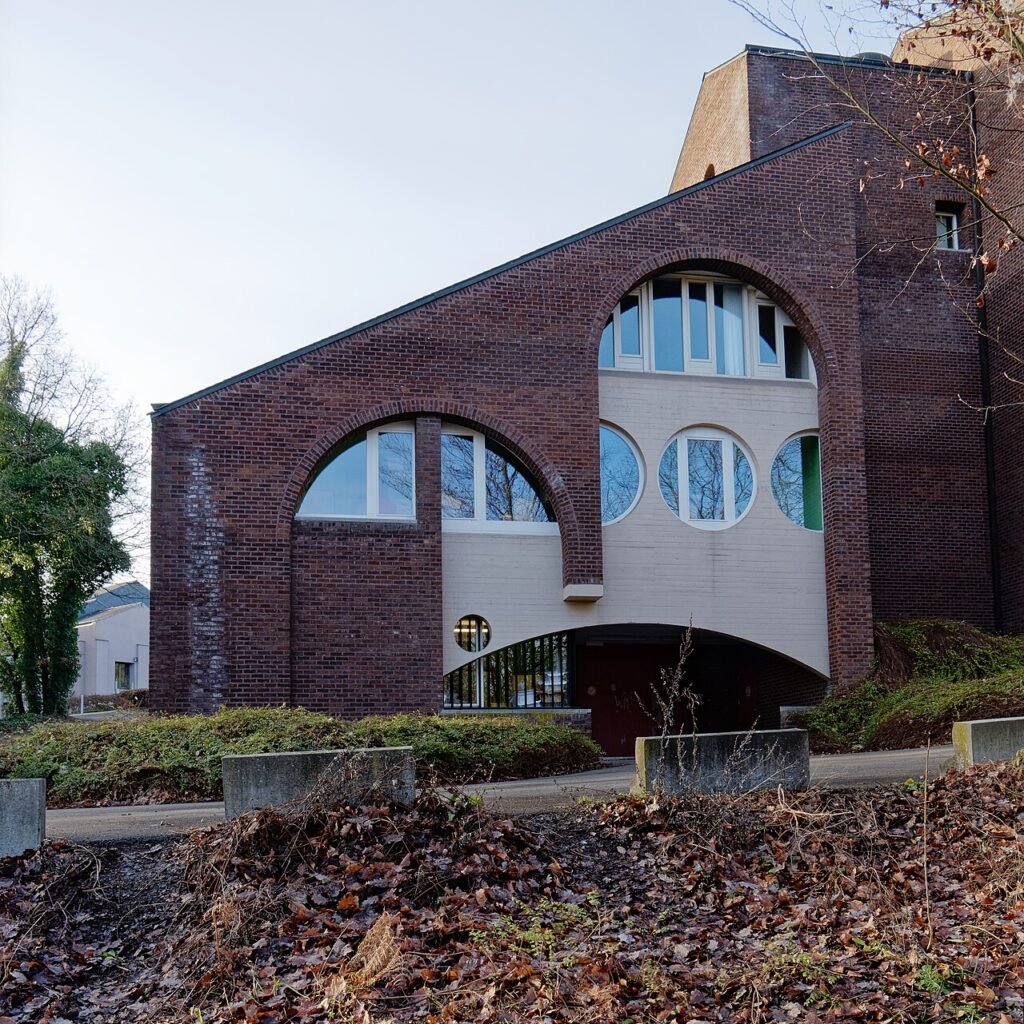
The EMerald Erasmus Mundus Scholarship 2027 is open. It funds a two-year master’s in georesources engineering across four European universities in Belgium, France, Sweden and Germany. Each scholarship is worth €33,600, paid as 24 monthly allowances of €1,400, and it also covers the programme’s participation costs. However, applications close on 28 February 2027, so there’s no time to waste.
EMerald sits where earth science meets engineering. You study how metal and mineral resources are found, characterised and modelled, and then how they’re processed, recycled and managed as well. So if you hold a degree in geology, mining, metallurgy, chemical or process engineering, this is one of the most relevant fully funded programmes in Europe.
In this guide, you’ll find the scholarship value, the fees for self-funded students, the four-semester route, the documents you need, the English scores, the interview and the full 2027 timeline. Above all, everything here comes from the official EMerald website at the University of Liège.
EMerald Erasmus Mundus Scholarship 2027 at a Glance
| Programme | EMerald – Erasmus Mundus Master in Georesources Engineering |
| Labels | Erasmus Mundus Joint Master and EIT-labelled |
| Duration | 2 years (120 ECTS) |
| Coordinator | University of Liège (ULiège), Belgium |
| Countries | Belgium, France, Sweden and Germany |
| Scholarship value | €33,600 (24 × €1,400) plus participation costs |
| Open to | Applicants worldwide |
| English | TOEFL 87, IELTS 6.5, Duolingo 120 or other B2–C1 proof |
| Scholarship deadline | 28 February 2027 |
| Results | 16 April 2027 |
| Start | Mid-September 2027 |
What Is the EMerald Master in Georesources Engineering?
EMerald is a two-year Erasmus Mundus and EIT-labelled master’s programme run by four European universities:
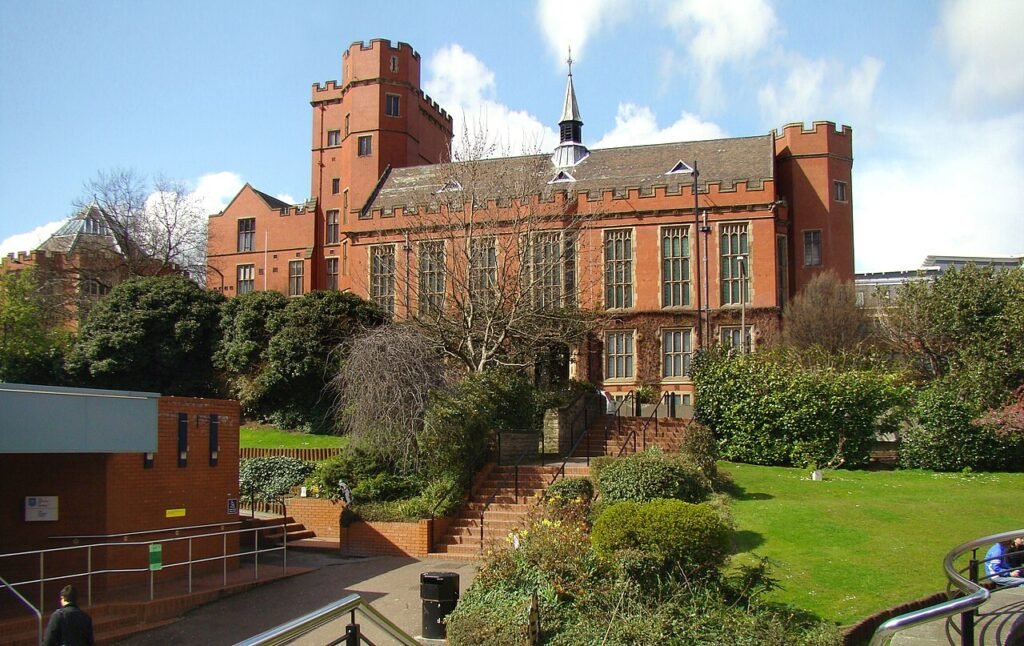
- University of Liège (ULiège), Belgium – coordinator
- University of Lorraine (UL), France
- Luleå University of Technology (LTU), Sweden
- TU Bergakademie Freiberg (TUBAF), Germany
The programme balances two areas. On the one hand, there’s knowledge of metal and mineral resources: geology, landfills, urban mines, reserve characterisation and modelling. On the other hand, there’s process engineering: comminution, sorting, preconcentration, extractive metallurgy and waste disposal. As a result, courses are grouped under four themes, namely characterisation, processing, modelling and management.
EMerald Programme Structure: Where You’ll Study
EMerald has four semesters of 30 ECTS each, and you move between countries as you go, so you’ll live in at least three of them.
| Semester | University | Focus |
|---|---|---|
| Semester 1 | University of Liège, Belgium | Mineral resources, process mineralogy, mineral processing, geostatistics, numerical analysis |
| Semester 2 | University of Lorraine, France | Advanced mineral processing, resources modelling and evaluation, management of resources |
| Semester 3 | Luleå (Sweden) or Freiberg (Germany) | Primary raw materials at LTU, or secondary raw materials and recycling at TUBAF |
| Semester 4 | Any of the four partners | Master’s thesis research and internship |
Semester 1 at Liège
In Liège, you choose 30 ECTS according to your background from courses such as Mineral Resources, Process Mineralogy, Mineral Processing I, Solid Waste and By-products Processing, Numerical Analysis, Geostatistics, and Exploitation of Mineral Deposits. There’s also a seminar on economic and societal issues in mining and recycling.
Semester 2 at Lorraine
Next, Lorraine adds advanced characterisation of the mineral–water interface, a case study of ore processing, Advanced Mineral Processing, Resources Modelling and Evaluation, and Management of Resources. In addition, this semester includes a three-week Georesources Business School and Circular Economy Workshop.
Semester 3: Choose Your Specialisation
This is where the paths split, because you pick one of two universities. At Luleå, you specialise in primary raw materials, with courses in Mining Geology, Mineral Processing II, Simulation of Mineral Processing and Geometallurgy. At Freiberg, by contrast, you focus on secondary raw materials, with courses such as Recycling – Secondary Raw Materials, Practice of Secondary Raw Materials, Training in Particle Technology and Resources Management.
Semester 4: Thesis and Internship
Finally, the last semester is for your master’s thesis research and internship, which you can carry out at any of the four partner universities.
What Degree Will You Receive?
Here’s a detail many guides miss: “EMerald” is the name of the programme, not a diploma in itself. Instead, you receive degrees from the consortium universities, depending on your track:
- University of Liège: Master in Mining and Geological Engineering
- University of Lorraine: Master in Sciences de la Terre et des Planètes Environnement – Georesources Engineering
- Luleå University of Technology: Master of Science, Major in Geosciences
- TU Bergakademie Freiberg: Master in Mechanical and Process Engineering
EMerald Erasmus Mundus Scholarship 2027: What It Covers
The EMerald website lists the Erasmus Mundus Joint Master (EMJM) scholarship for the 2027 call as available. It’s a full grant, and it’s also open to applicants worldwide.
- €33,600 in total, paid as 24 monthly allowances of €1,400
- Participation costs, paid directly to the coordinating university
The allowance is meant to cover travel, visa, installation and subsistence costs. In particular, it’s calculated for the full period you need to complete the programme, including study, research, placement, thesis preparation and defence. Moreover, the scholarship is only awarded in full and only to full-time students.
Who Can’t Get the EMJM Scholarship?
If you’ve already received an Erasmus Mundus Joint Master scholarship in the past, you can’t apply for another one. Also, EMerald states that it’s strictly forbidden to receive two European scholarships at the same time.
Other Funding Options
- EIT Raw Materials grants: these partial grants of €15,000 are not available for the 2027 call.
- ULiège grants: listed on the website under the 2026 call, these partial grants offered 24 monthly payments of €1,200 plus €1,000 for installation, but they didn’t cover the participation fee. If they’re offered for 2027, you’ll need to submit a financial plan, so check the website for updates.
EMerald Fees for Self-Funded Students
Even if you don’t win a scholarship, you can still join as a self-funded student. The programme fees, in place since 2024, are:
| Student group | Fee per year |
|---|---|
| Non-European students | €8,000 |
| European students | €2,000 |
| European students from one of the four partner universities | €1,000 |
The fee includes your registration fee, a management fee covering laboratory expenses, supervision and running costs, private health insurance, access to university facilities such as libraries and Wi-Fi, and help from each university’s international office with administration, housing and banking. However, it doesn’t include student union contributions or optional activities.
You pay the fee yearly to the coordinating university. Note, though, that if you drop out during the first semester, the second semester won’t be refunded.
Can Self-Funded Students Get a Fee Waiver?
Yes, possibly. The Master Management Committee can grant partial waivers on a case-by-case basis. If you want to be considered, request it in your online application. In addition, self-funded and partial-scholarship applicants must submit a financial plan.
How Much Does It Cost to Live in Europe on EMerald?
EMerald estimates average individual living costs at around €14,000 per year. So a self-funded non-European student should budget for about €22,000 a year once the €8,000 fee is added. That’s why the EMJM scholarship matters so much for African applicants.
EMerald Application Requirements and Documents
All documents must be in JPEG, PNG or PDF format. Moreover, copies must be sworn, although simple translations are accepted at this stage. Then, if you’re selected, you’ll need to show the originals once you arrive in Belgium.
- A copy of your passport or ID, together with an English or French translation of your birth certificate
- An ID-format photo
- An updated CV in English, so long as it’s no longer than one page
- A personal motivation letter in English
- Your high school diploma with a sworn English translation
- Your higher education diploma and transcript of records with a sworn English translation
- Proof of English proficiency, unless you’re a native English speaker
- Official documents showing your accomplishments over the last five years, if you weren’t enrolled at a university
- A recommendation letter in English
- New for 2027: a motivation video
Don’t Use AI for Your Motivation Letter
The official page says it directly: “Do not use AI tools” for the motivation letter. In other words, write it yourself, in your own voice. Since you’ll also record a motivation video and face an interview, a polished AI letter that doesn’t match how you speak would only hurt you.
EMerald English Requirements
- TOEFL: minimum 87
- IELTS: minimum 6.5
- Duolingo: minimum 120
- Or any other document showing English proficiency at the B2–C1 level
For example, some social media posts advertise EMerald as available “without IELTS”. That’s only partly true, because you don’t need IELTS specifically, but you do need proof of B2–C1 English, such as TOEFL, Duolingo or another accepted document.
EMerald Selection Process and 2027 Timeline
Overall, the scholarship round runs in two steps. First, you submit your complete online application. Then the 40 highest-rated applicants are invited to an interview. During that interview, you’ll answer questions about your motivation and background, and you’ll also discuss a scientific paper that the committee sends you a few days beforehand.
| Stage | Dates |
|---|---|
| Online application (documents and video) | 3 November 2026 – 28 February 2027 |
| Review by the selection committee | 1 – 21 March 2027 |
| Interviews of shortlisted applicants | 29 March – 14 April 2027 |
| Results | 16 April 2027 |
| Start of the academic year | Mid-September 2027 |
Incomplete applications are no longer considered, so upload every document and your video before you submit. Similarly, EMerald asks you to use a PC, not a phone, when you create your account and submit the form.
Self-Funded Application Deadlines
- Non-EU self-funded students: 1 March – 2 May 2027, with Teams interviews in May
- EU self-funded students: 1 March – 30 June 2027, with Teams interviews in July
How to Apply for the EMerald Erasmus Mundus Scholarship 2027
- Create an account on the EMerald admissions portal, since all updates go to the email address you register.
- Select the right application form as soon as you log in.
- Prepare your documents, especially the sworn translations of your diplomas and transcripts.
- Write your motivation letter yourself and record your motivation video.
- Ask for a recommendation letter in English early, because referees need time.
- Submit before 28 February 2027. Even so, don’t leave it to the last day.
- Prepare for the interview if you’re among the top 40, especially for the scientific paper discussion.
Apply here: EMerald official application page
Tips for African Applicants
First, get your sworn translations sorted early. If your diplomas are in French, as they often are for applicants from francophone Africa, including French-speaking Cameroon, you’ll need sworn English translations, and these can take time.
Second, prepare for the scientific paper. For instance, read recent papers in mineral processing, recycling or geometallurgy, and practise summarising the method and results out loud. After all, the interview tests whether you can discuss research, not just recite your CV.
Finally, use your motivation video wisely. Keep it natural. Talk about a real problem in the minerals or recycling sector that you care about, and connect it to the specialisation you’d choose in the third semester.
More Erasmus Mundus Scholarships for 2027
- TCCM Erasmus Mundus Scholarship 2027
- CLMCE Erasmus Mundus Scholarship 2027
- All master’s scholarships on Prim Study Abroad
Frequently Asked Questions About the EMerald Erasmus Mundus Scholarship
What is the deadline for the EMerald Erasmus Mundus Scholarship 2027?
The deadline is 28 February 2027, although applications have been open since 3 November 2026.
Is the EMerald Erasmus Mundus Scholarship fully funded?
Yes. The EMJM scholarship pays €33,600 over 24 months (€1,400 a month) and also covers participation costs, which are paid directly to the coordinating university.
How much does EMerald cost without a scholarship?
Non-European students pay €8,000 a year, whereas European students pay €2,000. In addition, EMerald estimates living costs at about €14,000 a year.
Can I apply for EMerald without IELTS?
Yes, as long as you have other proof of B2–C1 English, such as TOEFL (87), Duolingo (120) or another accepted document.
Which countries will I study in?
You’ll study in Belgium and France in the first year, and then later in Sweden or Germany in the third semester. Your thesis can be at any of the four partner universities.
How many students are interviewed?
Only the 40 highest-rated scholarship applicants are invited to an interview, so competition is strong.
When are the results announced?
The consortium announces its final decision on 16 April 2027.
Can Africans apply for the EMerald scholarship?
Yes. The EMJM scholarship is open to applicants worldwide, including Cameroonians and other Africans.
Is EMerald a joint degree?
No. EMerald is the programme name, and you receive degrees from the consortium universities depending on your chosen track.
Final Thoughts
The EMerald Erasmus Mundus Scholarship 2027 is a strong, fully funded option for anyone with a background in geology, mining or process engineering. In particular, you’ll study in at least three European countries, specialise in primary or secondary raw materials, and receive €1,400 a month if you win. Start your sworn translations now, write your own motivation letter, and submit before 28 February 2027.
For questions, contact the EMerald team at emerald@uliege.be or +32 4 366 95 27.