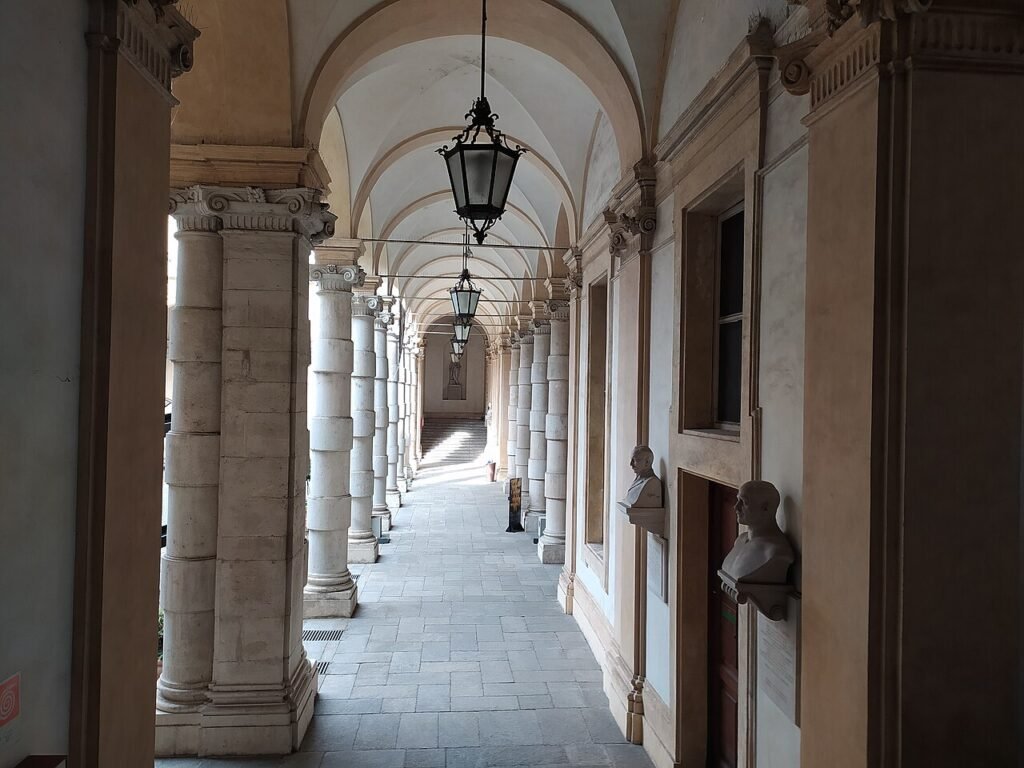
The University of Turin PhD Scholarships 2026–2027 are available through the second admissions call for the university’s 42nd doctoral cycle. The call includes funded and unfunded positions across 19 PhD programmes, with options in data science, law, computer science, the humanities, experimental medicine and other fields. Applications close on 15 December 2026 at 12:00 noon CET, Italian time.
The standard doctoral scholarship is €17,500 gross per year, unless the programme sheet specifies a different amount. Before paying the €60 application fee, check the individual position in Annex 1. A single programme can list several places with different funding, research topics or selection requirements. The sheet tells you which opportunity you are applying for and what you need to submit.
University of Turin PhD second call at a glance
| Detail | What applicants should know |
|---|---|
| University | University of Turin, also known as Università degli Studi di Torino or UniTo |
| Location | Turin, Italy |
| Admissions round | Second call, 42nd PhD cycle, academic year 2026–2027 |
| Study level | Doctorate |
| Programme duration | Usually three or four years. Check the programme sheet for the exact duration. |
| Funding | Funded and unfunded positions. The standard scholarship is €17,500 gross per year unless a programme specifies otherwise. |
| Main qualification | An eligible Italian postgraduate qualification or a comparable foreign degree |
| Application fee | €60 for each PhD programme application |
| Application deadline | 15 December 2026 at 12:00 noon CET (UTC+1) |
| Referee deadline | 16 December 2026 at 12:00 noon CET, where the programme requires references |
| Application system | PICA, accessed from the Doctoral School’s second-call page |
University of Turin PhD application deadline and key dates
The second call closes at noon in Italy on Tuesday, 15 December 2026. If you are applying from another time zone, convert the deadline before you plan your submission. Leave time to complete the payment and check that PICA has registered your application.
| Date | What happens |
|---|---|
| 15 December 2026, noon CET | Submit the application and pay the fee. If the programme requires references, request them through PICA by this deadline after submitting your application. |
| 16 December 2026, noon CET | Referees complete their online submissions for programmes that require references. |
| By 18 December 2026 | UniTo publishes examination schedules, venues and any relevant corrections to those arrangements on the call page. |
| 31 January 2027 | Degree completion deadline for Pharmaceutical and Biomolecular Sciences applicants who apply before graduating. |
| 1 February 2027 | The Pharmaceutical and Biomolecular Sciences PhD begins. |
| By 12 February 2027 | UniTo normally publishes final rankings. Check the separate timetable for the earlier-start Pharmaceutical and Biomolecular Sciences programme. |
| 28 February 2027 | General deadline for applicants to obtain a qualifying degree if they applied before graduating. |
| 9 March 2027 | General deadline for applicants with a pending degree to report that they have obtained it. Follow the programme-specific instructions for the earlier-start exception. |
If you are applying to several Italian universities, give each call its own entry in your calendar. The December deadline applies to Turin’s second call. Bocconi has its own timetable and application requirements. Bocconi University PhD scholarships and deadlines
Which PhD programmes are in the second call?
The Doctoral School lists the following 19 programmes for this round. Use the exact programme name to find its sheet in Annex 1. Some positions have a defined research topic, so check the position description even if the general PhD title matches your interests.
| Broad field | Programmes in the second call |
|---|---|
| Computing, mathematics and physical sciences | Computer Science, Modeling and Data Science, Physics |
| Agriculture, food, environment and sustainability | Agricultural, Forest and Food Sciences, Earth Sciences, Food System, Innovation for the Circular Economy, Sustainable Development and Cooperation (SUSTNET) |
| Chemistry and pharmaceutical sciences | Chemical and Material Sciences, Pharmaceutical and Biomolecular Sciences |
| Medicine and life sciences | Experimental Medicine and Therapy, Medical Physiopathology, Neuroscience, Translational Oncology |
| Law, history and social sciences | Global History of Empires, Law and Institutions, Sociology and Methodology of Social Research |
| Language, media and cultural heritage | Language, Communication, Media and Performance Studies, Technologies for Cultural Heritage (Tech4Culture) |
For example, an applicant interested in quantitative research could start with Modeling and Data Science, then check whether a listed project matches their training in statistics, mathematics or computing. Similarly, an applicant interested in sustainability could compare the projects under Innovation for the Circular Economy and Sustainable Development and Cooperation. The project description and selection criteria will tell you whether your experience fits the position.
What does the University of Turin PhD scholarship cover?
The standard scholarship is €17,500 gross annually, and UniTo pays it in monthly instalments. The gross amount includes the scholarship holder’s share of social security contributions, so the amount you receive in your account will be lower. If Annex 1 gives a different amount for the position, use that figure when planning your budget.
UniTo renews the scholarship annually subject to its review of your research and training activities and approval for progression. Therefore, award holders should keep track of the programme’s reporting and progression requirements throughout the doctorate.
The scholarship can increase by 50% for authorised research periods abroad that form part of your training plan. The general limit for this increase is 12 months across the PhD. It can extend to 18 months in qualifying international or joint-supervision arrangements. An individual funded project can also set a shorter limit.
| Funding question | What to check |
|---|---|
| Does every place include a stipend? | Check Annex 1 for the number and funding status of the places in your programme. |
| Is the advertised amount take-home pay? | €17,500 is the standard gross annual figure. Budget using the net amount once UniTo confirms it. |
| Does a funded place eliminate enrolment charges? | Check the call and enrolment instructions for the contributions payable at registration. |
| Can I keep another scholarship or research appointment? | UniTo restricts overlapping awards and appointments. Limited exceptions apply, including some funding for research abroad. |
| Have I received Italian PhD funding before? | Review Article 10 of the signed call. A previous Italian doctoral scholarship, even for part of a course, can affect your eligibility for another scholarship. The article also addresses applicants who already hold an Italian doctorate. |
Who can apply?
You need an eligible postgraduate qualification. UniTo accepts qualifying Italian degrees and comparable academic degrees from abroad. The central call sets no general age or citizenship limit. Individual programmes or funded places can have additional conditions, so read the sheet for the specific position you want.
Applicants with a foreign degree
The selection committee checks whether your qualification is comparable to an Italian second-cycle degree, such as a Laurea Magistrale. Your degree must come from a recognised institution and qualify you for doctoral study in the country where you earned it. UniTo also considers the academic nature of the qualification, including the research thesis component. If you hold a professional qualification and are unsure whether it grants doctoral access, check this with your awarding institution before you apply.
The committee assesses the foreign qualification for admission to this selection. If you receive an offer, UniTo will check the formal documentation at enrolment. The call’s Annex A explains how to document the authenticity and comparability of your qualification.
Applicants who have yet to graduate
You can apply before graduation if you obtain your qualifying degree by 28 February 2027 under the general rules. The university’s official conferral date is what matters. Plan around that date if your thesis defence or final exam takes place earlier.
You must report the award to UniTo by 9 March 2027 under the general timetable. Applicants completing an Italian qualification should follow the signed call’s Annex 3 instructions. If you are completing a foreign qualification, send the degree certificate or other official evidence from your institution showing the conferral date to dottorati@unito.it, as the call directs.
Pharmaceutical and Biomolecular Sciences has an earlier timetable. Applicants must obtain the qualifying degree by 31 January 2027, and the programme starts on 1 February 2027. Follow its specific instructions for reporting graduation and enrolling.
Documents you need for the UniTo PhD application
Start with the signed call and the sheet for your programme. The main call explains how to submit a valid application. The programme sheet tells you which academic materials the selection board will assess and how to prepare them.
| Document or step | What to prepare |
|---|---|
| Valid photo ID | Upload a readable copy of your valid identification document. Every applicant must provide it. |
| Academic qualifications and transcripts | Prepare your diploma and exam or grade records. If you are still studying, submit the records available at the time of application. |
| Academic CV | Use the format required by the call or your programme. The Doctoral School provides the CV template in Annex 2. |
| Research proposal or other academic material | Follow Annex 1 on required content, format, length and project-specific instructions. |
| References | Where required, prepare your referees’ details and request the references through PICA after submitting your application. |
| Signed application | Follow PICA’s signature instructions if you apply without SPID or CIE. |
| Foreign-degree evidence | Follow Annex A for translations, authenticity and comparability documents. |
How to prepare documents for an overseas qualification
For the usual bachelor’s-plus-master’s route, gather the relevant degree certificates and transcripts for both levels. Include the award dates and final grades where available. If your qualification is a single integrated degree, provide the records for that course. If your second-cycle degree is still in progress, submit your completed first-cycle records and the academic results available for your current programme, as applicable.
If your documents are in a language other than Italian, English or French, prepare the originals and complete certified translations. Check Annex A for acceptable certification and for the documents that establish authenticity and comparability. Depending on the qualification, options may include a Diploma Supplement, recognised verification or comparability statements, or consular documentation.
Provide these documents at application stage where available and complete the required checks if you receive an offer. UniTo generally allows up to three months from the programme start to complete the required documentation, subject to any earlier deadline that applies to your position. Incomplete documentation can delay scholarship payments and put your enrolment at risk. Applicants with international protection or a pending protection claim who cannot obtain the required records should contact the Doctoral Office before the application deadline.
How to apply through PICA
- Open the official second-call page. Download the signed call and go to Annex 1. Find your programme, read its selection rules and identify the position or research topic you want.
- Open the PICA application from the call’s “How to apply” section. Italian citizens must use SPID or CIE. Other candidates should follow the registration options that apply to them.
- Complete the form and upload your PDFs. Check that your ID is readable and that each document sits in the correct section. If you use a login method other than SPID or CIE, follow the instructions to download, sign and re-upload the completed form.
- Pay the €60 fee through PagoPA. The fee applies to each programme application and is mandatory and non-refundable. If you apply to two programmes, submit two applications and pay the fee for each one.
- Submit the application and check its status in PICA. Payment is one step in the process. After submission, check your dashboard and save the confirmation or protocol number.
- Request references, if required. After you submit, use PICA’s references section to send requests by 15 December at noon CET. Your referees must then submit their letters through the system by 16 December at noon CET. They should have their letters ready before you send the portal request.
Make one final check before submitting. Confirm that the application names the right programme, your ID and academic records open correctly, the fee payment is complete and your form has the required signature. If you applied to multiple programmes, repeat the check for each one.
How selection, interviews and enrolment work
Each programme follows its own assessment procedure. Annex 1 specifies the documents it scores, whether it holds an exam or interview and how it handles project-specific positions. Use that sheet to prepare. For instance, when a position has a defined topic, be ready to explain how your previous research or coursework equips you to investigate it.
Monitor the Selections section of the Doctoral School’s call page after submitting. UniTo uses the published notices as official notification, so check the page for dates and changes. If you need a remote oral exam, state your reason in the application and follow the programme’s instructions. The selection board decides whether to approve the request. If an obstacle arises after submission, contact the board as directed. Have the valid ID you used in your application ready for the exam.
When UniTo publishes the final ranking, check both your admission status and the funding attached to any place you receive. Successful candidates generally have seven days from publication of the ranking to enrol and pay the required contributions. Follow the instructions and dates issued with your result, especially for an earlier-start programme. If you receive offers for more than one UniTo PhD, choose the programme in which you intend to enrol. If you are on a waiting list, continue checking the official page for replacement offers.
Frequently asked questions
Can international students apply for a funded UniTo PhD?
Yes. International candidates can apply with a qualifying degree and compete for the funded positions listed in the programme sheets. If you earned your degree abroad, use Annex A to check translations, authentication and proof of doctoral access.
Is the €17,500 scholarship available for every admitted candidate?
Funding depends on the position you receive in the ranking. Annex 1 identifies funded and unfunded places and any position-specific amount. If you are comparing how universities award doctoral funding, you can also see how the process works in the LSE Demography PhD funding guide.
Does every programme require a research proposal or interview?
Requirements vary. Read the selection and assessment sections of your programme sheet before preparing a proposal, booking travel or arranging a remote interview.
Can the applicant send reference letters by email?
For programmes that require references, send the referee request through PICA. The referee then submits directly through the online system. A copy emailed to the university or uploaded by the applicant does not satisfy that process.
Which annex should I read first?
Start with Annex 1 for the places, funding, research topics and selection rules for your programme. Then consult Annex A if you need to document a foreign qualification. Read both alongside the signed call, particularly if you are applying before graduation.