The Euroculture Erasmus Mundus Scholarship 2027 offers international students the opportunity to pursue a two-year master’s degree while studying at universities across Europe. Successful scholarship recipients receive full tuition coverage, health insurance and a monthly allowance of €1,400 for up to 24 months.
Applications for the 2027–2029 intake opened on 15 October 2026, with the Erasmus Mundus scholarship application deadline set for 15 January 2027.
The Erasmus Mundus Joint Master in Euroculture is an interdisciplinary programme examining European culture, politics, society and identity. It brings together seven European universities and requires students to study at more than one institution during their degree.
The programme is particularly relevant to graduates in the humanities and social sciences, including international relations, political science, sociology, history, communication, law and cultural studies. Applicants from other academic backgrounds may also qualify if their previous education meets the programme’s academic requirements.
Beyond academic qualifications, Euroculture evaluates applicants’ writing abilities, motivation, references and relevant experiences. Candidates must submit an academic writing sample of at least 2,000 words, making preparation considerably more demanding than simply uploading a CV and degree certificate.
This guide explains the scholarship benefits, participating universities, eligibility requirements, English-language exemptions, required documents, application procedure and selection process. It also addresses several requirements that applicants frequently misunderstand, particularly the rules concerning graduation certificates, academic writing samples and referee submissions.
Euroculture Erasmus Mundus Scholarship 2027 Overview
The Erasmus Mundus Joint Master in Euroculture is a 120-ECTS postgraduate programme delivered over four semesters.
Its central objective is to help students understand Europe as a cultural, political and social space while examining how European societies interact with the wider world.
Students explore subjects such as European integration, cultural identity, social change, international relations, intercultural communication and contemporary political developments.
Rather than approaching these issues through a single academic discipline, Euroculture combines perspectives from history, sociology, political science, philosophy, communication and related fields.
An important feature is international mobility. Students must study at two different European partner universities, gaining experience of different educational systems and cultural environments.
Scholarship Summary
| Scholarship Details | Information |
|---|---|
| Scholarship name | Euroculture Erasmus Mundus Scholarship 2027 |
| Programme | Erasmus Mundus Joint Master in Euroculture |
| Academic level | Master’s degree |
| Programme duration | 24 months |
| Credits | 120 ECTS |
| Participating European universities | Seven |
| Funding | Erasmus Mundus Joint Masters |
| Monthly allowance | €1,400 |
| Maximum stipend over 24 months | €33,600 |
| Tuition fees | Fully covered for scholarship recipients |
| Health insurance | Included |
| Eligible applicants | International candidates meeting programme requirements |
| Application fee | None |
| Applications opened | 15 October 2026 |
| Scholarship deadline | 15 January 2027 |
| Application platform | Euroculture Online Application Tool (OAT) |
| Scholarship results | Expected by the end of March 2027 |
Admission and scholarship selection are separate decisions. A candidate may satisfy the academic requirements and receive an admission offer without securing Erasmus Mundus funding.
Applicants should therefore understand the financial implications of both scholarship-funded and self-funded study before indicating their preferences.
Euroculture Erasmus Mundus Scholarship 2027 Benefits
The Erasmus Mundus scholarship provides financial assistance throughout the two-year programme. Its main benefits include tuition coverage, a monthly allowance and health insurance.
However, fully funded does not mean that every expense is paid separately by the consortium.
Monthly Living Allowance of €1,400
Scholarship recipients receive a monthly allowance of €1,400 for up to 24 months.
The maximum value of these payments is
€1,400 × 24 months = €33,600
The allowance contributes towards accommodation, food, transportation and other expenses associated with living and studying abroad.
Because Euroculture involves compulsory mobility, students may need to arrange accommodation in more than one country. The cost of living can differ significantly between European university cities.
For instance, a student’s housing budget in Uppsala or Strasbourg may differ from what they would spend in Olomouc or Udine. Actual costs depend on accommodation availability, personal circumstances and lifestyle.
Scholarship recipients should therefore prepare a budget for each study destination rather than assume that their monthly expenses will remain unchanged throughout the programme.
Full Tuition Fee Coverage
The scholarship covers Euroculture participation fees for selected recipients, regardless of nationality.
These participation fees include programme registration and administration, access to academic facilities, joint thesis supervision and participation in the Euroculture Intensive Programme.
The tuition arrangements do not cover every associated expense.
In particular, travel to the Intensive Programme is not included in the participation fee coverage.
Applicants should distinguish between costs covered directly by the consortium and expenses that must be managed through their scholarship allowance.
Health Insurance
Scholarship recipients receive health insurance during the programme.
This is particularly important because students are expected to study in different European countries.
Nevertheless, students should review the applicable insurance policy to understand its coverage, exclusions and any additional healthcare obligations in their host countries.
International Academic Mobility
One of Euroculture’s distinctive benefits is the opportunity to study at multiple universities within the same master’s programme.
Students encounter different academic approaches, interact with international classmates and develop a deeper understanding of European societies.
The programme also provides opportunities for practical experience, independent research and professional development.
Depending on their academic track and placement, some students may spend part of their studies at a partner institution outside Europe.
Expenses Not Covered Separately
Although the Erasmus Mundus scholarship offers substantial financial support, recipients remain responsible for managing certain expenses.
These may include accommodation, personal living costs, travel between study destinations, books and study materials, and some fieldwork-related expenses.
Students may also need funds for initial travel arrangements, accommodation deposits or other costs before receiving their regular allowance.
Scholarship Benefits at a Glance
| Expense | Scholarship Coverage |
|---|---|
| Tuition and participation fees | Fully covered |
| Monthly allowance | €1,400 |
| Maximum allowance for 24 months | €33,600 |
| Health insurance | Included |
| Accommodation | Paid from available funds |
| Travel between universities | No separate guaranteed reimbursement |
| Travel to the Intensive Programme | Not included in participation fee coverage |
| Books and personal expenses | Managed by the student |
| Certain fieldwork expenses | Additional costs may apply. |
Euroculture Programme Structure and Partner Universities
Euroculture combines academic coursework, international mobility, practical experience and independent research.
The programme consists of four semesters, with students studying at a minimum of two different European universities.
Semester 1: Foundations
Students begin at their first European partner university.
The opening semester introduces important concepts relating to European culture, society, politics and identity.
Coursework develops students’ understanding of historical and contemporary European developments while strengthening their academic research and analytical skills.
Semester 2: Exploration
During the second semester, students move to another European partner university.
They continue their interdisciplinary studies, explore specialised subjects and participate in collaborative academic activities.
Studying at a second institution allows students to encounter different intellectual traditions and perspectives on European issues.
Semester 3: Specialisation
The third semester offers opportunities for academic or professional specialisation.
Depending on the available pathways and selection requirements, students may undertake advanced academic study, complete an approved study period outside Europe or pursue a professional placement.
This stage allows students to connect their academic interests with research or career objectives.
Semester 4: Master’s Thesis
The final semester focuses on independent research and completion of the master’s thesis.
Students develop a research question, apply appropriate academic methods and produce a substantial written study under academic supervision.
The thesis provides an opportunity to investigate a subject related to European culture, politics, society or intercultural relations in greater depth.
Seven Participating European Universities
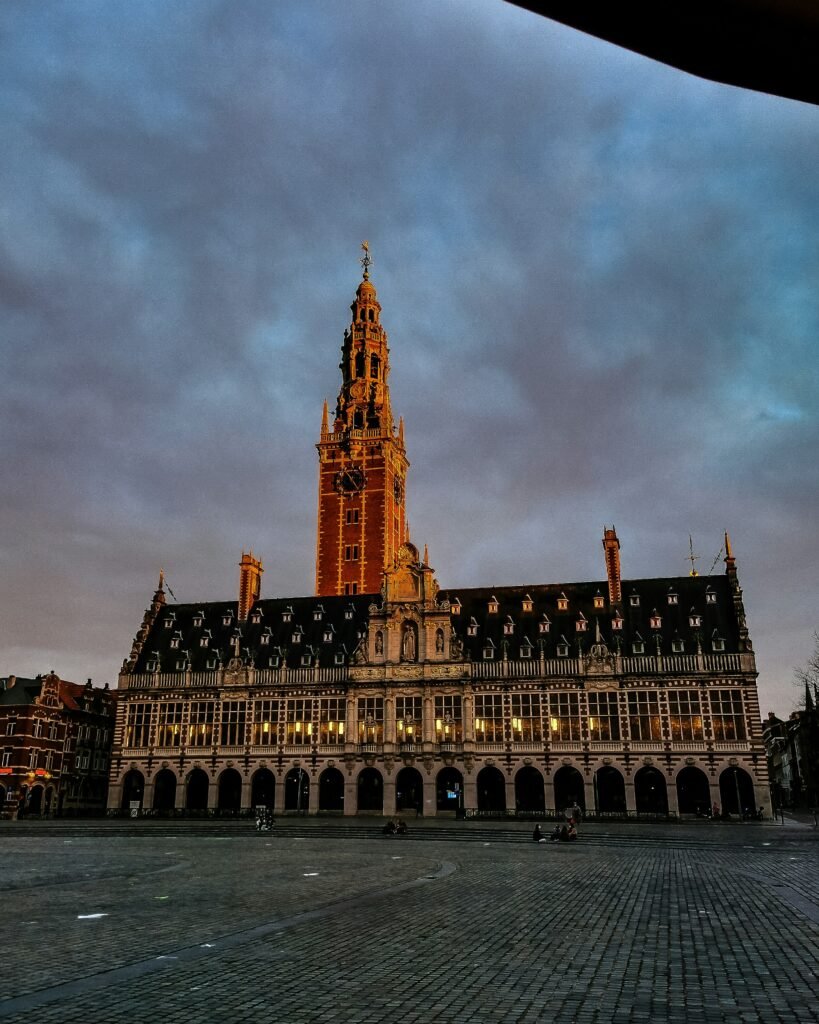
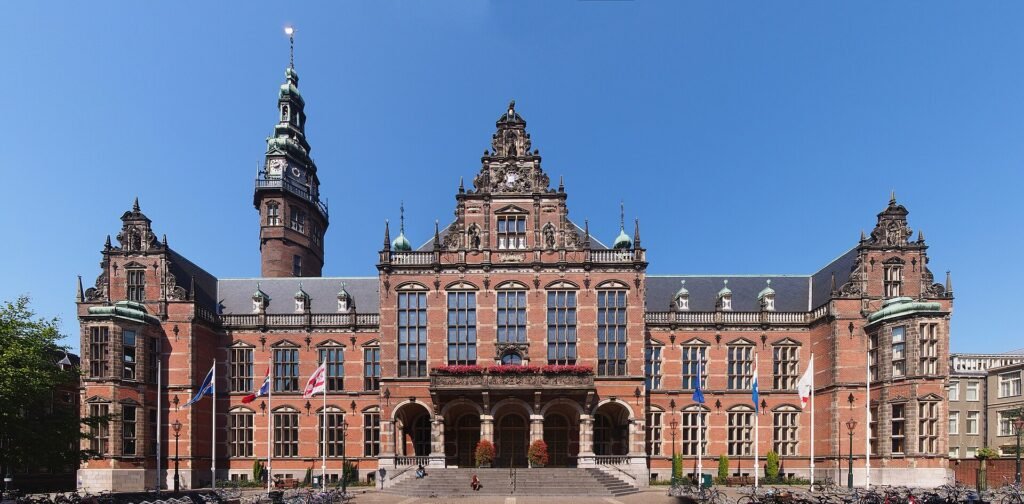
The Euroculture consortium brings together seven European universities.
| University | Country |
|---|---|
| University of Groningen | Netherlands |
| University of Göttingen | Germany |
| University of Udine | Italy |
| University of Strasbourg | France |
| Palacký University Olomouc | Czech Republic |
| Jagiellonian University | Poland |
| Uppsala University | Sweden |
These institutions deliver a shared programme while offering different academic specialisations, research environments and educational experiences.
Applicants can indicate their university preferences during the application process. However, admission to a preferred institution is not guaranteed.
Placements depend on the consortium’s academic and administrative arrangements, available capacity and the selection process.
Opportunities to Study Outside Europe
Euroculture also maintains academic partnerships with institutions in Canada, India, Japan and Mexico.
Eligible students may apply for opportunities to complete part of their third-semester studies at an approved partner institution outside Europe.
These placements are limited and competitive. They should not be interpreted as an automatic entitlement for every admitted student.
Applicants interested in international mobility should examine the available academic tracks and consider how a particular destination relates to their academic interests.
Students comparing international master’s programmes may also explore the GLOBE Erasmus Mundus Scholarship 2027. While Euroculture focuses on European societies, culture and politics, GLOBE offers a different interdisciplinary pathway centred on global change ecology and biodiversity management.
Who Can Apply for the Euroculture Erasmus Mundus Scholarship 2027?
The scholarship welcomes eligible international applicants who satisfy the programme’s academic, English-language and scholarship requirements.
Applicants from African countries, including Cameroon, Nigeria, Ghana and Kenya, may apply.
However, eligibility depends on more than nationality. Candidates must demonstrate that their previous education provides an appropriate foundation for postgraduate study in Euroculture.
Academic Qualifications
Applicants must hold a bachelor’s degree from a recognised higher education institution in a field relevant to the programme.
Euroculture primarily targets graduates from humanities and social science disciplines.
Relevant academic backgrounds include:
- International Relations and European Studies
- History and Cultural Studies
- Political Science and Sociology
- Anthropology and Philosophy
- Literature and Languages
- Communication and Media Studies
- International or European Law
- Theology and related humanities disciplines
Applicants from other fields may also be considered if their previous studies contain sufficient relevant academic content.
The Admissions Board evaluates the substance of an applicant’s education rather than relying exclusively on the title of their degree.
Can Applicants From Other Academic Backgrounds Qualify?
Possibly, but applicants should not assume that any bachelor’s degree automatically satisfies the admission requirements.
For example, a graduate in economics whose studies included political economy, European integration, public policy or international development may have relevant academic preparation.
Similarly, a graduate in business administration with substantial coursework in intercultural management, communication or social sciences may wish to have their eligibility assessed.
These examples illustrate possible academic connections; they do not guarantee admission.
The compulsory academic requirements must still be satisfied. Relevant employment or volunteering cannot, by itself, compensate for an academic background that the Admissions Board considers insufficient.
In some circumstances, an applicant with a less directly related bachelor’s degree may demonstrate the required academic preparation through a completed, relevant master’s qualification.
Candidates uncertain about their academic eligibility should review their transcripts and contact the programme before applying.
Must Applicants Have a High GPA?
Euroculture does not specify a universal minimum GPA in the application guidance.
Nevertheless, academic performance forms part of the competitive selection process.
Applicants should therefore present their academic record accurately and demonstrate their ability to undertake advanced interdisciplinary study.
A strong academic writing sample, relevant experience and convincing motivation may strengthen an application, but they do not eliminate the need to satisfy the formal admission requirements.
Graduation Requirements for the 2027 Scholarship
One of the most important conditions concerns when applicants must complete their first university degree.
For Erasmus Mundus scholarship consideration, applicants must have completed their bachelor’s degree by 15 January 2027.
This is different from requiring every applicant to possess the final printed diploma by that date.
What If the Degree Certificate Has Not Been Issued?
Applicants who have completed all graduation requirements but have not yet received their physical degree certificate may be able to submit an official statement confirming their completed graduation.
The statement must establish that all required modules have been passed and that graduation occurred no later than the scholarship deadline.
An ordinary statement that a student expects to graduate in the future is not equivalent to proof that the degree has already been completed.
This distinction is particularly relevant to graduates from universities where official certificates are issued several months after final examinations.
Applicants should request appropriate confirmation from their university and ensure that the document meets Euroculture’s requirements.
Can Final-Year Students Apply?
Students who will graduate after 15 January 2027 do not satisfy the stated degree-completion requirement for Erasmus Mundus scholarship consideration.
However, different arrangements may apply to self-funded admission.
Candidates applying without scholarship funding may be considered before completing their degree, provided they meet the relevant conditions before the programme begins.
Applicants should not confuse the self-funded admission arrangements with the scholarship eligibility deadline.
English Language Requirements
Euroculture is taught in English, and applicants must demonstrate the language proficiency required for postgraduate study.
The programme accepts several recognised English-language qualifications.
| English Language Test | Minimum Requirement |
|---|---|
| IELTS Academic | Overall 6.5, with no component below 6.5 |
| TOEFL iBT | 93 under the pre-2026 scoring system |
| Cambridge English | C1 Advanced or C2 Proficiency |
| PTE Academic | Overall 71, with at least 61 in writing |
| LanguageCert Academic | Overall 75; not accepted at Uppsala University |
Applicants using TOEFL results should check the official conversion or score requirements applicable to the updated scoring system.
They should also confirm the validity period of their certificates and any additional conditions imposed by their preferred partner universities.
Can Applicants Receive an English-Language Test Exemption?
Yes, under specified conditions.
An exemption may apply to applicants who have completed a bachelor’s or master’s degree taught entirely in English.
Applicants who completed one continuous year of university-level study in a country where English is the primary official language may also qualify under the programme’s rules.
Supporting documentation is required.
For example, an applicant relying on an English-taught degree may need an official university statement confirming the language of instruction.
However, exemption decisions depend on the programme’s published criteria and any university-specific requirements.
Being a native English speaker or holding citizenship from an English-speaking country does not automatically establish exemption eligibility.
Applicants should obtain confirmation of their exemption status rather than assume that their nationality or previous schooling is sufficient.
Additional Erasmus Mundus Scholarship Conditions
Candidates must meet the programme’s academic and language requirements as well as the applicable Erasmus Mundus funding rules.
In particular:
- Applications must be complete and submitted by 15 January 2027.
- Applicants must hold a completed qualifying degree or acceptable proof of degree completion.
- Candidates must satisfy the relevant English-language requirements.
- Applicants must be eligible to obtain the necessary visa or residence permit.
- Previous Erasmus Mundus funding must not conflict with the programme’s scholarship eligibility rules.
- Scholarship recipients cannot receive another EU grant for the same period of Erasmus Mundus studies.
Applicants who previously received certain Erasmus Mundus Joint Master or Erasmus+ doctoral-level scholarships may be ineligible for another Erasmus Mundus Joint Master scholarship.
However, an Erasmus+ mobility grant received during earlier bachelor’s or master’s studies does not automatically prevent an applicant from applying.
Candidates with previous EU-funded study experience should examine the precise scholarship rules before making assumptions about their eligibility.
Required Documents for the Euroculture Erasmus Mundus Scholarship 2027
Euroculture requires a comprehensive application submitted through its Online Application Tool.
Applicants should begin preparing their documents well before the deadline, particularly the academic writing sample and references.
1. Bachelor’s Degree Certificate or Acceptable Graduation Evidence
Applicants must provide evidence of a completed qualifying degree.
Those who have graduated but are awaiting the final certificate should obtain an official document confirming that all degree requirements have been completed.
Applicants with additional academic qualifications should also provide the relevant certificates.
Documents issued in languages other than English require certified English translations.
Required format: PDF.
2. Academic Transcripts
Applicants must submit official transcripts showing the courses completed, grades received and duration of study.
Transcripts are especially important for applicants whose degree titles do not clearly demonstrate their preparation in the humanities or social sciences.
The Admissions Board may need to examine the actual course content when assessing academic relevance.
Required format: PDF.
3. Proof of English Language Proficiency
Applicants must provide a valid result from an accepted English-language examination or documentation establishing their eligibility for an exemption.
Those relying on previous English-medium university education should obtain the appropriate institutional evidence.
Required format: PDF.
4. Academic Writing Sample
The academic writing sample is one of the most important elements of the Euroculture application.
Applicants must submit a previously assessed academic assignment completed during their earlier studies.
Acceptable examples may include a bachelor’s thesis, seminar paper or research essay.
The submitted work must contain at least 2,000 words and demonstrate the applicant’s ability to construct an argument, engage critically with academic sources and communicate ideas clearly.
The work must be submitted in its original assessed form.
Applicants should not rewrite or substantially improve an old assignment merely to make it more impressive for Euroculture.
Writing Sample Requirements
| Requirement | Details |
|---|---|
| Minimum length | 2,000 words |
| Type of work | Previously assessed academic assignment |
| Examples | Thesis, research essay or seminar paper |
| Revisions | Original assessed version required |
| English abstract | Approximately 200 words |
| Non-English work | Additional English summary of approximately 1,000 words |
| Group assignments | Applicant’s individual contribution must be identifiable |
| AI assistance | Any AI tools used in preparing the original work must be declared |
| File format |
Applicants submitting work written in another language must also include the required English-language supporting material, including the original table of contents and bibliography.
The application guidance should be consulted for the precise presentation and summary requirements.
How to Choose a Strong Academic Writing Sample
Applicants should select work that demonstrates their analytical and research abilities.
A strong sample normally presents a clear research question or argument, uses relevant academic sources and develops a logical discussion supported by evidence.
For example, a political science graduate might submit an assessed paper on European integration or democratic governance.
A sociology graduate could select work examining migration, identity or social inequality.
A history graduate might submit a research essay investigating cultural change or political developments.
The subject does not necessarily need to be identical to the applicant’s intended master’s thesis topic. However, it should provide convincing evidence of the academic skills required for Euroculture.
Important: Applicants should not create a new assignment and present it as previously assessed university work. They should also comply with the programme’s AI disclosure requirements.
5. Curriculum Vitae
Applicants must submit an English-language CV outlining their academic qualifications, work experience, internships, extracurricular activities and relevant achievements.
The Europass CV format is accepted but not compulsory.
A different professional format may be used if it presents the information clearly.
The CV should highlight experiences relevant to Euroculture’s interdisciplinary and international focus.
For example, research experience, community engagement, policy-related work, language skills or intercultural activities may help demonstrate an applicant’s preparation and motivation.
Required format: PDF.
6. Passport or National Identity Card
Applicants must upload a clear copy of a valid passport or national identity document.
The information should be readable and consistent with the details entered in the application system.
Accepted formats: PNG or JPEG.
7. Passport-Sized Photograph
Applicants must provide a recent digital passport-sized photograph for identification purposes.
Accepted formats: PNG or JPEG.
8. Two Academic or Professional References
Euroculture requires two referees.
The first referee must be an academic referee, such as a university lecturer or professor familiar with the applicant’s academic performance.
The second may be another academic referee or a professional referee, such as an employer or supervisor.
How the Updated Reference Procedure Works
For the 2027–2029 intake, applicants do not need to upload signed recommendation letters.
Instead, they enter their referees’ contact details in the application system.
After submission, the Euroculture Secretariat contacts the nominated referees and invites them to complete an online questionnaire.
Both referees must respond within two working weeks of the applicant’s submission.
The application remains incomplete until both references have been received.
This requirement has an important practical implication: submitting the online form does not necessarily mean that the application is complete.
Applicants should contact their referees in advance, explain the process and confirm that they will be available to respond promptly.
Using an academic referee who rarely checks their email or is unavailable during the application period could create avoidable difficulties.
How to Apply for the Euroculture Erasmus Mundus Scholarship 2027
Euroculture uses a single online application procedure for Erasmus Mundus scholarship applicants and self-funded candidates.
Applicants seeking funding must indicate their interest in the scholarship during the application process.
Step 1: Check Your Academic Eligibility
Review the admission requirements and compare them with your academic qualifications.
Pay particular attention to the relevance of your degree, the required graduation date and the English-language rules.
Applicants from less directly related disciplines should examine their transcripts carefully.
Step 2: Prepare Your Documents
Collect the required certificates, transcripts, English-language evidence, academic writing sample, CV, identification and photograph.
Arrange certified translations where necessary.
Do not leave the writing sample until the final days, particularly if it requires an English abstract or summary.
Step 3: Contact Your Referees
Identify two suitable referees, ensuring that at least one is academic.
Ask for their permission before entering their details in the application system.
Explain that they will receive an online questionnaire and must respond within two working weeks after submission.
Step 4: Create an Online Application Account
Access the Euroculture Online Application Tool and create an account.
Enter your personal information, academic background and contact details.
The platform allows applicants to save their progress and return to complete the application.
Ensure that all information matches the supporting documents.
Step 5: Indicate Your University Preferences
Provide your preferred Euroculture partner universities according to the application instructions.
Applicants should consider the academic opportunities, mobility arrangements and practical implications of their preferences.
However, the consortium does not guarantee placement at a preferred institution.
Step 6: Select Erasmus Mundus Scholarship Consideration
Applicants who wish to compete for Erasmus Mundus funding must indicate their scholarship interest.
They may also specify whether they want to be considered for self-funded admission if they are unsuccessful in the scholarship competition.
This decision should be made carefully.
A self-funded admission offer is not equivalent to a scholarship, and candidates would need to arrange the necessary financial resources.
Step 7: Upload Your Documents and Submit
Upload all required documents in the specified formats.
Check that files are complete, readable and correctly labelled.
Submit the application by 15 January 2027 to be considered for Erasmus Mundus scholarship funding.
Applications must be submitted through the official online platform. Email and postal applications are not accepted.
After submitting, check for the confirmation email and verify that the submission was successful.
Step 8: Follow Up With Your Referees
Because referee questionnaires are completed after submission, applicants should monitor their progress.
Remind referees of the two-working-week response requirement.
An otherwise strong application may remain incomplete if the required references are not received.
Step 9: Prepare for a Possible Interview
Shortlisted applicants may be invited to an interview with a representative of the Euroculture Board of Admissions.
The interview lasts approximately ten minutes and assesses motivation, academic preparation and relevant personal or professional competencies.
Candidates should be ready to explain why Euroculture fits their interests and how their previous experiences have prepared them for interdisciplinary postgraduate study.
Step 10: Await the Selection Decision
Eligible applications are assessed competitively.
Scholarship results are expected by the end of March 2027, although applicants should monitor official communications for updates.
Depending on their results and application preferences, candidates may receive a scholarship offer, be placed on a reserve list or be considered for self-funded admission.
There is no Euroculture application fee. Applicants should use the official platform rather than paying third parties who claim that a submission fee is required.
How to Strengthen Your Euroculture Scholarship Application
Meeting the formal admission requirements is essential, but scholarship selection also considers the overall strength of the applicant’s profile.
Several aspects deserve particular attention.
Demonstrate Genuine Academic Interest
Euroculture is not simply a general master’s degree for students who want to study in Europe.
It has a specific interdisciplinary focus on European culture, society, politics and identity.
Applicants should explain which issues interest them and how those interests connect with the programme.
For example, a graduate who has studied migration policy might be interested in how European institutions respond to migration and integration challenges.
Another applicant with a background in communication may want to investigate media narratives, cultural representation or public discourse across European societies.
These connections should emerge naturally from the applicant’s education and experiences.
Choose Your Academic Writing Sample Carefully
A well-written academic assignment can demonstrate skills that grades alone may not reveal.
Applicants should choose work that shows their ability to investigate a question, use evidence and develop a coherent argument.
The strongest choice is not necessarily the longest assignment or the one with the most complicated title.
A clearly structured paper with sound research methods and thoughtful analysis may provide stronger evidence of academic preparation.
Because the original assessed version is required, candidates should identify an appropriate existing assignment early.
Present Relevant Experience With Context
Euroculture considers supplementary experiences such as internships, extracurricular activities, additional languages and exposure to international or multicultural environments.
Applicants should explain what they learned from these experiences rather than merely listing them.
Consider a graduate who volunteered with an organisation supporting displaced communities. The experience may have developed an understanding of cultural identity, social integration and communication across different backgrounds.
Another applicant who participated in student leadership or international academic activities might demonstrate teamwork, cross-cultural awareness or an interest in public affairs.
These experiences can strengthen an application when they are genuinely relevant, but they do not replace compulsory academic qualifications.
Applicants particularly interested in migration, cultural diversity and international cooperation may also consider the EMMIR Erasmus Mundus Scholarship 2027, a master’s programme specialising in migration and intercultural relations.
Prepare for the Interview
A short interview leaves little room for vague or excessively rehearsed responses.
Applicants should be able to explain their academic interests, relevant experiences and reasons for choosing Euroculture.
They should also understand the programme’s mobility requirements and be prepared to discuss how studying at different universities could contribute to their academic development.
Specific, thoughtful answers are more convincing than generic claims about wanting international exposure.
Understand the Difference Between Admission and Scholarship Selection
A candidate may be academically qualified for Euroculture but still fail to secure Erasmus Mundus funding.
Scholarships are competitive and depend on the overall applicant pool and available awards.
Candidates who would only be able to attend with full funding should consider this before selecting self-funded admission as an alternative.
Euroculture Erasmus Mundus Scholarship 2027 Application Deadlines
The scholarship and self-funded admission procedures have different timelines.
Applications for the 2027–2029 intake opened on 15 October 2026.
The Erasmus Mundus scholarship application deadline is 15 January 2027.
Important Dates
| Application Stage | Date |
|---|---|
| Applications open | 15 October 2026 |
| Erasmus Mundus scholarship deadline | 15 January 2027 |
| Scholarship results expected | End of March 2027 |
| Self-funded application evaluations begin | End of March 2027 |
| Recommended self-funded deadline for non-EU/EEA passport holders | 1 May 2027 |
| Recommended self-funded deadline for EU/EEA passport holders | 1 June 2027 |
Deadlines for Self-Funded Applicants
Applicants who do not seek Erasmus Mundus scholarship funding may follow the separate self-funded admission timeline.
The programme recommends that self-funded applicants holding non-EU/EEA passports apply by 1 May 2027.
For applicants holding EU/EEA passports, the recommended date is 1 June 2027.
These dates are recommendations rather than absolute closing deadlines.
Applications submitted later may still be considered, but timely admission processing, visa arrangements and university registration cannot be guaranteed.
Applicants seeking Erasmus Mundus funding must not confuse these later dates with the scholarship deadline.
Frequently Asked Questions
Is the Euroculture Erasmus Mundus Scholarship 2027 Fully Funded?
Yes. Selected Erasmus Mundus scholarship recipients receive full tuition coverage, health insurance and a monthly allowance of €1,400 for up to 24 months.
The maximum total monthly allowance is €33,600 over two years.
Students must manage accommodation, travel and personal expenses using their available funding.
Can Students From African Countries Apply?
Yes. Eligible applicants from Cameroon, Nigeria, Ghana, Kenya and other African countries may apply.
They must satisfy the programme’s academic, English-language and scholarship requirements.
Is IELTS Compulsory?
No. Euroculture accepts several English-language qualifications, including IELTS Academic, TOEFL iBT, Cambridge English, PTE Academic and LanguageCert Academic, subject to the programme’s requirements.
Some applicants may qualify for an exemption based on documented previous university-level education in English.
Can I Apply With a Degree Outside the Humanities or Social Sciences?
Possibly.
The Admissions Board evaluates whether the applicant’s previous academic studies provide sufficient preparation for Euroculture.
Candidates from other disciplines should review their transcripts and the official academic eligibility requirements carefully.
Relevant work experience alone does not replace the compulsory academic requirements.
Can I Apply if I Have Graduated but Have Not Received My Certificate?
Applicants who completed all graduation requirements by 15 January 2027 may be able to provide an official statement confirming completed graduation.
A statement indicating that graduation is expected after the deadline does not satisfy the same requirement.
Can Final-Year Bachelor’s Students Apply?
For Erasmus Mundus scholarship consideration, the qualifying bachelor’s degree must have been completed by 15 January 2027.
Different provisions may apply to self-funded candidates who complete their degree before the programme begins.
Is an Academic Writing Sample Compulsory?
Yes.
Applicants must submit a previously assessed academic assignment containing at least 2,000 words.
The required supporting materials include an approximately 200-word English abstract and, where applicable, an additional English summary for non-English work.
Can I Submit a Newly Written Essay as My Academic Writing Sample?
The programme requires previously assessed academic work in its original form.
Applicants should not replace that requirement with a newly written essay or revise previously assessed work for the application.
Are Recommendation Letters Required?
Applicants must provide two references, including at least one academic referee.
For the 2027–2029 procedure, signed recommendation letters are not uploaded directly.
Instead, the Euroculture Secretariat contacts the nominated referees and asks them to complete an online questionnaire.
How Long Do Referees Have to Respond?
Both referees must respond within two working weeks of the applicant’s submission.
Applicants should inform their referees in advance because the application remains incomplete until both references are received.
Is There an Application Fee?
No. Euroculture does not charge an application fee.
Is Previous International Experience Required?
No. Previous international experience is not compulsory.
However, relevant international exposure, language skills, internships and intercultural activities may strengthen a candidate’s application.
When Will Scholarship Results Be Announced?
Results are expected by the end of March 2027, according to the main application timeline.
Applicants should monitor official communications because notification dates may be updated.
Can I Apply Again if I Am Unsuccessful?
Applicants may apply for a future intake if applications are open and they satisfy the relevant requirements.
A new application is required because unsuccessful applications are not automatically carried forward.
Conclusion
The Euroculture Erasmus Mundus Scholarship 2027 provides an opportunity for graduates interested in European culture, politics, society and international cooperation to pursue interdisciplinary postgraduate study across several countries.
The scholarship’s financial package is substantial, offering tuition coverage, health insurance and up to €33,600 in monthly allowance payments over two years.
However, successful applicants must demonstrate more than basic eligibility.
Academic preparation, a suitable writing sample, relevant experience, motivation and timely referee submissions all contribute to a complete and competitive application.
Candidates should pay particular attention to the degree-completion requirement. Applicants seeking Erasmus Mundus funding must have completed their qualifying bachelor’s degree by 15 January 2027, although acceptable official evidence of completed graduation may be used when the physical certificate has not yet been issued.
The academic writing sample also deserves careful consideration. Choosing an appropriate previously assessed assignment and preparing the required supporting material can take time, especially when the original work is not in English.
For applicants whose academic interests align with Euroculture, the programme offers a distinctive combination of interdisciplinary study, international mobility and research opportunities.
Those seeking Erasmus Mundus funding should complete their preparations and submit their applications by 15 January 2027.
Official Links
- Euroculture Official Application Procedure, Admission Requirements and Deadlines: https://www.euroculturemaster.eu/application-procedure
- Euroculture Online Application Tool: https://www.euroculturemaster.eu/online-application-tool