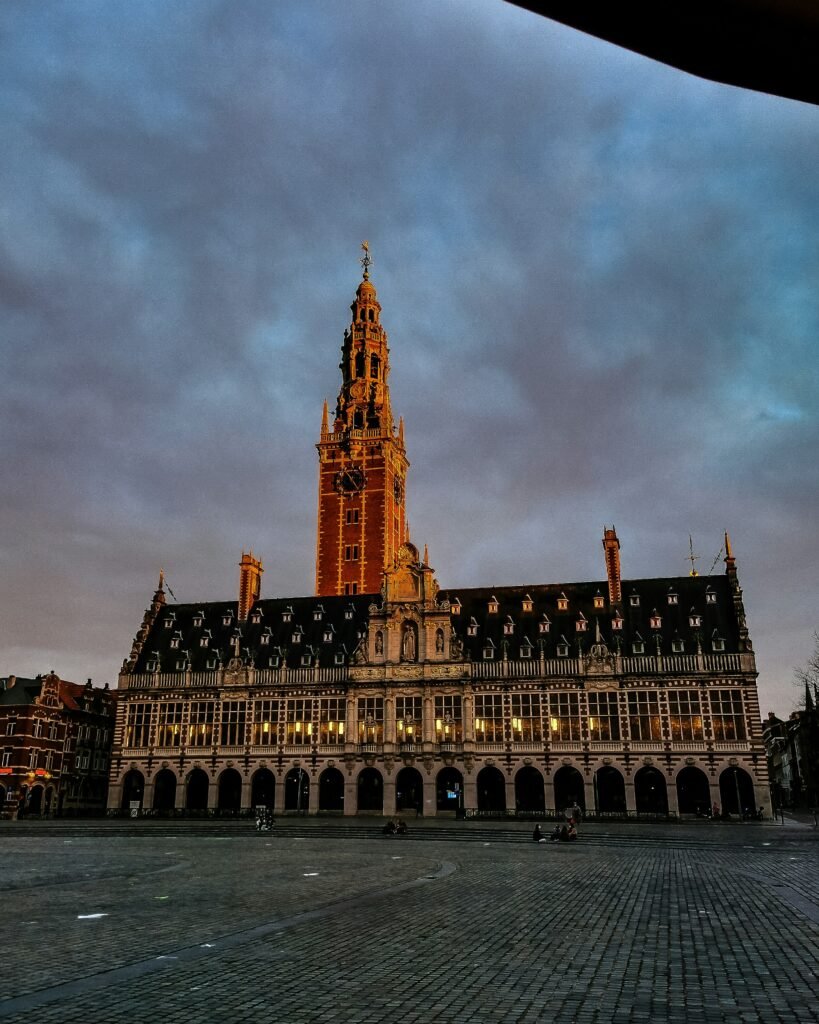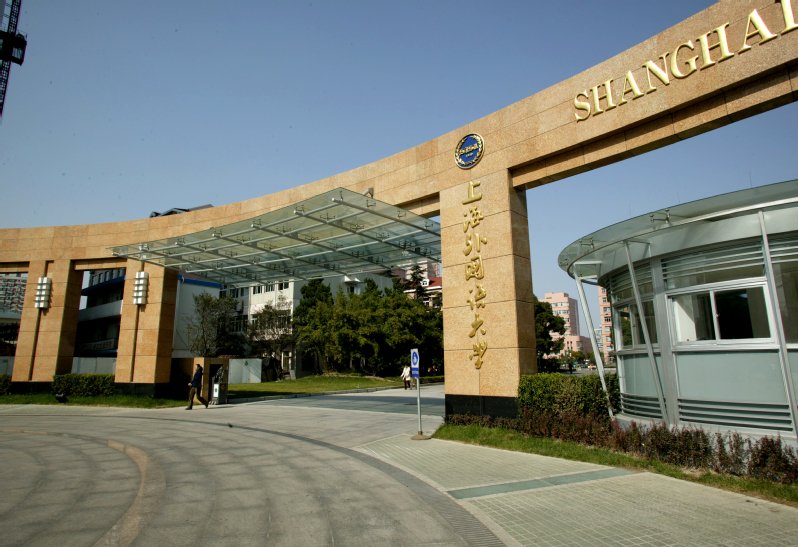

Applications are now open for the Erasmus Mundus EMMIR Scholarship 2027 for international students interested in migration, intercultural relations, development, social sciences and related fields.
The European Master in Migration and Intercultural Relations (EMMIR) is a two-year Erasmus Mundus master’s programme delivered by an international consortium of eight partner institutions across Europe, Africa and Asia.
The new EMMIR Edition 14 covers 2027–2029, with studies beginning in September 2027. Unlike a conventional master’s degree completed at a single university, EMMIR places international mobility at the centre of the programme. Students study in different countries, complete an internship and undertake independent research leading to a master’s thesis.
Applicants can compete for an Erasmus Mundus scholarship, a non-fee-paying study place or a fee-paying study place.
The deadline for applicants seeking an Erasmus Mundus scholarship or a non-fee-paying study place is 20 December 2026 at 23:59 CET.
Erasmus Mundus EMMIR Scholarship 2027 Overview
| Scholarship Details | Information |
|---|---|
| Programme | European Master in Migration and Intercultural Relations (EMMIR) |
| Edition | Edition 14 |
| Study Period | 2027–2029 |
| Degree Level | Master’s |
| Duration | 2 years |
| Semesters | 4 |
| Field | Migration and Intercultural Relations |
| Funding | Erasmus Mundus scholarships are available. |
| First Semester | Oldenburg, Germany |
| Second Semester | Stavanger, Norway |
| Further Mobility | EMMIR partner institutions |
| Consortium | 8 partner institutions across Europe, Africa and Asia |
| Programme Start | September 2027 |
| Scholarship Deadline | 20 December 2026, 23:59 CET |
| Fee-Paying Final Deadline | 15 July 2027 |
| Eligible Applicants | International applicants meeting EMMIR requirements |
What Is the EMMIR Erasmus Mundus Programme?
EMMIR stands for the European Master in Migration and Intercultural Relations.
It is an international master’s programme for students who want to understand migration, mobility and intercultural relations from different academic, geographical and cultural perspectives.
Migration cannot be fully understood through a single country or academic discipline. Therefore, EMMIR examines migration through different political, economic, historical, social and cultural contexts.
The programme combines academic knowledge in migration and intercultural studies with broader professional competencies. Students develop skills in research, communication, problem-solving, cooperation, administration and management.
Furthermore, EMMIR is jointly delivered by eight partner institutions across Europe, Africa and Asia. Students are therefore exposed to different academic traditions and regional perspectives throughout the programme.
This international structure also shapes the classroom experience. Each EMMIR cohort brings together students from different countries, disciplines and professional backgrounds.
EMMIR Programme Structure and International Mobility
International mobility is one of the defining features of EMMIR.
The programme lasts two years and four semesters. Students begin their studies together before progressing through different mobility, internship and research stages.
| Stage | Location/Activity | Main Focus |
|---|---|---|
| Semester 1 | Oldenburg, Germany | Foundation in migration and intercultural relations |
| Semester 2 | Stavanger, Norway | Continued joint academic study |
| Semester 3 | Selected partner institution | Specialisation, mobility and project-based internship |
| Semester 4 | Research and thesis phase | Independent research and master’s thesis |
Students begin the programme together in Oldenburg, Germany.
During the second semester, the entire cohort moves to Stavanger, Norway.
In the third semester, students have greater flexibility to shape their EMMIR experience. They attend a partner university of their choice, complete courses and undertake a project-based internship.
Before the final semester, students participate in a joint proposal colloquium. Supervision groups are then formed to support their research and thesis development.
The fourth semester focuses primarily on completing the master’s thesis.
As a result, applicants should be prepared not only for demanding postgraduate study but also for substantial international mobility.
EMMIR Partner Universities
EMMIR is run through an international consortium involving eight partner institutions in Europe, Africa and Asia.
This structure allows students to examine migration from different geographical and academic perspectives rather than studying the subject solely through a European or single-country lens.
The mobility component is particularly important because migration itself crosses borders. Students experience different academic and social environments while studying the political, cultural, economic and historical dimensions of human mobility.
What Does the Erasmus Mundus EMMIR Scholarship Cover?
Selected applicants to Edition 14 can receive an Erasmus Mundus scholarship.
Under the current Erasmus Mundus Joint Master scholarship structure, selected scholarship holders may receive a monthly contribution of up to €1,400 for the duration of the programme, subject to the funding conditions applicable to the scholarship.
For a 24-month programme, €1,400 per month would amount to up to €33,600 in scholarship support over the two years.
Applicants should, however, distinguish an Erasmus Mundus scholarship from the other types of EMMIR study places.
| Study Route | Funding Situation | Deadline |
|---|---|---|
| Erasmus Mundus Scholarship | Funded place for selected scholarship recipients | 20 December 2026 |
| Non-fee-paying self-funded place | No programme fee, but the student covers other applicable costs. | 20 December 2026 |
| Fee-paying self-funded place | Student finances programme and living costs | Until places are filled |
| Final fee-paying deadline | — | 15 July 2027 |
The official EMMIR announcement confirms that Erasmus Mundus scholarships are available for Edition 14. Applicants who want funding should therefore apply by the December deadline rather than waiting for the later self-funded application period.
Who Can Apply for the EMMIR Scholarship 2027?
EMMIR is designed for applicants with academic backgrounds related to migration and intercultural relations.
Applicants need a first degree, such as a bachelor’s degree or equivalent qualification.
Relevant academic fields include:
| Academic Background | Relevance |
|---|---|
| Social Sciences | Relevant |
| History | Relevant |
| Cultural Studies | Relevant |
| Educational Sciences | Relevant |
| Law | Relevant |
| Economics | Relevant |
| Development Studies | Relevant |
| Journalism | Relevant |
| Other related disciplines | May be considered depending on relevance |
Applicants from other disciplines should clearly demonstrate how their education, research, employment or other experiences connect with migration studies and intercultural relations.
EMMIR Academic Requirements
Holding a bachelor’s degree alone is not sufficient.
The final grade of the first degree must be at least C+ or its equivalent, supported by appropriate academic documentation.
Applicants must also demonstrate knowledge of:
- Migration studies
- Intercultural relations
- Empirical methods
Evidence can come from undergraduate modules, examination results, academic papers, essays or other relevant academic work.
Additionally, preference may be given to qualified applicants with relevant professional experience.
Therefore, your application should demonstrate more than a general desire to study in Europe. It should show a clear academic or professional connection to the subject of migration.
Can You Apply If Your Degree Is More Than Five Years Old?
Yes, but there is an additional consideration.
EMMIR states that an applicant’s most recent degree should normally not be older than five years.
If your last degree was obtained more than five years ago, you should explain in your Statement of Purpose why you have decided to return to university.
Applicants in this situation should use their professional experience and recent activities to demonstrate that EMMIR fits logically into their current career or academic development.
Can You Apply If You Already Have a Master’s Degree?
Yes.
However, EMMIR itself leads to a master’s degree. Therefore, applicants who already hold a master’s qualification are expected to convincingly justify why they want to pursue another master’s degree.
Your explanation should demonstrate what EMMIR provides that your previous postgraduate education did not.
For example, this could involve a new specialisation in migration studies, a shift in professional direction or a specific research interest that requires interdisciplinary and international training.
EMMIR English Language Requirements
English proficiency is required because EMMIR is taught in English.
Applicants whose native language is not English or whose undergraduate studies were not conducted in English generally need to demonstrate sufficient English proficiency by the application deadline.
However, a standardised English test is not the only possible way to satisfy this requirement.
Applicants may demonstrate English proficiency through:
- An accepted English-language competency test
- Documented evidence that previous higher education was completed in English
- Documented professional experience in an English-language working environment
- An approved English-language proficiency waiver
EMMIR states that language certificates are generally considered valid for two years.
Therefore, EMMIR should not simply be described as a “No IELTS Required” scholarship. English proficiency remains mandatory, although applicants may have different ways of proving it.
Who May Request an English Language Waiver?
Certain non-native English speakers may request an English-language proficiency waiver.
These may include applicants from countries where English is one of several official languages.
Applicants may also qualify based on previous higher education completed in English or relevant professional experience in an organisation where English was the official working language.
Other waiver categories include applicants who completed qualifying education in countries such as Australia, Canada, Ireland, the United Kingdom, the United States or New Zealand.
Nevertheless, the Consortium Committee reserves the right to request additional evidence of English proficiency.
Applicants relying on a waiver should therefore prepare appropriate supporting documents rather than assuming that an exemption will automatically be granted.
Special Requirement for Native English Speakers
Applicants whose native language is English have an additional language consideration.
They must demonstrate proficiency in a second language relevant to migration studies by the application deadline.
This requirement reflects the multilingual and intercultural nature of EMMIR.
EMMIR Selection Criteria
Applications are evaluated by the Consortium Committee Selection Board.
Meeting the minimum requirements does not guarantee admission or scholarship funding.
The Selection Board considers several factors:
| Selection Factor | What Is Considered |
|---|---|
| Academic qualifications | Relevance and level of previous education |
| Research/professional experience | Relevance and quality of previous experience |
| Motivation | Reasons for pursuing EMMIR |
| Languages | Second or third-language proficiency |
| Migration knowledge | Previous engagement with migration-related subjects |
| Academic preparation | Evidence of research and empirical-method skills |
Applicants who fail to provide the necessary documentation may be excluded from further consideration.
Consequently, candidates should prepare their applications carefully and avoid waiting until the final days before the deadline.
Documents Required for the EMMIR Scholarship 2027
Applicants should prepare the documents requested through the official application system.
These generally include:
- Curriculum Vitae (CV)
- Statement of Purpose
- Bachelor’s degree certificate or equivalent qualification
- Complete academic transcripts
- Documentation showing the final grade of the first degree
- Evidence of English-language proficiency where required
- Evidence of relevant academic knowledge or professional experience
- Additional documents requested through the EMMIR application system
Documents may need to be certified or officially translated depending on their language and format.
Accepted applicants may later be required to send certified copies of their application documents for verification.
Importantly, an initial notification of admission does not complete the verification process. Discrepancies or irregularities discovered during document verification can result in cancellation of admission.
How to Write a Strong EMMIR Statement of Purpose
The Statement of Purpose is particularly important because EMMIR evaluates an applicant’s motivation and academic preparation.
Avoid writing a generic scholarship essay focused mainly on wanting to study abroad.
Instead, establish a clear connection between your previous studies, experience, migration-related interests and future objectives.
For example, an economics graduate might discuss labour migration, remittances, migration and development or migrant integration into labour markets.
A law graduate could focus on migration law, refugee protection, citizenship or human rights.
Similarly, a journalism graduate might explore migration narratives, media representation, intercultural communication or misinformation surrounding migration.
Applicants whose previous degree is more than five years old should also explain why they are returning to university.
Likewise, applicants who already hold a master’s degree need to justify why another master’s qualification is necessary.
A strong Statement of Purpose should therefore answer three broad questions: What have you already done? Why is EMMIR the appropriate next step? What do you intend to do with the training afterwards?
How to Apply for the Erasmus Mundus EMMIR Scholarship 2027
Applications are submitted online through the application platform used by the EMMIR consortium.
Applicants should:
- Review the EMMIR entry requirements carefully.
- Confirm that their first degree satisfies the academic requirements.
- Gather their degree certificate and academic transcripts.
- Prepare evidence of knowledge in migration studies, intercultural relations and empirical methods.
- Determine how they will satisfy the English-language requirement.
- Prepare an academic and professional CV.
- Write a programme-specific Statement of Purpose.
- Arrange certified translations where required.
- Complete the online application form.
- Select the appropriate scholarship or study-place category.
- Upload all required documents.
- Review the application carefully before submitting it.
Applicants seeking Erasmus Mundus funding should complete the process before 20 December 2026 at 23:59 CET.
EMMIR Scholarship 2027 Application Deadline
The application deadline depends on the type of study place being requested.
| Applicant Category | Deadline |
|---|---|
| Erasmus Mundus scholarship applicants | 20 December 2026, 23:59 CET |
| Non-fee-paying self-funded applicants | 20 December 2026, 23:59 CET |
| Fee-paying self-funded applicants | Until available places are assigned |
| Final deadline for fee-paying places | 15 July 2027 |
| Edition 14 begins. | September 2027 |
Applicants seeking funding should therefore pay particular attention to 20 December 2026.
The July deadline is for fee-paying self-funded places and should not be confused with the Erasmus Mundus scholarship deadline.
Can Applicants From Africa Apply for EMMIR?
Yes.
EMMIR is an international programme involving partner institutions across Europe, Africa and Asia.
Applicants should focus on satisfying the programme’s academic and language requirements rather than assuming that Erasmus Mundus programmes are restricted to European applicants.
For applicants whose academic or professional interests involve forced migration, refugees, displacement or humanitarian response, our guide to the Erasmus Mundus NOHA Scholarship 2027 is also worth exploring. NOHA focuses on international humanitarian action and provides another relevant Erasmus Mundus pathway for students interested in global humanitarian challenges.
Can Final-Year Bachelor’s Students Apply?
Applicants should pay close attention to EMMIR’s requirement concerning completion of the first degree.
The programme expects applicants to provide documentation of a final first degree by the required deadline. A transcript confirming that the applicant has taken all examinations necessary to finish the programme may be accepted, provided the required final grade is documented.
Therefore, students who are still completing their undergraduate programme should confirm that they can provide the required evidence within the application timeline.
Can Previous Erasmus Mundus Scholarship Holders Apply?
Applicants who have already benefited from an Erasmus Mundus Joint Master scholarship are not eligible to receive another EMJM scholarship.
This is particularly important for candidates who previously completed another Erasmus Mundus Joint Master with EU scholarship funding.
Is the Erasmus Mundus EMMIR Scholarship 2027 Open?
Yes.
The official EMMIR programme announced in October 2026 that applications for Edition 14 (2027–2029) are open.
The new cohort begins its studies in September 2027.
Candidates seeking an Erasmus Mundus scholarship should submit their applications by 20 December 2026 at 23:59 CET.
Is It Hard to Get the EMMIR Erasmus Mundus Scholarship?
Erasmus Mundus scholarships are competitive because applicants compete internationally for funded places.
For EMMIR specifically, the Selection Board considers the relevance and level of academic qualifications, research or professional experience, motivation and language proficiency.
Therefore, meeting the minimum C+ requirement should not be interpreted as guaranteeing scholarship selection.
Strong candidates should demonstrate a convincing connection between their previous education, experience, migration interests and future plans.
Is There an Age Limit for the EMMIR Scholarship?
The published EMMIR entry requirements reviewed for this application cycle do not specify a general maximum age limit.
Instead, the programme focuses on academic qualifications, subject preparation, experience, motivation and language abilities.
However, applicants whose most recent degree is more than five years old should explain in their Statement of Purpose why they have chosen to return to university.
Why Consider EMMIR?
EMMIR may be particularly attractive to students who want to build careers connected to migration, intercultural relations and international development.
The programme combines academic training with international mobility, practical experience and independent research.
Possible professional areas include:
- Migration research
- International organisations
- Government and public policy
- NGOs
- Humanitarian organisations
- Refugee and migration services
- International development
- Intercultural education
- Human rights organisations
- Migration policy and governance
- Research institutions
- Academia
The mobility structure also enables students to encounter different migration contexts rather than studying the subject exclusively from one national perspective.
Students comparing several Erasmus Mundus opportunities can also explore the Erasmus Mundus EMABG Scholarship 2027. Applicants looking for programmes in a different academic field may also consider the Neurasmus Erasmus Mundus Scholarship 2027.
Frequently Asked Questions About EMMIR 2027
What is EMMIR?
EMMIR is the European Master in Migration and Intercultural Relations, a two-year Erasmus Mundus master’s programme run by a consortium of eight partner institutions across Europe, Africa and Asia.
When will EMMIR 2027 begin?
EMMIR Edition 14 is scheduled to begin in September 2027 and continue until 2029.
What is the EMMIR scholarship deadline?
Applicants seeking an Erasmus Mundus scholarship must apply by 20 December 2026 at 23:59 CET.
What is the deadline for non-fee-paying study places?
Applicants seeking a non-fee-paying self-funded study place must also apply by 20 December 2026 at 23:59 CET.
What is the deadline for fee-paying applicants?
Applications for fee-paying self-funded places remain open until the available places are assigned, with 15 July 2027 as the final deadline.
What degree do I need for EMMIR?
Applicants need a first degree such as a bachelor’s degree or equivalent qualification in a field related to migration studies. Examples include social sciences, history, cultural studies, educational sciences, law, economics, development studies and journalism.
What minimum grade is required?
The final grade of the applicant’s first degree must be at least the equivalent of C+.
What previous knowledge does EMMIR require?
Applicants are expected to demonstrate knowledge of migration studies, intercultural relations and empirical methods through previous studies, academic work or relevant experience.
Is IELTS compulsory for EMMIR?
Not necessarily. English proficiency is required, but applicants may be able to demonstrate it through an accepted test, qualifying previous education, professional experience or an approved waiver.
Can I apply if I already have a master’s degree?
Yes. However, you must convincingly explain why you want to pursue another master’s degree.
Can previous Erasmus Mundus scholars apply for another scholarship?
Applicants who have previously benefited from an Erasmus Mundus Joint Master scholarship are not eligible for another EMJM scholarship.
Does EMMIR involve studying in several countries?
Yes. International mobility is central to EMMIR. Students begin in Oldenburg, Germany, continue in Stavanger, Norway, and later undertake additional mobility through the EMMIR partner network.
Final Thoughts
The Erasmus Mundus EMMIR Scholarship 2027 provides an opportunity for students interested in migration, intercultural relations, development and related social-science fields to pursue an international master’s programme across several countries.
However, EMMIR is a specialised programme. Applicants need to demonstrate more than general interest in obtaining a European scholarship. They should show relevant academic preparation, knowledge of migration and intercultural relations, familiarity with empirical methods and a convincing reason for choosing the programme.
Therefore, prospective applicants should begin preparing early. Academic records, language evidence, the CV and particularly the Statement of Purpose should work together to present a coherent application.
Applications for EMMIR Edition 14 (2027–2029) are currently open, and applicants seeking the Erasmus Mundus scholarship must submit their applications by 20 December 2026 at 23:59 CET.
Official Links
EMMIR Official Website:
https://www.emmir.org/
EMMIR Applications:
https://www.emmir.org/applications