The DocNomadsPLUS Erasmus Mundus Scholarship 2027 offers aspiring documentary filmmakers an opportunity to pursue a two-year master’s degree across Portugal, Lithuania and Belgium. Selected students receive a full tuition waiver and a monthly allowance of €1,400, while studying at three European institutions with established programmes in film and the arts.
Applications for the September 2027 intake opened on 20 October 2026, and the scholarship application deadline is 20 January 2027.
Unlike many master’s programmes that assess applicants primarily through grades and academic qualifications, DocNomadsPLUS places considerable weight on creative ability. Candidates must produce an original three-minute documentary, record a motivation video and submit a sample of their previous filmmaking work.
Applicants from film, media and communication backgrounds are particularly encouraged to apply. However, graduates from other disciplines may also be considered if they can demonstrate convincing artistic potential.
This guide explains the scholarship funding, participating universities, admission requirements, compulsory filmmaking assignments, selection criteria and application process. It also examines some of the practical considerations that applicants should understand before committing to a programme involving study in three different countries.
Students exploring other international master’s opportunities may also be interested in the GLOBE Erasmus Mundus Scholarship 2027.
DocNomadsPLUS Erasmus Mundus Scholarship 2027 Overview
DocNomadsPLUS is an Erasmus Mundus Joint Master’s programme designed to train documentary filmmakers through a combination of academic study, artistic research and practical film production.
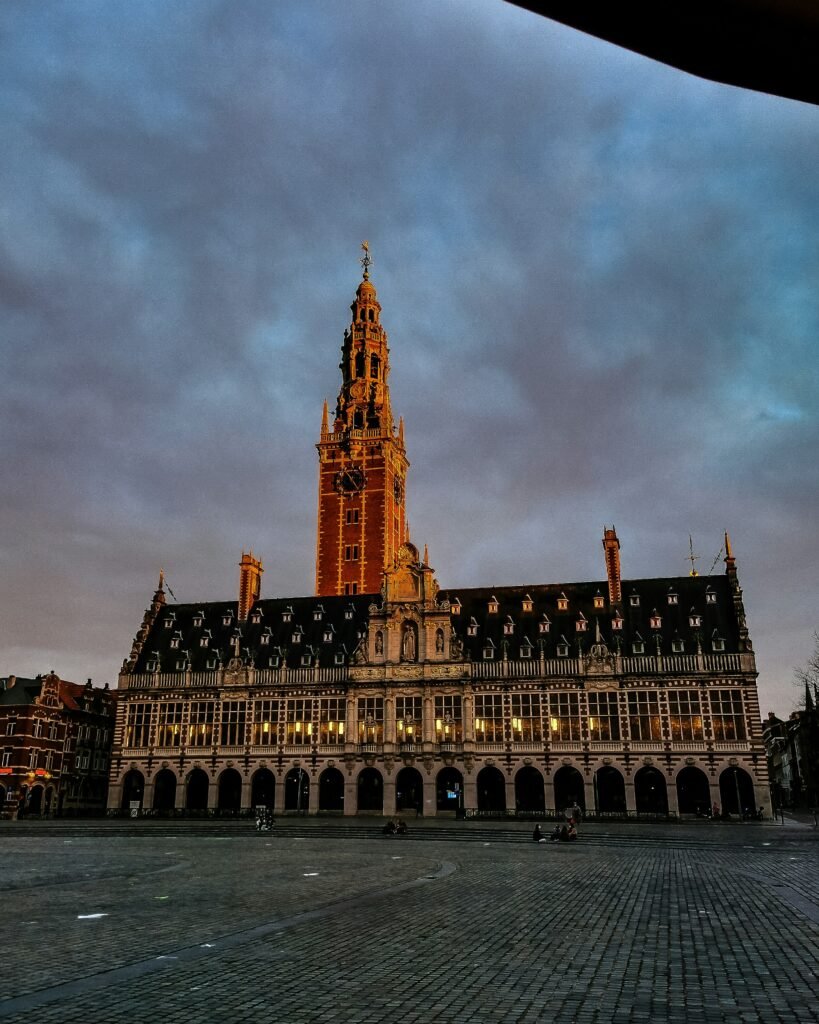
The programme is delivered jointly by Universidade Lusófona in Portugal, the Lithuanian Academy of Music and Theatre in Lithuania, and LUCA School of Arts in Belgium.
Students spend their first three semesters at the partner institutions and complete their graduation project during the fourth semester at one of the three locations.
The programme awards 120 ECTS credits and leads to a multiple Master of Arts degree in Documentary Filmmaking.
Scholarship at a Glance
| Scholarship Details | Information |
|---|---|
| Scholarship name | DocNomadsPLUS Erasmus Mundus Scholarship 2027 |
| Programme | Erasmus Mundus Joint Master in Documentary Filmmaking |
| Study countries. | Portugal, Lithuania and Belgium |
| Degree level | Master’s |
| Duration | Two years, 120 ECTS |
| Language | English |
| Study mode | Full-time, on campus |
| Monthly scholarship | €1,400 |
| Maximum allowance over 24 months | €33,600 |
| Tuition | Fully waived for Erasmus Mundus scholarship recipients |
| Tuition for self-funded students | €15,000 for the complete programme |
| Eligible applicants | Candidates worldwide who meet admission requirements |
| Applications opened | 20 October 2026 |
| Scholarship deadline | 20 January 2027 |
| The programme begins. | September 2027 |
| Application method | Official online application system |
The consortium expects to enrol approximately 24 students per cohort, although this is not a binding number. Only a minority of places carry Erasmus Mundus scholarship funding.
Consequently, meeting the academic requirements does not guarantee either admission or financial support.
DocNomadsPLUS Scholarship Benefits and Financial Support
For successful Erasmus Mundus scholarship recipients, the programme combines a tuition waiver with monthly financial support. However, applicants should understand precisely which costs are covered and which expenses they must manage themselves.
Full Tuition Fee Waiver
The programme’s tuition fees amount to €15,000 for four semesters.
Students awarded an Erasmus Mundus scholarship do not pay these participation costs.
The tuition arrangements include access to the programme’s classes and examinations, enrolment at the consortium institutions, diploma issuance, administrative support and insurance meeting Erasmus+ requirements.
Self-funded students are responsible for the €15,000 participation fee, which the consortium collects in instalments.
Monthly Living Allowance of €1,400
Scholarship recipients receive €1,400 per month during the funded study period.
Over 24 months, the maximum total is:
€1,400 × 24 months = €33,600
This allowance contributes towards living expenses, travel and visa costs. It is not an additional payment on top of a separate guaranteed travel grant.
Students will need to use their scholarship income to manage accommodation, meals, local transport and other personal expenses.
Travel and Visa Expenses
Studying in three countries is one of the programme’s greatest academic attractions, but it also creates financial and logistical responsibilities.
Students must relocate between Lisbon, Vilnius and Brussels during their studies.
The consortium does not include flights, mobility-related travel, passports or visa expenses within the tuition fee. Erasmus Mundus scholarship recipients are expected to meet these expenses using their available funding.
For international students, especially those travelling from outside Europe, this distinction is important. An applicant may need money for initial travel, housing deposits or visa-related expenses before settling into the programme.
Health Insurance
The participation arrangements include insurance that meets Erasmus+ programme requirements.
This applies to both scholarship recipients and self-funded students.
Applicants should still review the policy conditions, including coverage limitations and any personal medical expenses that may fall outside the insurance provisions.
Accommodation and Estimated Living Costs
DocNomadsPLUS does not promise free accommodation as a separate scholarship benefit.
The consortium estimates that students may require approximately €600–€1,000 per month for living expenses.
Actual costs will depend on the city, accommodation arrangements and individual spending habits.
For example, a student sharing accommodation may have different monthly expenses from someone renting a private apartment. Housing deposits, travel between countries and filmmaking-related personal purchases may also affect the budget.
The €1,400 monthly allowance provides meaningful support, but recipients should still prepare a realistic financial plan.
Scholarship Funding Summary
| Expense | Erasmus Mundus Scholarship Coverage |
|---|---|
| Tuition fees | Fully waived |
| Monthly living allowance | €1,400 |
| Total allowance over 24 months | Up to €33,600 |
| Health insurance | Included under programme arrangements |
| Flights and international travel | No separate guaranteed payment; allowance contributes to costs. |
| Visa and travel documents | Paid from available funding |
| Accommodation | Not provided separately |
| Personal living expenses | Managed through monthly allowance |
| Study materials and personal equipment | Additional expenses may apply. |
Who Can Apply for the DocNomadsPLUS Erasmus Mundus Scholarship 2027?
The programme welcomes applications from candidates around the world who meet its academic, language and artistic requirements.
Applicants from Cameroon, Nigeria, Ghana, Kenya, India, Pakistan and other countries may apply, provided they satisfy the admission conditions.
Nationality alone does not guarantee eligibility or selection.
Academic Qualifications
Applicants must hold a recognised first-cycle higher education qualification that provides access to master’s-level study.
The minimum academic requirement corresponds to Level 6 of the European Qualifications Framework.
The detailed admission guidance primarily identifies graduates in:
- Film Studies
- Audiovisual Arts
- Media Studies
- Communication Studies
Applicants from other academic disciplines may also be considered if they submit a convincing artistic portfolio.
A clarification worth noting: The programme overview refers to a bachelor’s qualification in design, while the detailed application guidance identifies film, audiovisual arts and media or communication studies, and explicitly allows other disciplines. Applicants with unusual academic backgrounds should therefore follow the detailed admissions guidance and contact the consortium if their eligibility remains uncertain.
Can Applicants Without a Filmmaking Degree Qualify?
Yes, a filmmaking degree is not an absolute requirement under the detailed admissions guidance.
However, candidates from unrelated disciplines must demonstrate artistic potential through their submitted work.
Consider a graduate in sociology who has independently produced short documentaries about migration, urban communities or social inequality. Their academic qualification may not be in filmmaking, but their portfolio could demonstrate the observational ability, storytelling skills and interest in social reality that the programme values.
Similarly, applicants with backgrounds in journalism, anthropology or communication may have relevant experience documenting people, communities and cultural practices.
The decisive question is whether their application demonstrates genuine potential to develop as documentary filmmakers.
A degree from another discipline should not be treated as an automatic advantage or disadvantage. The consortium evaluates each applicant’s qualifications and artistic submissions.
Can Final-Year Students Apply?
Yes.
Students who have not yet graduated may submit an official statement from their institution confirming their final-year enrolment, expected graduation date and qualification.
The detailed application requirements state that candidates must graduate by 31 August 2027.
Applicants who have already completed their studies but are awaiting their final diploma may submit a provisional graduation certificate.
English Language Requirements
DocNomadsPLUS is taught entirely in English.
Applicants must demonstrate at least B2 proficiency in spoken and written English under the Common European Framework of Reference for Languages.
The consortium accepts several recognised English-language tests.
| English Language Test | Minimum Score |
|---|---|
| IELTS Academic | Overall 6.5, with no component below 5.5 |
| TOEFL iBT | 79 |
| Duolingo English Test | 110 |
| Cambridge English Qualifications | 170 on the Cambridge English Scale |
| ITACE for Students | CEFR B2 |
The ITACE for Students test can only be taken in Belgium.
Validity of English Certificates
English-language certificates must have been issued within five years before the application deadline.
For the 2027 intake, certificates issued before 20 January 2022 are not accepted.
Candidates should verify the issue date of their certificates before preparing their applications.
Who Is Exempt from an English Test?
Applicants may qualify for an exemption if they hold a secondary or higher education diploma from an English-taught programme in one of the following locations:
- Australia
- English-speaking Canada
- Ireland
- New Zealand
- United Kingdom
- United States
Important for African applicants: Completing a degree in English in Cameroon, Nigeria, Ghana or another country outside the specified exemption list does not automatically qualify an applicant for an English-language test exemption.
The consortium explicitly states that it does not accept Medium of Instruction letters as proof of English proficiency.
An applicant who studied entirely in English but does not meet the listed exemption conditions must submit an accepted test certificate.
The admissions committee may also assess candidates’ practical English communication skills during the interview.
Additional Erasmus Mundus Scholarship Conditions
Applicants seeking Erasmus Mundus funding must satisfy the programme’s admission requirements and the relevant scholarship rules.
In particular, candidates must:
- Hold a recognised higher education qualification or accepted equivalent.
- Not have previously received an Erasmus Mundus Joint Master scholarship.
- Not receive another EU-funded scholarship for the same Erasmus Mundus programme during the funded study period.
- Submit a complete application before the scholarship deadline.
- Meet the consortium’s academic, language and selection requirements.
Candidates with dual nationality must specify the nationality under which they are applying for the scholarship.
The scholarship is awarded competitively on merit.
Participating Universities and Study Structure
One distinctive feature of DocNomadsPLUS is its compulsory mobility across three European countries.
Rather than spending the entire master’s programme at one institution, students experience different filmmaking traditions, academic environments and cultural settings.
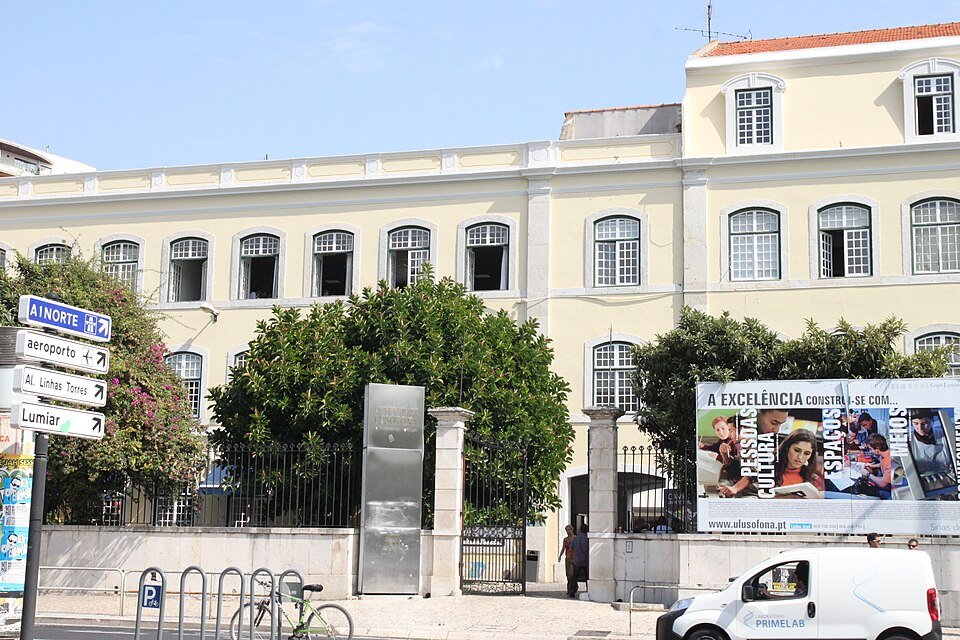
Semester 1: Universidade Lusófona, Portugal
The first semester takes place at Universidade Lusófona in Lisbon.
Students begin developing the technical and artistic foundations of documentary filmmaking, including camera work, sound, editing, documentary aesthetics and artistic research.
Coursework combines filmmaking practice with cinema and cultural studies.
The semester also introduces collaborative production and the professional responsibilities involved in documentary work.
Semester 2: Lithuanian Academy of Music and Theatre, Lithuania
Students move to the National Film School (KIMO) of the Lithuanian Academy of Music and Theatre in Vilnius.
The second semester builds on the technical foundation established in Portugal.
Particular attention is given to visual storytelling, creative research, documentary practice and the professional filmmaking environment.
Students continue developing original film projects while exploring different ways of representing people, places and social experiences.
Semester 3: LUCA School of Arts, Belgium
The third semester takes place at LUCA School of Arts in Brussels.
The curriculum explores contemporary documentary practices, sound design, artistic expression and professional filmmaking.
Students develop more advanced approaches to film production while continuing their theoretical and practical training.
Semester 4: Graduation Film Project
During the final semester, students return to one of the three partner locations to complete their graduation project.
The project consists of:
- An original graduation documentary film worth 20 ECTS.
- A graduation essay involving academic writing and artistic research worth 10 ECTS.
Throughout the two-year programme, students create at least four individual films, alongside additional collaborative exercises.
Successful graduates receive a multiple Master of Arts degree in Documentary Filmmaking, with the three partner institutions currently issuing separate diplomas.
Study Locations at a Glance
| Semester | Institution | Location | Main Focus |
|---|---|---|---|
| 1 | Universidade Lusófona | Lisbon, Portugal | Filmmaking foundations and documentary aesthetics |
| 2 | Lithuanian Academy of Music and Theatre | Vilnius, Lithuania | Visual storytelling and creative research |
| 3 | LUCA School of Arts | Brussels, Belgium | Contemporary documentary practice and sound design |
| 4 | One of the partner institutions | Portugal, Lithuania or Belgium | Graduation film and artistic research essay |
Required Documents for the 2027 Application
Applicants must submit their academic and personal documents through the official online application system.
The main requirements include:
- Curriculum Vitae: A summary of previous studies, relevant experience and artistic or filmmaking activities.
- Bachelor’s degree certificate: A digital copy of the qualification, provisional graduation certificate or acceptable final-year statement.
- Academic transcript or diploma supplement: Evidence of completed courses and grades.
- Passport or identity document: A copy of an international passport or EU identity card.
- English-language evidence: An accepted test certificate or qualifying exemption.
- Recent photograph: A clear headshot against a white background.
- Three compulsory video assignments: An original documentary, motivation video and portfolio film.
Degree certificates issued in languages other than English, Dutch, French or German require an official translation into one of those languages.
Legalisation of original diploma documents is not required during the initial application stage, although further verification may be requested later.
Applicants should prepare readable scans and ensure that the information on their documents is consistent.
Three Compulsory Video Assignments
The filmmaking assignments are central to the DocNomadsPLUS selection process.
Unlike a conventional master’s application in which academic transcripts and a motivation letter may dominate the evaluation, this programme asks applicants to demonstrate their artistic abilities directly.
Assignment 1: Original Documentary Film — Three Minutes
Applicants must produce an original documentary on the theme:
“Around Me, in the Here and Now.”
The film should explore real people, places or situations through a personal cinematic approach.
The consortium expects candidates to demonstrate curiosity about social reality, attention to characters and places, and an original artistic perspective.
Applicants must shoot and edit the documentary themselves.
Several technical rules apply:
- The film must be three minutes long.
- Additional music, sound effects and video effects are not permitted.
- Voice-over is allowed if it uses the applicant’s own voice and mother tongue.
- English subtitles must be embedded, even when the film is spoken in English.
- The film must be uploaded through an unlisted, password-free link.
- Publicly accessible submissions result in automatic disqualification.
The official FAQ also identifies prohibited effects such as time-lapse, slow motion, fast motion, cross dissolves, filters, black-and-white effects, split screens and graphic animation.
Applicants should review these restrictions before filming, rather than attempting to remove prohibited effects after completing their production.
How to Approach the Documentary Assignment
A strong submission does not necessarily require an expensive camera, elaborate scenery or a complicated storyline.
What matters is the applicant’s ability to observe reality and communicate something meaningful through film.
For example, an applicant might document the daily routine of a street vendor, the work of a local craftsperson or a community activity that reveals something about everyday life.
These are illustrative ideas, not official project suggestions. The subject should emerge from the applicant’s own interests and surroundings.
A useful approach is to identify one specific situation, consider why it matters and develop a visual narrative around it.
The three-minute limit means applicants must make careful decisions about what to include. A focused documentary with a clear perspective may communicate more effectively than an ambitious project attempting to address too many subjects.
Assignment 2: Motivation Video — Maximum One Minute
Applicants must record a short video answering three questions:
- What does documentary mean to you?
- Why are you applying to DocNomadsPLUS?
- What do you expect from the master’s programme?
The video should demonstrate a clear understanding of the programme and a genuine interest in documentary filmmaking.
Candidates should avoid relying entirely on generic statements about wanting to study in Europe or gain international exposure.
Instead, they can explain how their previous experiences, artistic interests or filmmaking ambitions connect with the training offered by DocNomadsPLUS.
The motivation video must also be submitted through an unlisted, password-free link.
Assignment 3: Portfolio Video — Maximum Ten Minutes
Applicants must submit a previous film they have made.
The portfolio video may be a complete film or an excerpt, provided it does not exceed ten minutes.
The film may belong to any genre, including fiction.
It must contain English subtitles and credits identifying everyone involved in the production and their respective roles.
Applicants should choose work that accurately represents their contribution and artistic abilities.
The consortium notes that the previous film may be viewed when necessary to support selection decisions.
Video Submission Checklist
| Requirement | Application Film | Motivation Video | Portfolio Video |
|---|---|---|---|
| Duration | Three minutes | Maximum one minute | Maximum ten minutes |
| Original work | Made specifically for the application | Recorded by applicant | Previous work |
| Main purpose | Demonstrate documentary vision | Explain motivation | Show previous filmmaking experience |
| English subtitles | Required | Follow official submission instructions | Required |
| Unlisted video link | Required | Required | Required |
| Password-free access | Required | Required | Required |
| Production restrictions | Strict rules on effects and sound | Follow official instructions | Any film genre accepted |
How DocNomadsPLUS Selects Scholarship Candidates
Understanding the selection process can help applicants allocate their preparation time more effectively.
The consortium first checks whether applications are complete and whether candidates meet the formal eligibility requirements.
Eligible applications are then evaluated by a selection committee.
Initial Evaluation: 30 Points
The official scoring system assigns a maximum of 30 points across three components.
| Evaluation Component | Maximum Points | Share of Initial Score |
|---|---|---|
| Original documentary application film | 20 | 66.7% |
| Motivation video | 5 | 16.7% |
| Previous studies and relevant experience (CV) | 5 | 16.7% |
| Total | 30 | 100% |
This breakdown reveals something important: the original three-minute documentary accounts for two-thirds of the initial application score.
Academic qualifications and previous experience remain relevant, but the programme gives substantially greater weight to demonstrated artistic potential.
An applicant with excellent grades but a weak documentary submission may therefore be less competitive than their academic record alone suggests.
Conversely, someone from a less conventional academic background may have an opportunity to demonstrate their strengths through filmmaking.
The scoring system does not mean that formal admission requirements can be ignored. Candidates must first satisfy the eligibility checks.
Online Selection Interview
Based on the initial ranking, at least 50 candidates are invited for first-round online interviews.
Each interview is allocated approximately 15 minutes.
The committee considers whether applicants can:
- Critically discuss their original documentary and other artistic work.
- Demonstrate familiarity with documentary film culture.
- Communicate effectively in English.
- Explain their motivation and interpersonal suitability for the programme.
Applicants should be prepared to discuss the creative decisions behind their film.
For example, they may need to explain why they selected a particular subject, how they approached filming real people or what they learned from the production process.
Being able to reflect thoughtfully on one’s work is likely to be more valuable than memorising a generic interview script.
Final Selection
Following the interviews, the committee establishes a final artistic ranking.
Where candidates have equal merit, the programme may give preference to applicants from countries not yet represented in DocNomadsPLUS or to candidates from minority or underprivileged backgrounds.
The consortium then communicates admission and scholarship decisions according to the published selection timeline.
How to Apply for the DocNomadsPLUS Erasmus Mundus Scholarship 2027
Applications must be submitted through the official DocNomadsPLUS online application system.
Step 1: Review the Admission Requirements
Read the official eligibility rules, scholarship conditions and filmmaking assignment instructions.
Check that your degree, English-language evidence and artistic background satisfy the programme’s requirements.
Step 2: Prepare Your Academic Documents
Collect your degree certificate or acceptable provisional documentation, academic transcript, CV, identification and English-language evidence.
Arrange official translations where required.
Step 3: Produce Your Application Documentary
Create the original three-minute film using the specified theme and technical requirements.
Pay particular attention to the restrictions on added sound, music and video effects.
Because this assignment carries 20 of the 30 initial evaluation points, it deserves substantial preparation time.
Step 4: Record Your Motivation Video
Prepare a one-minute response addressing all three official questions.
Connect your motivation to your filmmaking interests and the particular learning opportunities offered by the programme.
Step 5: Select Your Portfolio Film
Choose a previous film or excerpt demonstrating your abilities.
Ensure that the duration, subtitles and credits meet the published requirements.
Step 6: Complete the Online Application
Enter your personal and academic information in the official application system.
Upload the required documents and provide the video links.
Indicate whether you are applying for an Erasmus Mundus scholarship and whether you wish to be considered for a self-funded place if you do not receive scholarship funding.
Step 7: Review and Submit Before the Deadline
Check all uploaded documents, contact details and video links.
Make sure your application film is unlisted rather than publicly accessible.
Submit the complete application by 20 January 2027 if you want to be considered for Erasmus Mundus funding.
Step 8: Prepare for the Interview
Shortlisted applicants should prepare to discuss their films, artistic interests and motivation.
First-round interviews are scheduled for 15–19 March 2027.
Candidates should monitor their email and follow any additional instructions issued by the consortium.
Application Deadlines and Selection Timeline
The first application round covers both Erasmus Mundus scholarship applicants and self-funded candidates.
| Application Stage | Date |
|---|---|
| Applications open | 20 October 2026 |
| Scholarship and first-round application deadline | 20 January 2027 |
| First-round interviews | 15–19 March 2027 |
| Successful and waitlisted applicants notified | By 31 March 2027 |
| Unsuccessful applicants notified | By 30 April 2027 |
| Possible second round for self-funded places | March 2027, subject to availability |
| Possible second-round interviews | April 2027 |
| Programme begins | September 2027 |
Is There a Second Application Round?
A second round may open in March 2027 if places remain available.
However, it is exclusively for self-funded candidates.
Applicants seeking an Erasmus Mundus scholarship must apply during the first round, which closes on 20 January 2027.
Waiting for a possible second round would therefore mean losing the opportunity to compete for Erasmus Mundus funding for this intake.
Practical Advice for Applicants
Prioritise the Documentary Film
The selection criteria make clear that artistic potential is central to the first evaluation stage.
Applicants should invest time in choosing a meaningful subject, planning the visual narrative and reviewing their footage.
Technical compliance matters too. A creative film that violates the submission rules may fail before the committee can properly assess its artistic strengths.
Understand the Difference Between Admission and Funding
The programme accepts a limited cohort, and only a minority of places carry Erasmus Mundus scholarships.
Applicants who indicate an interest in self-funded admission may still be considered for a place even if they do not receive scholarship funding.
However, they should carefully assess whether they can afford the €15,000 tuition and associated living and mobility expenses.
Prepare for Three International Relocations
Moving between Portugal, Lithuania and Belgium provides valuable cultural and professional exposure.
It also requires practical planning.
Students should anticipate changes in housing arrangements, transport expenses and administrative procedures throughout the programme.
Be Realistic About English-Language Evidence
The English-language exemption rules are specific.
Applicants should not assume that an English-taught degree automatically removes the need for IELTS, TOEFL, Duolingo or another accepted qualification.
If an applicant does not meet the exemption criteria, they should arrange a recognised test early enough to receive a valid result before the application deadline.
Explore Related Erasmus Mundus Opportunities
Applicants interested in the wider relationship between media, storytelling and international affairs may also explore the Mundus Journalism Erasmus Mundus Scholarship 2027.
Although the two programmes have different academic and professional objectives, comparing their admission requirements can help applicants identify which pathway better suits their interests.
Frequently Asked Questions
Is the DocNomadsPLUS Erasmus Mundus Scholarship 2027 Fully Funded?
Yes, for selected Erasmus Mundus scholarship recipients.
The award includes a full tuition waiver and €1,400 per month during the funded study period, worth up to €33,600 over 24 months.
The allowance contributes to living, travel and visa expenses. Separate free accommodation and additional guaranteed airfare payments are not included.
Can African Students Apply?
Yes. The programme welcomes eligible applicants worldwide, including candidates from African countries.
Applicants must meet the academic, English-language and artistic requirements.
Can I Apply Without a Film Degree?
Yes. Candidates with bachelor’s degrees in other disciplines may be considered if they provide a convincing artistic portfolio and meet the formal academic requirements.
Is IELTS Compulsory?
No. Applicants may submit other accepted qualifications, including TOEFL iBT, Duolingo English Test and Cambridge English qualifications.
However, proof of English proficiency is compulsory unless the applicant qualifies for one of the programme’s specified exemptions.
Can I Use a Medium of Instruction Letter?
No.
The consortium explicitly states that Medium of Instruction statements are not accepted as English-language evidence.
Can I Apply Without Professional Filmmaking Experience?
Professional employment in filmmaking is not listed as an absolute admission requirement.
However, applicants must complete the original documentary and motivation video and submit a previous film for their portfolio.
This means candidates need demonstrable filmmaking ability even if they have never worked professionally in the industry.
Can I Submit a Fiction Film as My Portfolio?
Yes.
The previous film may be from any genre, provided it meets the portfolio submission requirements.
The original three-minute application film, however, must be a documentary.
Can Final-Year Students Apply?
Yes.
Applicants must provide the required institutional confirmation and complete their qualifying degree by 31 August 2027, according to the detailed application requirements.
How Many Students Receive Scholarships?
The programme expects approximately 24 students per cohort, but only a minority of places are funded through Erasmus Mundus scholarships.
The official admissions information does not guarantee a fixed number of scholarship awards for every applicant cohort.
What Is the Application Deadline?
The Erasmus Mundus scholarship application deadline is 20 January 2027.
A later round may be offered for self-funded applicants only.
Conclusion
The DocNomadsPLUS Erasmus Mundus Scholarship 2027 is an opportunity for applicants who want to develop their documentary filmmaking skills through practical training, artistic research and international study.
The financial package is substantial, but the scholarship is highly competitive. Candidates must satisfy the academic and English-language requirements while demonstrating a distinctive artistic perspective.
The most important part of the initial selection is the original documentary film, which carries 20 out of 30 available points. Applicants should therefore treat the filmmaking assignment as the centre of their application rather than a supplementary requirement.
For candidates willing to invest time in developing an original documentary, preparing a strong portfolio and understanding the programme’s mobility arrangements, DocNomadsPLUS offers a valuable route into advanced documentary filmmaking education in Europe.
Official Links
- DocNomadsPLUS Official Application, Eligibility and Scholarship Requirements: https://www.docnomadsplus.eu/application
- DocNomadsPLUS Programme Structure and Participating Universities: https://www.docnomadsplus.eu/programme