
The Berlin School of Economics PhD Scholarship 2027 funds every admitted doctoral student for the expected length of the programme. There are no tuition fees, the first phase pays a stipend of €1,650 per month, and the later research years are normally funded through paid employment at one of the school’s member institutions. Applications for the October 2027 intake close on 15 January 2027 (CET).
What makes this programme unusual is its structure. The Berlin School of Economics isn’t a single university. Instead, it’s a joint doctoral programme run by nine institutions in Berlin and Brandenburg, including Humboldt University, Freie Universität Berlin, TU Berlin and ESMT Berlin. You apply once, choose one of four tracks (Accounting, Economics, Finance or Management) and then find your supervisors during the first year.
Below, you’ll find the funding details, eligibility rules, GRE and English requirements, the four PhD tracks, the documents to prepare and the full 2027 timeline. Every figure here comes from the Berlin School of Economics’ official application, PhD programme and FAQ pages.
Berlin School of Economics PhD Scholarship 2027 at a Glance
| Programme | Berlin School of Economics PhD Program |
| Location | Berlin and Brandenburg, Germany |
| PhD tracks | Accounting, Economics, Finance, Management |
| Stipend | €1,650 per month during the Qualification Phase |
| Later funding | Normally employment at a member institution (Dissertation Phase) |
| Tuition | None (semester fee of about €300–350 applies) |
| Duration | About four to five years, full-time |
| Language | English (German not required) |
| GRE | Highly recommended, not mandatory |
| Supervisor before applying | Not required |
| Application deadline | 15 January 2027 (CET) |
| Programme start | October 2027 |
What Is the Berlin School of Economics?
The Berlin School of Economics brings together nine institutions active in economics and business research in the Berlin–Brandenburg area:
- European University Viadrina Frankfurt (Oder)
- Freie Universität Berlin
- Humboldt-Universität zu Berlin
- Technische Universität Berlin
- University of Potsdam
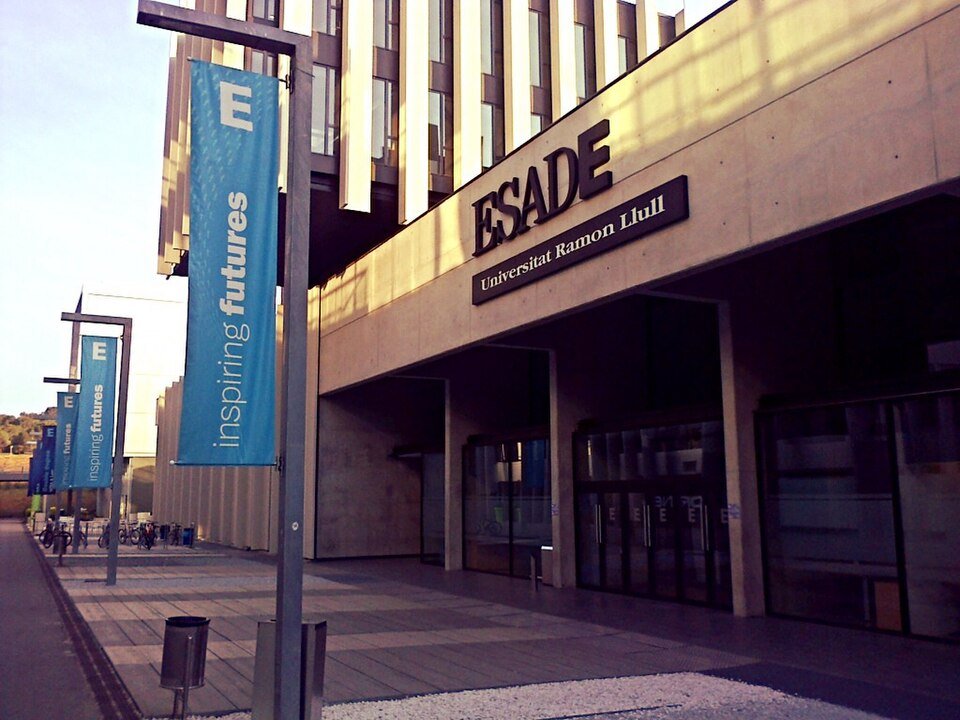
- ESMT Berlin
- Hertie School
- ROCKWOOL Foundation Berlin Institute for the Economy and the Future of Work (RFBerlin)
- WZB Berlin Social Science Center
Because the school itself can’t award doctoral degrees, admitted students also enrol as doctoral candidates at a member institution that can. In most cases, your PhD is awarded by the university where your first supervisor holds a professorship.
The appeal of this model is simple. Rather than joining one department, you get coursework and research seminars across Berlin’s whole economics community, from university chairs to policy-oriented research institutes.
Don’t Confuse It With the Berlin School of Economics and Law
Many searches mix up two different institutions. The Berlin School of Economics is the joint PhD programme described here. By contrast, the Berlin School of Economics and Law (HWR Berlin) is a separate university of applied sciences with its own degrees and admissions. So the €1,650 stipend and the 15 January 2027 deadline apply only to the Berlin School of Economics PhD Program.
How It Differs From the DIW Berlin Graduate Center
Another common question is how this programme relates to the DIW Berlin Graduate Center, which also pays €1,650 a month in its first year and also closes on 15 January 2027. They’re separate programmes with separate applications. DIW Berlin isn’t among the nine institutions listed by the Berlin School of Economics.
In practice, the DIW Graduate Center focuses on economics and places its students in DIW Berlin’s research departments from the second year. The Berlin School of Economics, by contrast, offers four tracks and funds the research years through employment at its member institutions. You can read the full breakdown in our guide to the DIW Berlin Graduate Center PhD 2027.
Funding: What the Berlin School of Economics Scholarship Covers
According to the official FAQ, all Berlin School of Economics students receive funding for the expected length of the programme. However, the type of funding changes halfway through.
1. €1,650 Monthly Stipend in the Qualification Phase
During the Qualification Phase, which lasts about three semesters, you receive a monthly stipend of €1,650. That works out to €19,800 over twelve months. In addition, a family allowance is paid for children, where applicable.
The school explains that stipends are used in this phase deliberately: they give you full flexibility to choose your research topic and supervisors before committing to a chair or research group.
2. Paid Employment in the Dissertation Phase
During the Dissertation Phase, which lasts about three years, funding is normally provided through employment at one of the member institutions. Students are typically employed at their supervisor’s chair or in research groups at research institutes.
Note, however, that this funding is conditional on meeting the programme’s performance criteria. In other words, the stipend gets you through coursework, and your progress decides the next stage.
3. No Tuition Fees
There are no tuition fees. You’ll only pay the semester fee charged by the degree-awarding university, which is about €300–350 per semester. Usefully, this fee includes a public transport ticket for Berlin.
Budgeting in Berlin
The stipend isn’t a separate housing or travel allowance, so plan your budget carefully. Rent in Berlin is the biggest expense for most students, and you’ll also need health insurance. Since visa rules for doctoral students change, check the current requirements with the German embassy in your country before you accept an offer.
The Four PhD Tracks
When you apply, you state a preferred track. Helpfully, the school allows you to change it during the Qualification Phase.
| Track | Focus and research areas | Core training |
|---|---|---|
| Economics | All major fields of economics, with a strong policy-oriented component and optional international internships and policy projects | Microeconomics, macroeconomics, econometrics |
| Finance | Asset pricing, corporate finance and financial intermediation, plus links to labour, international and development economics, history and climate change | Microeconomics, econometrics and a finance core course |
| Accounting | Quantitative accounting research using analytical, empirical and experimental methods; faculty from ESMT Berlin, HU Berlin and TU Berlin | Microeconomics, econometrics, machine learning |
| Management | Entrepreneurship, marketing, operations research, organisational economics, organisational behaviour and personnel economics; hosted by HU Berlin and ESMT Berlin | A methodological toolkit for management research, plus electives |
The Finance track, for example, prepares graduates for research careers at universities, central banks and other research-oriented institutions. Meanwhile, the Accounting track expects a master’s ideally specialised in accounting or a related quantitative field such as finance, economics or data science.
Programme Structure and Courses
All four tracks share the same structure, split into two phases over about ten semesters.
Qualification Phase (Semesters 1–3)
- First, five obligatory core courses of 9 ECTS each (45 ECTS)
- In addition, 45 ECTS from electives, short courses, seminars, summer schools, soft-skills courses, teaching or an internship
- Meanwhile, choosing your first supervisor by the end of semester 2
- Finally, writing research proposals that faculty discuss with you individually and in seminars
In total, you need at least 90 ECTS to complete this phase. The Fall 2026 course catalogue lists core courses such as Microeconomics I, Macroeconomics I, Econometrics I, Econometric Methods, and Business Analytics and Data Science. Electives include Causal Machine Learning, Research Topics in Finance I, Applied Empirical Macroeconomics and The Economics of Climate Change, among others.
Dissertation Phase (Semesters 4–10)
In this phase, you research and write your thesis, find a second supervisor, attend conferences and external summer schools, teach, and prepare for the job market. Finally, you hand in and defend your dissertation.
Eligibility Requirements
Academic Background
Applicants should hold a master’s degree in economics or business studies and have performed exceptionally well. Graduates of related fields, such as industrial engineering, statistics or quantitative social sciences, may also qualify if they have sufficient background in economics or business. The FAQ also confirms that engineering, mathematics and statistics graduates are considered on this basis.
Applying With a Bachelor’s Degree
If you only hold a bachelor’s degree, you can still apply. To do so, you must also apply to a participating master’s programme with a fast-track option, which then runs in parallel with the PhD. The eligible fast-track master’s programmes are:
- MEMS (Humboldt University)
- Economics (Humboldt University)
- Business Administration (Humboldt University)
- Economics (Freie Universität Berlin)
- Public Economics (Freie Universität Berlin)
Most Berlin School of Economics courses count towards these master’s degrees, but you’ll need extra master’s courses to reach 120 ECTS. Note that you can’t apply to the PhD and the master’s through the same portal.
No Supervisor Needed in Advance
Unlike most German doctoral positions, you don’t need to find a supervisor before applying. You choose one during the first year.
GRE, GMAT and English Requirements
GRE General Test
The GRE is highly recommended but not mandatory. Applications without it are considered, though the FAQ says GRE scores greatly improve your chances. There’s no published minimum, because the threshold depends on the scores of each year’s applicants. GRE at Home is accepted, and scores are valid for five years. The institution code is 3853.
GMAT
The GMAT is accepted in place of the GRE, but only for applicants to the business administration tracks (programme code D1Z-41-07).
English Proficiency
Non-native English speakers should show proficiency through TOEFL or IELTS. You’re exempt if you hold a degree from a university in an English-speaking country or can document at least one year of study at an English-speaking university. Test scores are highly recommended but not mandatory, no minimum is specified, and results are valid for two years. The TOEFL institution code is 8167. Late test results aren’t accepted.
Since German isn’t required, the whole programme is accessible to English speakers, though the school encourages students to learn German for daily life.
Required Application Documents
- Motivation letter (maximum two pages) explaining your motivation and outlining your main research interests
- Detailed CV, without a photograph
- Academic transcripts and certificates (scans are accepted; originals are requested after admission)
- GRE or GMAT scores (recommended)
- TOEFL or IELTS scores, if applicable (recommended)
- Two academic reference letters, uploaded directly by your referees
On the other hand, a research proposal isn’t required. In fact, the FAQ states that including one gives no advantage, so put that effort into the motivation letter instead.
Reference Letters: The Step Most Applicants Rush
The school contacts your referees through the portal once you click “Contact referee now”. Referees then complete a questionnaire and upload their letters by 19 January 2027. Keep these rules in mind:
- A maximum of two letters is accepted, and academic referees are preferred.
- Also, you can’t change a referee after confirming them, so ask first.
- Similarly, letters sent by email or uploaded by you aren’t accepted.
- Moreover, late letters leave your application incomplete, and incomplete applications aren’t considered.
- Lastly, private email addresses aren’t contacted, so use your referees’ institutional emails.
Application Timeline for the 2027 Intake
| Step | Date |
|---|---|
| Online information session | 2 December 2026, 12:30–14:00 CET |
| Application deadline | 15 January 2027 (CET) |
| Reference letter deadline | 19 January 2027 |
| Video interviews (shortlisted applicants) | 3–19 March 2027 |
| Admission decisions | End of March 2027 |
| Programme start | October 2027 |
Notably, the free information session covers the programme, the four tracks and the application process, and ends with a Q&A in breakout rooms with representatives of each track. Registration is required through the link on the official application page.
How to Apply for the Berlin School of Economics PhD Scholarship 2027
- Choose your track and read the faculty pages of the member institutions that match your interests.
- Register for the 2 December information session and prepare your questions.
- Confirm two academic referees early, ideally before December, because they can’t be changed later.
- Also take the GRE if you can. Since late results aren’t accepted, book a test date well before January.
- Then draft your motivation letter, keeping it to two pages.
- Next, open the application portal, upload your documents and send referee requests through “Contact referee now”.
- Submit before 15 January 2027. After submission, your application is locked, so check everything first.
Tips for a Competitive Application
- Make the motivation letter specific. Name the research questions you want to explore and connect them to work done at the member institutions. A vague interest in “economics” won’t stand out.
- Show quantitative strength. The core courses are econometrics- and theory-heavy, so highlight econometrics, statistics, programming (R, Python or Stata) and any empirical projects.
- Take the GRE seriously. It isn’t compulsory, but the school says it greatly improves your chances, especially when your transcripts come from a system the committee knows less well.
- Brief your referees. Send them your CV, transcript and motivation letter so their letters support the same story.
- Apply early. Submitting well before 15 January gives your referees time to meet their 19 January deadline.
If you’re building a list of funded doctoral options in Germany, also look at the University of Bonn Funded PhD Positions 2027.
Frequently Asked Questions
Is the Berlin School of Economics PhD fully funded?
Yes. All students receive funding for the expected length of the programme: a €1,650 monthly stipend in the Qualification Phase, then normally paid employment at a member institution in the Dissertation Phase, subject to performance criteria. There are no tuition fees, only a semester fee of about €300–350.
What is the Berlin School of Economics PhD Scholarship 2027 deadline?
The deadline is 15 January 2027 (CET). Reference letters must be uploaded by 19 January 2027.
What are the Berlin School of Economics PhD Scholarship 2027 requirements?
You need a master’s in economics or business with excellent results, or a related field with enough economics or business background. You’ll also submit a motivation letter, CV, transcripts and two academic references. GRE and TOEFL/IELTS scores are highly recommended but not mandatory.
Are there tuition fees at the Berlin School of Economics?
No. Instead, the only cost is the semester fee of about €300–350 charged by the degree-awarding university, which includes Berlin public transport.
Can I apply with only a bachelor’s degree?
Yes, provided you also apply to one of the participating fast-track master’s programmes at Humboldt University or Freie Universität Berlin.
Do I need the GRE?
No, but it’s highly recommended. The school considers applications without it, while stating that GRE scores greatly improve your chances.
Is the Berlin School of Economics the same as the Berlin School of Economics and Law?
No. The Berlin School of Economics is a joint PhD programme of nine Berlin–Brandenburg institutions, whereas the Berlin School of Economics and Law (HWR Berlin) is a separate university.
Can I get a DAAD PhD scholarship in Germany instead?
DAAD funds doctoral study in Germany through its own schemes, with separate rules and deadlines. If you already hold another scholarship, the Berlin School of Economics asks you to state its issuer and duration in your application.
How long does the PhD take?
About four to five years of full-time study. However, part-time study isn’t possible.
Final Thoughts
The Berlin School of Economics PhD Scholarship 2027 offers a rare combination: full funding, no tuition, no supervisor search before applying, and access to nine research institutions in one of Europe’s busiest economics hubs. For graduates in economics, finance, accounting or management, it’s one of the strongest funded doctoral options in Germany this cycle.
Above all, start with your referees and your motivation letter. Then attend the 2 December information session, and submit your application on the official portal well before 15 January 2027.