
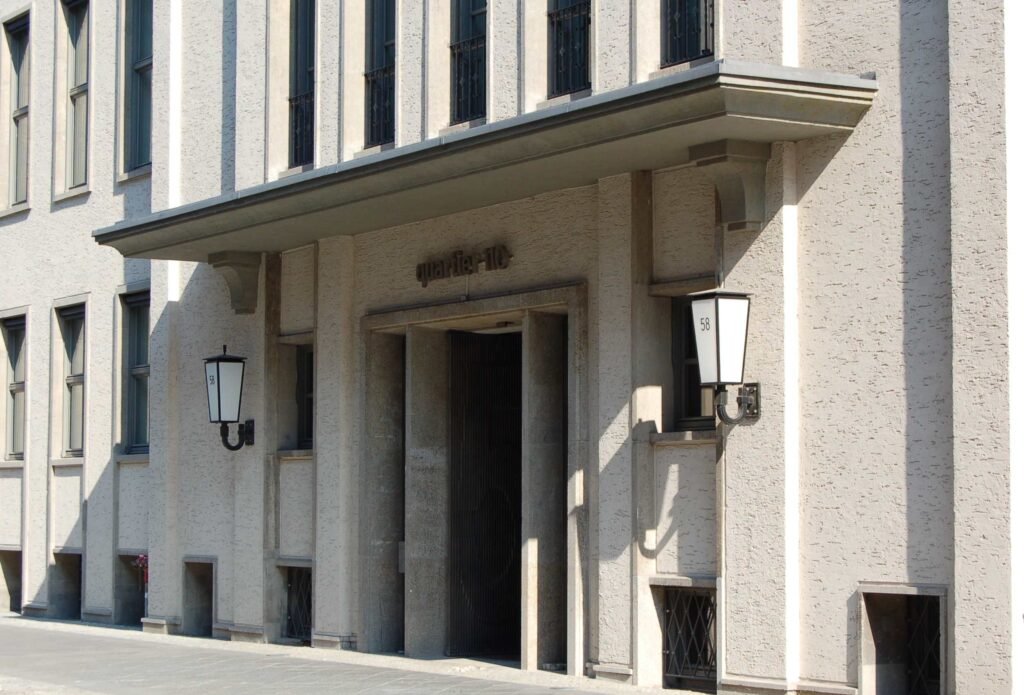
Applications are now open for the DIW Berlin Graduate Center PhD Programme 2027 in Germany, offering international graduates an opportunity to pursue doctoral research in economics with financial support for up to five years.
Successful applicants receive a monthly stipend of €1,650 during the first year, while funding for the remaining four years is normally provided through paid research employment at the German Institute for Economic Research (DIW Berlin), subject to meeting the programme’s performance requirements. The doctoral programme does not charge tuition fees.
For graduates interested in economics, econometrics, public policy, finance-related research, statistics or other quantitative disciplines, the programme provides a route into advanced research and policy analysis in Germany. It combines doctoral coursework with practical research experience, allowing participants to develop their academic skills while working alongside experienced economists.
The 2027 application period opened on 15 October 2026, and interested candidates must submit their applications by 15 January 2027 at 23:59 Central European Time (CET).
Applicants from different countries are welcome to apply, provided they meet the academic and language requirements. German language proficiency is not necessary, and candidates can submit applications without GRE scores, although DIW Berlin strongly recommends taking the GRE General Test.
This guide explains the funding arrangements, eligibility requirements, available research areas, application documents and selection process. It also addresses important questions about English proficiency, GRE scores and preparing a competitive application.
Overview of the DIW Berlin Graduate Center PhD Programme 2027
| Programme Details | Information |
|---|---|
| Programme name | DIW Berlin Graduate Center PhD Programme 2027 |
| Host institution | German Institute for Economic Research (DIW Berlin) |
| Country | Germany |
| Location | Berlin |
| Study level | Doctoral / PhD |
| Academic field | Economics and related quantitative research |
| Programme duration | Approximately five years |
| First-year funding | €1,650 monthly stipend |
| Years 2–5 funding | Normally paid research employment, subject to performance requirements |
| Tuition fees | No tuition fees |
| Teaching language | English |
| German language requirement | Not required |
| GRE requirement | Highly recommended but not compulsory |
| Applications opened | 15 October 2026 |
| Application deadline | 15 January 2027, 23:59 CET |
| Application method | Online through the official DIW Berlin portal |
About the DIW Berlin Graduate Center
The German Institute for Economic Research, commonly known as DIW Berlin, is a research institution based in Germany’s capital. Its work covers economic developments, public policy and social issues, combining empirical research with policy analysis.
Through its Graduate Center, DIW Berlin trains doctoral researchers who want to contribute to academic knowledge and evidence-based economic policymaking.
The Graduate Center operates a structured doctoral programme that combines advanced university-level coursework, research training and practical experience in DIW Berlin’s research departments.
Unlike a conventional doctoral arrangement in which a student may work largely independently from the beginning, the DIW programme provides an organised first year of academic training before participants move into a more intensive research phase.
Students also benefit from cooperation with universities and research institutions in Berlin. Although DIW Berlin organises the programme and provides research training, the doctoral degree is ultimately awarded by the university affiliated with the student’s supervisor.
Participating universities commonly include Humboldt University of Berlin, Freie Universität Berlin, Technische Universität Berlin and the University of Potsdam.
This arrangement gives doctoral researchers access to both a research institute and a university environment.
DIW Berlin Graduate Center PhD 2027 Funding and Scholarship Benefits
One of the programme’s main attractions is its financial support structure. DIW Berlin provides funding for the expected five-year duration of doctoral training, although the form of support changes after the first year.
1. Monthly stipend of €1,650 during the first year
During the initial coursework phase, doctoral students receive a stipend of €1,650 per month.
Over 12 months, this amounts to €19,800 in first-year stipend funding.
The first year concentrates on strengthening students’ theoretical and quantitative foundations, particularly in microeconomics, macroeconomics and econometrics.
The stipend allows students to concentrate on their academic training without depending entirely on separate employment.
However, applicants should budget carefully for accommodation, food, health insurance and other living expenses in Berlin. The published stipend should not be interpreted as an additional housing or travel allowance.
2. Funded research employment during Years 2–5
From the second year onwards, funding is normally provided through employment in one of DIW Berlin’s research departments.
The institute specifies employment under the German public-sector salary framework:
TVöD, pay grade EG 13, at 75% of a full-time position.
This means that eligible doctoral researchers may receive employment income while undertaking research relevant to their doctoral studies.
The actual salary depends on the applicable public-sector pay arrangements and individual employment circumstances. Applicants should not assume that the €1,650 first-year stipend continues unchanged throughout the programme.
Importantly, funding during the research phase is conditional on fulfilling the programme’s performance criteria. DIW Berlin communicates these requirements to participants at the beginning of their studies.
3. No tuition fees
The DIW Berlin Graduate Center does not charge tuition fees for its doctoral programme.
Nevertheless, students who enrol at a participating Berlin university may need to pay a semester contribution. DIW Berlin currently indicates approximately €380 per semester.
University enrolment is not compulsory during the first year. However, the institute recommends it because student status may provide access to benefits such as public transport arrangements and student health insurance.
Therefore, applicants should distinguish between no programme tuition fees and the separate administrative or semester contributions that universities may charge.
4. Research training and professional development
Financial support is only one aspect of the programme.
Doctoral students also gain access to academic seminars, research workshops, specialist courses and professional development activities.
The programme encourages participation in research discussions and provides opportunities to strengthen academic writing, scientific presentations and communication skills.
In addition, students may undertake research-related internships with institutions in Germany or abroad, depending on their academic interests and the programme’s arrangements.
Summary of financial benefits
| Funding Component | Benefit |
|---|---|
| First-year stipend | €1,650 per month |
| First-year total | €19,800 over 12 months |
| Research-phase funding | Normally employment during Years 2–5 |
| Employment framework | TVöD EG 13, 75% |
| Tuition fees | None |
| University semester contribution | Approximately €380 per semester, where applicable |
| Additional research opportunities | Training, workshops and possible research internships |
Important: The programme provides substantial financial support, but it does not advertise a universal package covering every applicant’s flights, accommodation and personal expenses. Research-phase funding also depends on satisfactory academic performance.
Who Can Apply for the DIW Berlin Graduate Center PhD 2027?
The programme targets academically strong graduates with an interest in advanced economic research.
Candidates are expected to demonstrate the academic preparation, analytical ability and research potential needed for a demanding doctoral programme.
1. Applicants with a master’s degree in economics or business studies
The standard academic requirement is a master’s degree or equivalent diploma in economics or business studies.
DIW Berlin expects applicants to have performed exceptionally well during their previous studies.
Academic transcripts therefore play an important role in the selection process.
Although the institute does not publish a universal minimum GPA for all educational systems, applicants should be prepared to demonstrate strong performance in relevant courses, especially those involving economic theory, mathematics, statistics and quantitative methods.
2. Applicants from Statistics, Engineering and related disciplines
A Master’s degree in Economics is not the only possible route into the programme.
DIW Berlin also considers graduates from related academic backgrounds, including:
- Statistics
- Industrial or Civil Engineering
- Quantitative Social Sciences
- Other closely related disciplines with sufficient economics preparation
However, holding one of these degrees does not automatically establish eligibility.
Applicants must demonstrate that they have enough knowledge of economics or business studies to follow advanced doctoral coursework.
For example, a statistics graduate who has studied econometrics, economic modelling and applied economic analysis may be better prepared than someone whose training has no connection to economic research.
Similarly, an engineering graduate interested in energy economics or climate policy could potentially demonstrate a relevant background through previous coursework and research.
The important consideration is how closely the applicant’s academic preparation matches the demands of the programme.
3. Students who have not yet completed their master’s degree
Applicants who are currently completing a Master’s programme may also apply.
However, they must successfully finish their degree before the DIW doctoral programme begins.
This provision is particularly useful for students who expect to graduate in 2027 but want to begin preparing their doctoral applications before receiving their final certificates.
Applicants should still submit the academic documents available at the time of application and follow the portal’s requirements.
4. International applicants
The official application information does not impose a nationality restriction.
Consequently, eligible applicants from African countries, Asia, Europe and other regions may apply.
Admission depends on academic qualifications, research suitability and the programme’s selection process rather than nationality alone.
5. English language proficiency
All courses are taught in English, and applicants must complete the application in English.
Candidates whose native language is not English must demonstrate adequate English proficiency unless they qualify for an exemption.
The programme recognises circumstances such as:
- Holding a degree from a university in an English-speaking country.
- Having completed at least one year of studies in an English-speaking degree programme.
Applicants who do not meet an exemption should provide suitable evidence of their English proficiency.
The institute recommends IELTS or TOEFL scores, although these test certificates are not universally compulsory.
Is German language proficiency required?
No.
Applicants do not need to speak German to gain admission to the DIW Berlin Graduate Center.
The doctoral coursework takes place in English, allowing international researchers to participate without prior German-language training.
Nevertheless, learning German can make everyday life easier, particularly when dealing with accommodation, administrative procedures and local services.
Is GRE Required for the DIW Berlin PhD Programme 2027?
This is an important question for international applicants because GRE examinations can involve additional costs and preparation time.
DIW Berlin accepts applications without GRE scores.
However, the institute explicitly states that applicants who submit GRE results have a considerably stronger chance of admission. It therefore highly recommends taking the GRE General Test.
The university does not publish a fixed minimum GRE score. Instead, the competitiveness of a score depends partly on the performance of other applicants in the relevant selection year.
Applicants should understand the distinction:
Not compulsory does not mean unimportant.
A candidate without GRE results can still submit an application, but the absence of those scores may weaken the application in a competitive selection process.
DIW Berlin accepts the GRE General Test, including the at-home version. It does not accept the GRE Subject Test, and GMAT cannot replace the GRE.
Applicants who have already taken the GRE should upload their Test Taker Score Report through the application portal.
Should you apply without GRE?
That depends on your academic profile and available preparation time.
If you have strong grades in advanced Mathematics, Econometrics and Statistics, along with relevant research experience, those qualifications can help demonstrate your quantitative ability.
Nevertheless, DIW Berlin’s own guidance indicates that submitting GRE results improves admission prospects.
Candidates who can reasonably prepare for and complete the GRE before the deadline should therefore consider doing so.
IELTS and TOEFL Requirements for International Applicants
DIW Berlin requires applicants to demonstrate that they can study and conduct research in English.
However, IELTS and TOEFL are not mandatory for every applicant.
The official guidance permits exemptions based on qualifying educational experience.
Applicants may be exempt if they completed a degree at a university in an English-speaking country or can document at least one year of study in an English-speaking degree programme.
For other applicants, the institute recommends providing recognised English-language test results.
Accepted examinations include IELTS Academic and TOEFL iBT, including specified home-based versions.
DIW Berlin does not specify a universal minimum IELTS or TOEFL score in its current application FAQ.
Can applicants from English-speaking African countries apply without IELTS?
Potentially, yes, but applicants should not assume that nationality alone provides an exemption.
The relevant question is whether their educational background meets DIW Berlin’s published conditions.
For example, an applicant who completed an English-taught degree may be able to document that educational experience. However, the university must assess whether the submitted evidence satisfies its requirements.
If you are unsure, review the official FAQ carefully and contact the Graduate Center for clarification before relying on an exemption.
Research Areas Available at DIW Berlin Graduate Center
Applicants should have research interests that connect with the work of DIW Berlin’s research departments.
The institute identifies several areas in which doctoral candidates may develop their research.
Macroeconomics
This field examines economic activity at the national and international levels.
Research may involve inflation, economic growth, monetary policy, business cycles or macroeconomic modelling.
Forecasting and Economic Policy
Researchers in this area study economic developments and evaluate policy choices.
Applicants interested in economic forecasting, empirical macroeconomics and policy analysis may find relevant research opportunities.
Energy, Transportation and Environment
This area connects economic research with energy systems, transport markets and environmental challenges.
It may appeal to applicants with backgrounds in Economics, Engineering or other quantitative disciplines.
Climate Policy
Climate policy research examines the economic implications of environmental regulation, climate change and policy responses.
Candidates interested in climate economics and evidence-based environmental policymaking can explore the department’s research activities.
Firms and Markets
This area focuses on business behaviour, competition, market structures and related economic questions.
It may interest applicants with backgrounds in Industrial Economics, Business Studies and applied Microeconomics.
Public Economics
Public Economics considers how governments raise and allocate resources and how public policies affect households, businesses and society.
Research interests may include taxation, public expenditure and economic inequality.
German Socio-Economic Panel Study (SOEP)
The SOEP provides opportunities for researchers interested in household-level data, social and economic conditions, inequality and empirical analysis.
Applicants with strong quantitative skills may find this area particularly relevant.
Entrepreneurship and Gender Studies
DIW Berlin also identifies research groups working on Entrepreneurship and Gender Studies.
These areas can accommodate economic research into business creation, labour markets, gender inequality and related policy questions.
Application advice: Rather than mentioning several unrelated interests in your motivation letter, select a focused research direction and explain how it connects with a particular DIW Berlin department.
For instance, an applicant interested in the economic effects of climate policy could explain a research question involving environmental regulation, firm behaviour or household welfare.
A clear connection between your background, research interests and DIW Berlin’s work will make your application more convincing.
Structure of the DIW Berlin Five-Year PhD Programme
The doctoral programme combines intensive coursework with independent research and professional training.
First year: Advanced doctoral coursework
The first year focuses on the theoretical and quantitative foundations needed for economic research.
Students study advanced Economics and Econometrics, including subjects such as:
- Microeconomics
- Macroeconomics
- Econometrics
- Mathematical and statistical methods
The programme includes a preparatory mathematics component and advanced courses designed to strengthen students’ ability to analyse economic questions rigorously.
This coursework is demanding, particularly for applicants who have not previously studied advanced economic theory.
Candidates from related disciplines should therefore assess their preparation before applying.
Years 2–5: Research and dissertation development
After the coursework phase, students concentrate on their doctoral research.
During this period, they normally work within DIW Berlin’s research departments while developing their dissertations.
They receive academic supervision and participate in research discussions, workshops and professional development activities.
The programme also provides opportunities to engage with experienced economists and researchers working on economic policy issues.
The expected duration is approximately five years, although the institute notes that doctoral completion commonly takes four to five years.
Which university awards the PhD?
DIW Berlin itself is a research institute rather than the university awarding the doctoral degree.
Students normally register with the university where their doctoral supervisor holds a professorship.
The degree may therefore be awarded by one of the cooperating universities in Berlin or Potsdam.
Applicants do not need to secure a supervisor before applying. DIW Berlin allows students to identify a suitable supervisor during the programme.
Required Documents for the DIW Berlin Graduate Center PhD 2027
Applicants must submit their documents through the official online application portal.
The application must be completed in English.
| Required Document | Important Information |
|---|---|
| Motivation letter | Maximum two pages |
| Curriculum vitae | Detailed academic CV without a photograph |
| Academic recommendations | Two letters from senior academic staff |
| Academic transcripts | Copies of relevant transcripts and certificates |
| Application form | Completed official DIW Berlin form |
| IELTS/TOEFL | Where applicable |
| GRE General Test | Where available; strongly recommended |
Motivation letter
The motivation letter is one of the most important parts of the application.
DIW Berlin requires applicants to explain why they want to join the doctoral programme and briefly describe their main research interests.
The letter must not exceed two pages.
A strong letter should establish a connection between the applicant’s academic preparation, previous research experience and intended doctoral work.
Rather than writing generally about a passion for Economics, candidates should identify the kinds of economic questions they want to investigate.
For example, an applicant who previously studied household welfare and public expenditure could explain how that experience developed an interest in evaluating social protection policies.
Another candidate with a background in financial markets might discuss an interest in macroeconomic uncertainty, monetary policy transmission or firm financing, provided the proposed direction fits DIW Berlin’s research activities.
The objective is not to present a completed dissertation. It is to demonstrate intellectual direction and readiness for doctoral research.
Academic curriculum vitae
Applicants must submit a detailed CV without a photograph.
The CV should present relevant education, research experience, technical skills and academic achievements clearly.
Where applicable, candidates can include experience using statistical or programming tools such as R, Stata or Python.
However, only include skills you genuinely possess. An interview panel may ask you to explain previous research methods or analytical work.
Two academic recommendation letters
DIW Berlin requires two recommendations from senior academics, such as professors or postdoctoral researchers.
Professional or business references do not satisfy this requirement.
The referees must upload their letters directly through the dedicated recommendation portal.
Applicants cannot submit the recommendation letters themselves, and recommendations sent by email will not be accepted.
Both letters must arrive before the application deadline.
This makes early communication with referees essential, particularly for applicants whose former lecturers have busy teaching or research schedules.
Academic transcripts and certificates
Candidates should provide copies of their academic records and relevant degree certificates.
Current Master’s students may apply before graduation, provided they complete the degree before the doctoral programme begins.
Applicants should ensure that uploaded documents are legible and meet the portal’s language requirements.
Research proposal
A full research proposal is not compulsory.
DIW Berlin considers the research interests described in the motivation letter sufficient for the initial application.
Candidates who already have a research proposal may attach it, but the institute states that doing so does not automatically provide an advantage.
How to Apply for the DIW Berlin Graduate Center PhD 2027
Applications must be submitted online during the official application period.
The following steps will help applicants prepare and complete the process.
Step 1: Review the eligibility requirements
Begin by checking whether your academic qualifications match the programme’s requirements.
Pay particular attention to your degree background, Economics preparation, English proficiency and quantitative training.
If your Master’s degree is outside Economics or Business Studies, identify the courses and research experiences that demonstrate relevant preparation.
Step 2: Identify your research interests
Review DIW Berlin’s research departments and identify the areas most closely connected to your academic interests.
You do not need a final dissertation topic, but you should have a credible explanation of the research questions you want to explore.
A focused research direction will also help you write a stronger motivation letter.
Step 3: Prepare your application documents
Gather your transcripts, certificates, academic CV and completed application form.
Write your motivation letter and review it carefully for clarity, relevance and consistency.
If you have GRE or English-language test results, prepare the appropriate score reports.
Step 4: Contact two academic referees
Choose senior academics who know your academic abilities and can comment meaningfully on your research potential.
Contact them early, explain the programme and provide the necessary information.
Remember that referees must submit their letters through a separate online portal.
Do not assume that completing your own application automatically completes the recommendation process.
Step 5: Access the official application portal
Visit the DIW Berlin Graduate Center application page and follow the link to the candidate portal.
The application system is operated through DIW Berlin’s designated service provider, P&I Loga.
Complete the required sections and upload the requested documents.
Step 6: Review and submit your application
Before submitting, check that your personal information, academic history and uploaded documents are accurate.
Confirm that your motivation letter meets the two-page limit and that your referees have received the instructions they need.
Applications sent by email are not accepted.
Step 7: Confirm submission and follow the selection process
After submitting your application, you should receive an automatic email confirmation.
DIW Berlin evaluates applications after the deadline and invites shortlisted candidates for interviews.
Interviews are conducted through video conferencing, so selected applicants do not need to travel to Berlin for the interview stage.
The institute asks applicants to avoid status inquiries until at least six weeks after the deadline.
How to Make Your DIW Berlin PhD Application More Competitive
Meeting the formal eligibility requirements is only the starting point.
DIW Berlin seeks applicants capable of handling demanding doctoral coursework and contributing to economic research.
Several aspects of an application deserve particular attention.
Demonstrate strong quantitative preparation
The programme places considerable emphasis on Econometrics, Microeconomics, Macroeconomics and mathematical reasoning.
Applicants should therefore highlight relevant courses, dissertations and research projects that demonstrate their analytical ability.
If you have worked with economic datasets, statistical models or empirical research methods, explain that experience clearly.
A well-documented Master’s dissertation involving regression analysis, causal inference or economic modelling may be particularly relevant.
Connect your research interests to DIW Berlin
A motivation letter becomes stronger when the applicant explains why a particular research environment is suitable for their goals.
For example, someone interested in household inequality could explore the work of the German Socio-Economic Panel Study.
A candidate interested in economic forecasting could examine the institute’s macroeconomic and forecasting research.
The connection should be genuine and specific rather than a collection of department names copied from the website.
Explain your research experience
Previous research experience can help demonstrate readiness for doctoral study.
Relevant experience might include a Master’s thesis, research assistantship, academic project or professional assignment involving rigorous economic analysis.
Explain what question you investigated, which methods you used and what you learned.
This is more informative than simply stating that you are passionate about research.
Consider submitting GRE results
Although GRE is optional, DIW Berlin explicitly recommends it because applicants with scores have stronger admission prospects.
Candidates who have sufficient time and resources should consider whether taking the GRE would strengthen their profile.
Choose referees carefully
A detailed recommendation from a lecturer who supervised your research may be more informative than a generic letter from someone who barely knows your work.
Your referees should be able to discuss your academic performance, analytical ability and potential for independent research.
Make sure they understand the deadline and the separate recommendation submission process.
Prepare early rather than waiting until January
The deadline is 15 January 2027, but the recommendation process makes last-minute applications risky.
An otherwise strong application can become incomplete if one referee fails to upload a letter on time.
Preparing the documents well ahead of the deadline also leaves room to resolve technical issues.
Important Application Dates for the 2027 Intake
| Activity | Date |
|---|---|
| Applications open | 15 October 2026 |
| Application deadline | 15 January 2027 |
| Submission closing time | 23:59 CET |
| Selection and interviews | After the application deadline; exact dates not specified |
| Programme commencement | Confirm through the official programme communications |
Applicants outside Germany should pay attention to the deadline’s time zone.
23:59 CET refers to Central European Time, not the applicant’s local time.
Submitting several days early is advisable, especially because recommendation letters must also arrive before the deadline.
Frequently Asked Questions About the DIW Berlin Graduate Center PhD 2027
Is the DIW Berlin Graduate Center PhD 2027 fully funded?
The programme provides funding for the expected five-year duration and does not charge tuition fees. Students receive €1,650 monthly during the first year, while subsequent funding normally comes through research employment. Funding during Years 2–5 depends on meeting the institute’s performance criteria. Applicants should not assume that flights, housing and every personal expense are separately covered.
Can international students from Africa apply?
Yes. The official requirements do not restrict applications to German or European nationals. Applicants from African countries may apply if they satisfy the academic and other admission requirements.
Can I apply without GRE?
Yes. DIW Berlin considers applications without GRE results. However, it strongly recommends submitting GRE General Test scores because they improve admission prospects.
Is IELTS compulsory?
Not for every applicant. DIW Berlin accepts qualifying evidence of English proficiency and provides exemptions for certain educational backgrounds. Applicants should review the official language requirements carefully.
Do I need to speak German?
No. The programme is taught in English, and German proficiency is not an admission requirement.
Can I apply with a Master’s degree in Statistics or Engineering?
Potentially. Applicants from related disciplines may qualify if they have sufficient academic preparation in Economics or Business Studies.
Can I apply while completing my Master’s degree?
Yes. You may apply before receiving your final Master’s certificate, provided you complete the degree before the programme starts.
Is a research proposal required?
No. A full research proposal is optional. Applicants must instead explain their research interests in the motivation letter.
Must I find a PhD supervisor before applying?
No. DIW Berlin does not require applicants to secure a supervisor before admission. Students have an opportunity to identify a suitable supervisor during the programme.
Can I study remotely or part-time?
No. The programme requires full-time participation and in-person attendance in Berlin.
Does DIW Berlin award the PhD degree?
The degree is awarded by the university affiliated with the doctoral student’s supervisor, rather than directly by DIW Berlin.
Are DIW Berlin Graduate Center and Berlin School of Economics the same programme?
No. Although the programmes cooperate closely and share many courses, they are separate doctoral programmes with distinct applications.
Applicants interested in both must apply separately.
What is the deadline for the 2027 intake?
The application deadline is 15 January 2027 at 23:59 CET. Applicants must also ensure their academic referees submit their recommendation letters before the deadline.
Other Scholarship Opportunities Worth Exploring
Applicants considering funded postgraduate studies in Europe may also find the following opportunities relevant.
The Erasmus Trustfonds Scholarship 2027–2028 in the Netherlands offers financial support for eligible Master’s applicants at Erasmus School of Economics. Although it is not a PhD scholarship, it may interest graduates planning to strengthen their Economics background before pursuing doctoral research.
For applicants exploring European postgraduate funding across different academic disciplines, the Erasmus Mundus EPOG Scholarship 2027 provides another route into advanced Economics and policy-oriented studies through an international Master’s programme.
Final Thoughts
The DIW Berlin Graduate Center PhD Programme 2027 is a substantial opportunity for academically strong graduates who want to build careers in economic research, public policy or academia.
Its appeal goes beyond the first-year stipend. Students receive structured doctoral training, work alongside experienced researchers and have opportunities to contribute to economic analysis through DIW Berlin’s research departments.
The funding arrangement also offers a potential transition from scholarship-supported coursework to paid research employment, although continued support depends on meeting the programme’s academic performance requirements.
Applicants should pay particular attention to their quantitative preparation, research interests and academic recommendations. These elements can help demonstrate that they are prepared for the programme’s demanding coursework and subsequent research phase.
With applications already open, interested candidates should begin preparing their documents and contacting referees rather than waiting until the January deadline.
Application deadline: 15 January 2027 at 23:59 CET.
Official Application Links and Sources
The following links lead directly to DIW Berlin’s official website and provide the authoritative information for applicants.
1. DIW Berlin Graduate Center – Official Application Page
https://www.diw.de/de/diw_01.c.799242.de/.html
This page contains the updated 2027 application schedule, application portal, recommendation letter portal, required documents, funding details and frequently asked questions. The German-language URL currently displays the application information in English.
2. DIW Berlin Graduate Center – English Application Page
https://www.diw.de/en/diw_01.c.799242.en/application.html
Applicants can consult the English-language page for programme requirements and application guidance. Some date information on this version may not yet reflect the latest 2027 update, so use the confirmed dates stated on the updated application page.
3. DIW Berlin Graduate Center – Programme Structure
https://www.diw.de/en/diw_01.c.598848.en/seiten/graduate_center_program.html
This page explains the doctoral coursework, research phase, academic training and programme structure.
4. DIW Berlin Graduate Center – Official Homepage
https://www.diw.de/en/diw_01.c.619412.en/graduate_center.html
Visit this page for general information about the Graduate Center, its academic environment and research opportunities.
5. Application Enquiries
For questions about the doctoral programme and application requirements:
For technical questions concerning the online application:
Applicants should submit applications only through the official online portal during the application period. Applications sent by email are not accepted.


Pingback: Germany CGIAR++ PhD Scholarship 2027: €1,800/Month