
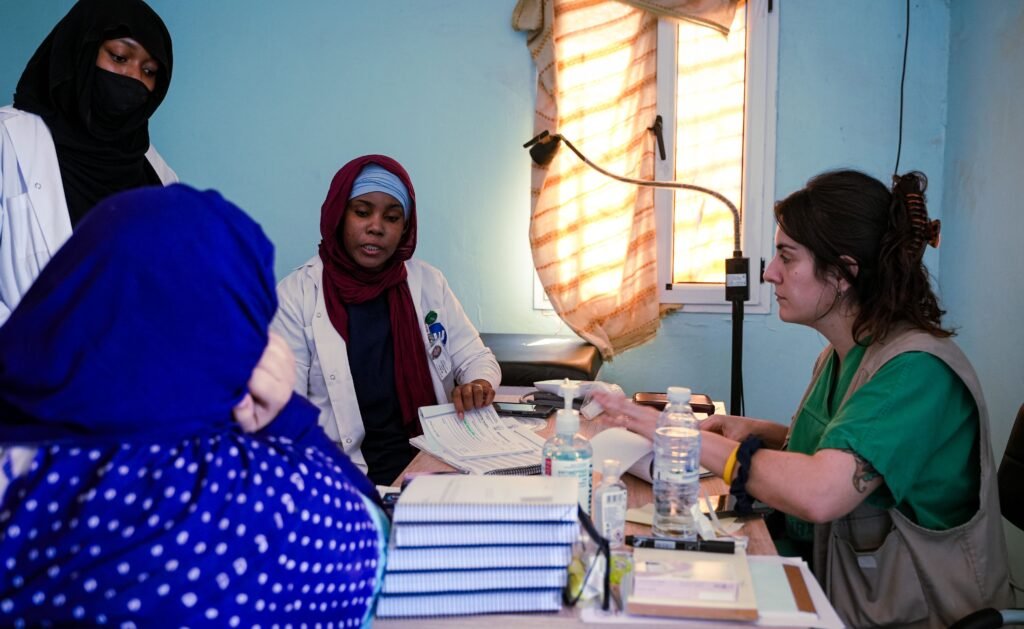
The WHO Internship Programme 2026/27 offers university students and recent graduates from around the world the opportunity to gain practical experience with the World Health Organization (WHO) while contributing to programmes related to global public health.
The program is particularly attractive because it offers WHO internships to students from a range of disciplines, not just to medical students. Opportunities may be available across technical health programs as well as administrative and professional areas such as communications, external relations, human resources, and management.
Eligible applicants must generally be at least 20 years old, have completed at least three years of full-time university studies before beginning the internship, and be enrolled in an eligible undergraduate, graduate, or postgraduate program. Recent graduates may also qualify if they apply within 18 months after completing their formal qualification.
WHO internships normally last between 6 and 24 consecutive weeks and are full-time. WHO provides medical and accident insurance during the internship, while eligible interns who require financial assistance may receive a living allowance. Some duty stations may also provide additional support, such as lunch vouchers.
However, applicants should understand one important point about the WHO Internship Programme 2026/27: there is no single worldwide application deadline for all internships. WHO publishes internship opportunities throughout the year, and each vacancy may have its location, requirements, and closing date.
WHO Internship Programme 2026/27 at a Glance
| Category | Details |
|---|---|
| Program | WHO Internship Programme 2026/27 |
| Organization | World Health Organization |
| Eligible Applicants | Students and recent graduates |
| Minimum Age | 20 years |
| Academic Requirement | At least 3 years of full-time university study completed before the internship begins |
| Study Levels | Undergraduate, graduate, and postgraduate |
| Recent Graduates | May qualify if applying within 18 months of completing their qualification |
| Internship Duration | 6–24 consecutive weeks |
| Work Schedule | Full-time |
| Locations | WHO headquarters, regional offices, and country offices |
| Financial Support | Living allowance for eligible selected interns requiring financial support |
| Insurance | Medical and accident insurance during internship |
| Application Fee | None |
| Application Platform | WHO’s Stellis recruitment system |
| Application Deadline | Varies by individual internship vacancy |
| Nationality | Applicants must hold a valid passport from a WHO member state. |
What Is the WHO Internship Programme?
The World Health Organization is the United Nations agency responsible for international public health.
Its internship program is designed to provide eligible students and recent graduates from diverse academic backgrounds with opportunities to gain exposure to WHO’s technical and administrative work.
Interns can learn how a major international health organization operates while also gaining practical experience that is relevant to their academic and professional interests.
At the same time, WHO programs benefit from the participation of students who specialize in fields relevant to the organization’s work.
Therefore, the program serves both as a learning opportunity for future professionals and as a mechanism through which WHO can engage emerging talent from diverse academic and geographical backgrounds.
Is the WHO Internship Program open for 2026/27?
WHO’s internship system should not be understood as one scholarship competition with a universal annual deadline.
Internship opportunities are published on a continuous basis, and individual vacancy notices contain their application requirements and deadlines.
This means that anyone searching for the WHO Internship Programme 2026/27 should regularly monitor the official WHO careers platform for currently available internship positions.
WHO’s program had previously been paused because of the organization’s financial situation. Official WHO reporting stated that the program was to reopen in the second quarter of 2026, and internship vacancies have since been advertised through WHO’s careers system.
Therefore, applicants interested in 2026 and 2027 opportunities should focus on current vacancy announcements rather than waiting for one general 2027 application opening.
Who Can Apply for WHO Internships?
WHO establishes several general eligibility conditions for its internship program.
Applicants should satisfy all the relevant requirements before submitting an application.
1. You Must Be at Least 20 Years Old
Applicants must be at least 20 years old on the date they submit their application.
WHO does not state a general upper age limit on its main internship eligibility criteria.
2. You Must Be a University Student or Recent Graduate
Applicants can be enrolled in a course of study at a university or equivalent institution leading to a formal qualification.
Eligible levels can include:
- Undergraduate programs
- Graduate programs
- Postgraduate programs
However, being a first-year university student is generally not sufficient.
Applicants must have completed at least three years of full-time university studies before starting the internship.
3. Recent Graduates Can Apply
You do not necessarily lose eligibility immediately after graduating.
Applicants who have already completed a formal qualification may still be considered if they apply within 18 months of completing that qualification.
This provision makes the program relevant not only to current students but also to recent graduates seeking international professional experience.
WHO Internship Eligibility Requirements
| Requirement | What You Need |
|---|---|
| Minimum Age | At least 20 at the application |
| Education | Enrolled in an eligible university program or recently graduated |
| University Study Completed | At least 3 years before starting the internship |
| Recent Graduate Rule | Apply within 18 months after completing the qualification. |
| Nationality | Valid passport from a WHO member state |
| Language | Fluency in at least one working language of the office of assignment |
| Family Relationship | The applicant must not be closely related to any WHO staff member according to the program’s rules. |
| Previous WHO Internship | The applicant must not have previously participated in the WHO Internship Programme. |
| Availability | Must be available full-time for 6–24 consecutive weeks |
Applicants must also satisfy any additional requirements listed in the particular vacancy.
What Can You Study to Qualify?
One misconception about WHO internships is that applicants must be medical students.
That is incorrect.
Because WHO is a large international organization, it requires expertise beyond clinical medicine.
Applicants may come from academic backgrounds related to WHO’s technical work or its administrative operations.
Potentially relevant fields can include:
| Area | Examples |
|---|---|
| Public Health | Public health, global health, epidemiology, and related areas |
| Medical & Health Sciences | Medicine and health-related disciplines |
| Social Fields | Social disciplines connected to WHO’s technical work |
| Management | Management and related areas |
| Administration | Administrative disciplines |
| Communications | Communications and related fields |
| External Relations | International/external relations-related fields |
| Human Resources | HR and organizational functions |
The individual vacancy notice remains decisive.
A degree that qualifies someone for one WHO internship may not satisfy the requirements for another.
Can students of finance, economics, or data apply?
Potentially, yes, if a particular WHO internship requires those competencies and the applicant meets the vacancy requirements.
WHO is an international organization with both technical health programs and extensive administrative functions. Individual vacancies can therefore require skills beyond medicine and clinical health.
However, applicants should not assume that any university degree automatically makes them eligible.
The safest approach is to compare your academic background, technical skills, and experience with the requirements of each vacancy before applying.
For example, a student with strong quantitative skills should pay particular attention to internship opportunities involving data, analysis, program support, research, or other areas where those competencies are relevant.
WHO Internship Locations
WHO internship opportunities can arise in various parts of the organization.
These can include:
- WHO Headquarters
- Regional offices
- Country offices
- Other WHO organizational locations
Consequently, applicants should not restrict their search to Geneva.
| WHO Setting | What Applicants Should Know |
|---|---|
| Headquarters | Opportunities may be available at WHO Headquarters in Geneva. |
| Regional Offices | Vacancies can arise within WHO’s regional structures. |
| Country Offices | Some internships may be based in WHO country offices. |
| Location Requirements | Each vacancy specifies its duty station. |
| Financial Conditions | Support and living expenses can vary substantially by location. |
The location is particularly important when calculating the financial implications of accepting an internship.
How Long Does a WHO Internship Last?
Under WHO’s global internship conditions, interns must normally be available full-time for a minimum of 6 consecutive weeks and a maximum of 24 consecutive weeks.
The actual duration depends on the needs of the WHO technical unit offering the internship.
Therefore, applicants should carefully verify the dates provided in each vacancy before applying.
WHO internships are intended to provide meaningful professional exposure rather than occasional part-time participation.
Is the WHO Internship Program paid?
This topic requires some clarification.
WHO provides a living allowance to eligible selected interns who need financial support.
However, this does not mean that every intern automatically receives the same salary or allowance.
Intern candidates must complete a financial disclosure as part of WHO’s process. Information about grants, bursaries, scholarships and other financial support can be considered when determining eligibility for WHO financial assistance.
The exact financial provisions can also depend on the duty station and internship vacancy.
Therefore, applicants should read the financial information attached to the specific position they are considering.
Is the WHO Internship Programme Fully Funded?
It is better to describe the WHO programme as an internship that may provide financial assistance to eligible interns rather than universally advertising every WHO internship as fully funded.
WHO provides all interns with medical and accident insurance during the internship period.
Eligible interns requiring financial support may receive a living allowance.
In addition, some duty stations may provide lunch vouchers or other specified support.
However, applicants should not automatically assume that WHO will cover every expense associated with relocating to and living at the duty station.
The individual vacancy notice should be checked carefully before making financial plans.
WHO Internship Benefits
| Benefit | Details |
|---|---|
| Practical Experience | Exposure to WHO’s technical or administrative programmes |
| International Experience | Opportunity to understand work within a major global health organisation |
| Living Allowance | Available to eligible selected interns requiring financial support |
| Medical Insurance | Provided during the internship |
| Accident Insurance | Provided during the internship |
| Meal Support | Lunch vouchers may be available at some duty stations. |
| Professional Development | Practical exposure relevant to future careers |
| Networking | Interaction with professionals working in international public health |
| Duration | 6–24 weeks of structured full-time experience |
Benefits can vary by internship and duty station.
Example: Financial Support for WHO Interns in Geneva
Applicants should always review the individual vacancy because financial provisions can be quite specific.
For example, a WHO Geneva internship vacancy published in 2026 stated that interns whose permanent residence was outside the duty station could receive a living allowance of up to CHF 1,680 per month, with the exact amount calculated after selection based on the intern’s financial disclosure.
That vacancy also provided CHF 20 in lunch vouchers per working day, together with medical and accident insurance.
This is a useful illustration of the support that can accompany a WHO internship, but applicants should not assume that these exact figures apply to every WHO internship worldwide.
Living expenses also differ significantly between duty stations.
Accommodation During a WHO Internship
Applicants should not assume that WHO will provide accommodation.
This is particularly important for candidates considering Geneva, where housing and general living costs can be high.
Before accepting an internship, successful candidates should calculate:
- Accommodation
- Local transportation
- Food
- Visa-related costs where applicable
- Travel
- Personal expenses
- Any costs not covered by the internship package
A prestigious internship can still create financial difficulties if an applicant accepts an offer without understanding the full cost of living at the duty station.
Do You Need IELTS or TOEFL?
WHO does not impose IELTS or TOEFL as a universal requirement for every applicant to its global internship programme.
Instead, applicants must be fluent in at least one of the working languages of the office where the internship is located.
Individual vacancies may specify additional language requirements.
Therefore, applicants should follow the language requirements written in the vacancy rather than assuming that an English-language test is always required.
Can International Students Apply?
Yes.
WHO invites candidates from around the world to apply for its Global Internship Programme.
One of the general nationality requirements is that the applicant must hold a valid passport from a WHO member state.
However, international eligibility does not mean every candidate is eligible for every vacancy.
Applicants must still satisfy:
- Academic requirements
- Language requirements
- Vacancy-specific requirements
- Availability requirements
- Other eligibility conditions
Can African Students Apply?
Yes.
Eligible students and recent graduates from African WHO Member States can apply for the programme.
This includes applicants from countries such as Cameroon, Nigeria, Ghana, Kenya, Uganda, South Africa and many others, provided they meet the general and vacancy-specific requirements.
WHO has also taken steps over the years to improve geographical diversity and make its internship programme more accessible to applicants from low- and middle-income countries.
Applicants from Africa should therefore not assume that WHO internships are designed only for candidates already studying in Europe or North America.
Can Cameroonians Apply for WHO Internships?
Yes, eligible Cameroonian applicants can compete for WHO internship opportunities if they satisfy the programme and vacancy requirements.
A Cameroonian student studying either in Cameroon or abroad should focus on whether they meet the academic, language and other conditions of the specific internship.
Studying outside Cameroon does not itself prevent someone from applying.
Likewise, studying in Cameroon does not make an applicant less eligible simply because the programme is international.
Do You Need Work Experience?
WHO’s general internship eligibility criteria do not establish a universal requirement for several years of professional work experience.
This is understandable, as the programme specifically targets students and recent graduates.
However, relevant experience can strengthen an application.
Depending on the vacancy, useful experience could include:
- University research
- Academic projects
- Volunteering
- Previous internships
- Student leadership
- Data analysis
- Research assistance
- Community projects
- Public health initiatives
- Relevant employment
- Publications
- Technical training
The objective should not be to fill your CV with unrelated activities.
Instead, demonstrate evidence that your background matches the internship you are applying for.
How to Apply for the WHO Internship Programme 2026/27
WHO internship applications must be submitted through the WHO Careers platform, which uses Stellis, the organisation’s online recruitment system.
WHO does not accept internship applications outside the official system.
The process generally involves:
- Visit the official WHO Internship Programme page.
- Review available internship vacancy notices.
- Identify positions that match your academic background and skills.
- Open the relevant vacancy and read all the requirements carefully.
- Create or update your WHO Stellis profile.
- Complete the eligibility information.
- Enter your educational background.
- Add your current studies.
- Provide your language skills.
- Add relevant qualifications, training and experience.
- Complete the motivation information required for the position.
- Include a tailored cover letter where appropriate.
- Please review your application carefully.
- Submit before the vacancy’s closing date.
- Please confirm that you have received the automated submission acknowledgement.
Do not send documents directly to WHO unless the organisation specifically requests them.
What Information Goes Into the Stellis Application?
Applicants should prepare the information needed for their WHO profile before starting.
The internship application system can request information concerning:
- Eligibility
- Education
- Current studies
- Language abilities
- Work and other relevant experience
- Qualifications and certifications
- Training
- Publications
- Computer skills
- Motivation for applying
Take these sections seriously.
Your Stellis profile is not simply an administrative form. The information submitted helps WHO assess whether your background fits the internship.
Can You Apply for More Than One WHO Internship?
Yes.
WHO states there is no limit on the number of internship vacancies you can apply for, as long as you meet their requirements.
However, this approach should not become a strategy of submitting the same generic application everywhere.
WHO specifically encourages applicants to prepare a specific cover letter for each position rather than sending one generic cover letter for every internship.
Five carefully targeted applications can be more convincing than numerous applications that show little understanding of the individual positions.
How to Write a Strong WHO Internship Cover Letter
Your cover letter should clearly show how your academic background, skills, and professional goals connect with the WHO unit and the internship responsibilities.
Your academic background → your skills → the WHO unit → the internship responsibilities → your professional goals
Avoid beginning with several paragraphs explaining how prestigious WHO is.
The recruiter already knows the organisation, so you should explain why your experience makes sense for that particular internship.
Instead, explain why your experience makes sense for that particular internship.
For example, if the vacancy involves data analysis, identify specific quantitative or analytical work you have completed.
If the position involves communications, demonstrate relevant writing, communication or digital skills.
If it involves public health research, show the research methods, coursework or projects that prepare you for the assignment.
Most importantly, customise your letter for the vacancy.
How to Prepare Your CV for WHO Internships
Your CV should make it easy for the recruiter to identify your relevant qualifications.
Consider highlighting:
Education
Include your current programme, institution, expected graduation date and relevant academic information.
Relevant Coursework
Where useful, mention courses directly connected to the internship.
Research and Projects
University projects can be valuable when you have limited professional experience.
Explain what you actually did rather than simply listing project titles.
Technical Skills
Depending on the internship, relevant skills could include:
- Data analysis
- Statistical software
- Research methods
- Microsoft Office
- Programming
- Database tools
- Communication tools
- Other vacancy-specific software
Languages
State the languages you can use and your level of proficiency.
Relevant Experience
Include internships, volunteering, employment, research assistance and leadership where they strengthen your suitability for the vacancy.
How Competitive Are WHO Internships?
WHO explicitly warns that its internships are very competitive and that only a small number of applicants are selected each year.
Meeting the minimum requirements therefore does not guarantee selection.
A candidate who meets every eligibility condition can still be unsuccessful because other applicants may have stronger alignment with the particular assignment.
This is why applicants should concentrate on fit rather than simply eligibility.
WHO Internship Selection Process
After applications are submitted, WHO reviews candidates against the requirements of the vacancy.
The overall recruitment process can take several weeks or even months.
Candidates under serious consideration may proceed through additional assessment or screening stages and interviews.
Only candidates moving forward in the process should expect further contact.
Therefore, applicants should continue applying for other suitable opportunities rather than assume that submitting one WHO internship application will result in an offer.
What Happens Before Starting the Internship?
Selected candidates may be required to provide additional documentation before the internship begins.
WHO’s general internship requirements include:
- Proof of university enrolment or completion of the most recent qualification
- Required financial disclosures
- Declaration of potential conflicts of interest
- Completed WHO medical certificate of fitness for work
- Other documents requested during the selection process
WHO advises candidates not to send documents before they are specifically requested.
Does a WHO Internship Guarantee a Job?
No.
Interns are not WHO staff members, and completing an internship does not automatically lead to employment.
However, former interns can apply as external candidates for WHO vacancies for which they meet the requirements.
The value of the internship therefore lies in the experience, exposure and skills gained, rather than in a guaranteed pathway into permanent WHO employment.
WHO Internship vs WHO Young Professionals Programme
These two programmes should not be confused with each other.
| WHO Internship Programme | WHO Young Professionals Programme |
|---|---|
| Primarily for students and recent graduates | Designed for eligible young professionals |
| Minimum age of 20 | Different age and eligibility rules apply. |
| Requires at least 3 years of university study before internship begins | Requires an advanced university degree |
| Professional experience is not universally required. | Professional experience requirements apply. |
| 6–24 weeks | Longer structured professional programme |
| Applicants from WHO Member States can potentially qualify. | Restricted to nationals of eligible least-developed countries |
| Interns are not WHO staff. | Different employment arrangements apply. |
Applicants should therefore determine which WHO talent programme is most appropriate for their career stage.
Beware of Fake WHO Internship Offers
Applicants should be cautious with websites, social media pages or individuals claiming they can secure a WHO internship in exchange for money.
WHO does not charge applicants money for recruitment.
Do not pay someone who claims you must pay:
- An application fee
- A recruitment fee
- A selection fee
- A processing fee to secure the position
- Money to guarantee an interview
Applications should be made through WHO’s official recruitment system.
A person promising guaranteed selection in exchange for payment should be treated as a serious warning sign.
Common WHO Internship Application Mistakes
Applicants should avoid:
- Applying without reading the full vacancy
- Assuming all WHO internships are medical
- Using one generic cover letter for every vacancy
- Applying for positions unrelated to their academic background
- Providing incomplete information in Stellis
- Exaggerating skills or experience
- Ignoring language requirements
- Waiting until the deadline to submit
- Assuming a WHO internship is automatically fully funded
- Paying third parties for supposed recruitment
- Sending unsolicited documents directly to WHO
- Applying once and giving up
Since WHO permits candidates to apply for multiple eligible internships, applicants should continue monitoring new vacancies.
Frequently Asked Questions
What is the deadline for the WHO Internship Programme 2026/27?
There is no single global deadline. WHO internship opportunities are posted continuously, and individual vacancy notices have their closing dates.
Is the WHO Internship Programme open to international students?
Yes. WHO invites eligible candidates from around the world to apply.
What is the minimum age?
Applicants must be at least 20 years old on the date of application.
Can undergraduates apply?
Yes, provided they meet the programme requirements, including having completed at least three years of full-time university studies before starting the internship.
Can master’s students apply?
Yes. Eligible graduate students can apply.
Can PhD students apply?
Yes. Eligible postgraduate students can apply where their academic background matches the internship.
Can recent graduates apply?
Yes. Graduates may remain eligible if they apply within 18 months after completing their formal qualification.
Can medical students apply?
Yes, if they meet the programme and individual vacancy requirements.
Can non-medical students apply?
Yes. WHO also offers internship opportunities connected to administrative programmes and fields such as communications, external relations, management and human resources.
How long does a WHO internship last?
WHO’s global programme generally requires interns to work full-time for 6 to 24 consecutive weeks, depending on the needs of the technical unit.
Does WHO pay interns?
WHO provides a living allowance to eligible selected interns who require financial support. The amount and conditions can depend on the internship and duty station.
Does WHO provide insurance?
Yes. WHO provides interns with medical and accident insurance during the internship period.
Does WHO provide accommodation?
Applicants should not assume accommodation is provided. Successful candidates should carefully review the conditions attached to their particular internship.
Is IELTS required?
There is no universal IELTS requirement for all WHO internships. Applicants must be fluent in at least one working language of the office of assignment; individual vacancies may specify additional language requirements.
Is there an application fee?
No. WHO does not charge applicants recruitment fees.
Can I submit applications for several internships?
Yes. WHO does not set a limit on the number of internship vacancies you can apply for, although you should tailor your application and cover letter to each position.
Can I apply again if I am not selected?
Yes, provided you continue to satisfy the eligibility requirements of subsequent vacancies.
Final Note
The WHO Internship Programme 2026/27 offers an excellent opportunity for eligible university students and recent graduates to gain practical experience within one of the world’s most important international public health organisations.
Applicants must generally be at least 20 years old, have completed at least three years of full-time university study before starting the internship, and either remain enrolled in an eligible university programme or apply within 18 months of completing their formal qualification.
Internships normally last between 6 and 24 consecutive weeks and are full-time. WHO provides medical and accident insurance, while eligible interns who require financial assistance may receive a living allowance. Additional provisions can vary by location and vacancy.
Most importantly, there is no single worldwide deadline for the WHO Internship Programme 2026/27. Opportunities are advertised throughout the year with individual closing dates.
Interested applicants should therefore monitor WHO’s official internship portal regularly, identify vacancies that genuinely match their academic background and skills, and prepare a targeted application for each position rather than waiting for one annual application round.
Official Links
WHO Internship Programme:
https://www.who.int/careers/internship-programme
WHO Careers and Application Portal:
https://www.who.int/careers/apply-for-a-position



Pingback: WHO Summer School 2027 in France: Free Training & Apply