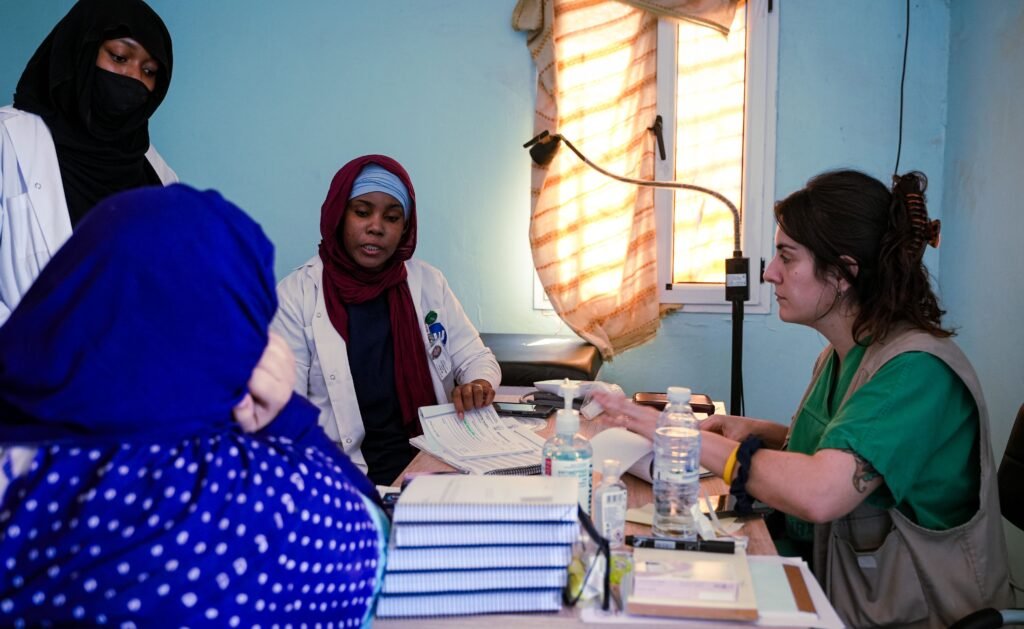

The UNICEF Internship Programme 2027 offers university students and recent graduates an opportunity to gain professional experience with one of the world’s leading organisations working for children. Whether you’re studying public health, economics, education, communications, international relations, information technology or another relevant discipline, an internship with UNICEF could help you develop practical skills while contributing to projects with a meaningful social impact.
Unlike many internship opportunities that require participants to work without financial compensation, UNICEF provides interns with a stipend to help meet living expenses. Depending on the position and available funding, additional financial contributions towards travel and visa costs may also be available.
The programme welcomes eligible undergraduate, master’s and PhD students, as well as individuals who graduated within the previous two years. Opportunities are advertised across UNICEF offices and teams, with some positions offering remote or part-time arrangements.
An important clarification for 2027 applicants: UNICEF does not operate one worldwide internship recruitment round with a single application deadline. Vacancies are published throughout the year, and each position has its own requirements and closing date. Applicants interested in opportunities during 2027 should therefore monitor the official careers portal regularly.
This guide explains how the UNICEF Internship Programme works, who qualifies, what financial support is available, how to prepare a competitive application and where to find genuine internship vacancies.
UNICEF Internship Programme 2027: Overview
| Scholarship information | Details |
|---|---|
| Organisation | United Nations Children’s Fund (UNICEF) |
| Opportunity | UNICEF Internship Programme |
| Opportunity type | Paid internship |
| Host locations | UNICEF offices and approved remote arrangements |
| Eligible applicants | Undergraduate, master’s and PhD students; recent graduates |
| Minimum age | 18 years |
| Internship duration | Normally 6–26 weeks |
| Financial support | Internship stipend; possible additional travel and visa contributions |
| Work arrangements | Full-time, part-time, on-site or remote, depending on the vacancy |
| Application period | Opportunities advertised throughout the year |
| General deadline | No single programme-wide deadline |
| Application platform | Official UNICEF Careers portal |
What Is the UNICEF Internship Programme?
The UNICEF Internship Programme is designed to give students and recent graduates practical experience in an international humanitarian and development organisation.
UNICEF works to protect children’s rights and improve their access to essential services, including education, healthcare, nutrition, safe water and protection from violence and exploitation. Achieving these objectives requires professionals with different areas of expertise, from programme officers and researchers to data analysts, communications specialists and administrative teams.
Internships allow participants to contribute to aspects of this work while learning from experienced professionals.
The responsibilities assigned to an intern depend on the office, the project and the applicant’s qualifications. One intern might help analyse survey data for a child protection project, while another may support communications activities, organise research findings or assist with programme monitoring.
This distinction matters because applicants don’t necessarily need a degree in international development to qualify. UNICEF’s operations require a wide range of professional skills, and individual vacancies explain the academic backgrounds and competencies needed.
Internships are temporary learning opportunities rather than permanent employment contracts. Although they can strengthen a graduate’s professional profile, completing an internship does not guarantee a future position with UNICEF.
Is the UNICEF Internship Programme 2027 Open for Applications?
UNICEF offers internships throughout the year, rather than opening one annual application cycle for all candidates.
As of October 2026, the official UNICEF Careers portal continues to advertise internship opportunities. Some vacancies may have start dates in 2027, while others are intended to begin earlier.
Therefore, the phrase “UNICEF Internship Programme 2027” is best understood as referring to internship opportunities relevant to the 2027 period, not a separate global recruitment exercise with one application form.
Applicants should pay attention to three dates when reviewing a vacancy:
- The date the position is advertised.
- The application deadline specified in the vacancy.
- The expected internship starting date and duration.
For example, a vacancy advertised in late 2026 may recruit an intern to begin work in early 2027. Another position may be advertised several months later for a different office or project.
It is also possible for UNICEF to have no suitable vacancies in a particular country or academic field at the time you search. That doesn’t mean the overall internship programme has closed.
The most reliable approach is to check the official vacancies portal regularly and apply when a position matches your qualifications.
Benefits of the UNICEF Internship Programme 2027
One of the programme’s main attractions is the combination of practical professional experience and financial support.
However, applicants should understand what UNICEF guarantees and which benefits depend on the specific position.
1. Internship Stipend
UNICEF provides interns with a stipend as a contribution towards living expenses.
According to UNICEF’s official internship guidance, the stipend may be paid by UNICEF or a partner institution.
The amount is not necessarily identical across countries and offices. Applicants should consult the financial arrangements in the individual vacancy announcement rather than assume that every intern receives the same monthly payment.
For instance, an internship in an expensive city may involve different financial arrangements from one in another duty station.
Before accepting an offer, candidates should consider whether the available stipend will adequately support their living expenses.
2. Possible Travel and Visa Contributions
Some selected interns may receive a one-time financial contribution towards travel and visa costs.
This support depends on funding availability and should not be treated as an automatic entitlement.
An applicant relocating internationally may still need to cover some expenses independently, including travel arrangements, accommodation deposits or other personal costs.
For this reason, describing every UNICEF internship as fully funded would be inaccurate.
3. Visa Support Documents
Where necessary, UNICEF can provide relevant supporting documents for visa applications.
These documents may help selected interns demonstrate the purpose and arrangements of their internship.
However, visa documentation support does not automatically mean that visa approval or all immigration expenses are guaranteed. Candidates remain responsible for meeting the immigration requirements applicable to their destination.
4. International Professional Experience
An internship with UNICEF offers exposure to professional practices in a large international organisation.
Interns may work alongside colleagues from different countries, academic backgrounds and professional disciplines.
Depending on the assignment, participants can gain experience in research, project coordination, communications, programme implementation, monitoring and evaluation or administrative support.
For graduates hoping to pursue careers in international development, humanitarian organisations, public policy or related fields, this experience can be particularly relevant.
5. Professional Development and Networking
Internships can also help participants develop transferable skills such as professional writing, teamwork, time management, data interpretation and communication.
The learning experience will differ between assignments, but working within an established international organisation can provide valuable insight into how complex programmes are managed.
Participants may also develop professional relationships that help them better understand future career pathways.
Nevertheless, applicants should view the internship primarily as a learning opportunity rather than a guaranteed route into permanent UNICEF employment.
UNICEF Internship Programme 2027 Eligibility Requirements
UNICEF establishes general eligibility conditions for its internship programme. Individual vacancies may introduce additional academic, language, nationality or professional requirements.
Academic Qualifications
Applicants must meet at least one of the following conditions:
- Be enrolled in an undergraduate degree programme.
- Be enrolled in a graduate or master’s degree programme.
- Be enrolled in a PhD programme.
- Have graduated from university within the previous two years.
This means the programme is not restricted to students who are still attending university.
For example, someone who completed a bachelor’s degree in 2026 may still fall within the recent-graduate eligibility window for an internship advertised in 2027, provided the relevant dates satisfy UNICEF’s requirements.
Applicants who graduated more than two years ago and are not currently enrolled in an eligible degree programme would generally not meet this particular condition.
Minimum Age Requirement
Applicants must be at least 18 years old.
UNICEF’s general internship criteria do not establish a universal upper age limit. However, applicants must still satisfy the academic or recent-graduate requirements and any conditions stated in the vacancy.
Language Requirements
Candidates must be proficient in at least one of UNICEF’s working languages:
- English
- French
- Spanish
Fluency in the working language of the office may also be required.
For instance, a position involving communications with French-speaking partners may require strong French-language skills, even if the applicant already speaks English.
The official programme’s general eligibility guidance does not prescribe one universal IELTS or TOEFL score for all internships. Applicants should therefore check the language requirements of the position rather than assume that a particular examination is compulsory or automatically waived.
Academic Performance and Motivation
UNICEF expects applicants to demonstrate strong academic performance and motivation.
Academic records can help show a candidate’s preparation, but a competitive application should also explain how the applicant’s skills relate to the internship’s responsibilities.
Someone applying for a monitoring and evaluation internship, for example, may benefit from highlighting coursework or projects involving statistics, surveys, research methods or data analysis.
Relevant volunteer work, student leadership, community projects and professional experience can also strengthen an application where they demonstrate useful skills.
Family Relationship Restrictions
UNICEF’s internship requirements exclude applicants who have immediate relatives, such as a parent or sibling, working with UNICEF.
Applicants must also not have other relatives within the reporting line of authority for the proposed internship.
Candidates should review these restrictions carefully and provide accurate information during the recruitment process.
Can International Students and African Graduates Apply?
Yes. The general UNICEF Internship Programme is open to eligible students and recent graduates from different academic backgrounds, including international applicants.
However, eligibility for the overall programme is not the same as eligibility for every vacancy.
Some internships are advertised internationally, while others are restricted to nationals or residents of a particular country.
A recent example from UNICEF’s official vacancies portal is an internship in Colombo, Sri Lanka, specifically restricted to Sri Lankan nationals. UNICEF has also advertised internship opportunities in Indonesia with particular nationality and applicant-group restrictions.
An otherwise qualified applicant from Cameroon, Nigeria, Ghana, Kenya or another country would not automatically qualify for those restricted positions.
International applicants should therefore examine the eligibility section of each announcement before preparing an application.
How African Applicants Can Identify Suitable Vacancies
Begin by searching the official UNICEF internship vacancies portal.
Review the country and duty station, then check whether the position specifies a nationality or residency restriction.
If the vacancy does not clearly explain whether overseas applicants are eligible, examine the complete announcement and any related application conditions before proceeding.
You should also consider the language of the assignment, whether the internship requires physical attendance, and whether you could realistically meet the travel and financial requirements.
An applicant from Cameroon who speaks English and French, for example, might have relevant language skills for certain international assignments. However, language ability alone does not override nationality restrictions or other eligibility conditions.
Similarly, a graduate with experience in data analysis may be better suited to research or monitoring-related internships than positions requiring specialist legal or medical training.
The strongest application is not necessarily the one submitted to the largest number of vacancies. It is the one that clearly demonstrates a match between the candidate’s qualifications and the responsibilities of a particular role.
Available Fields and Types of UNICEF Internships
UNICEF recruits interns according to the operational needs of its offices and projects. Consequently, the fields available can change throughout the year.
The following are examples of professional areas that may be relevant to UNICEF internship assignments.
Public Health, Nutrition and Social Policy
UNICEF’s work involves programmes related to children’s health, nutrition and wellbeing.
Internship responsibilities in related teams may involve research support, information management, programme coordination or analysis of development indicators.
Students with backgrounds in public health, nutrition, economics, sociology or social policy may find relevant opportunities, depending on the vacancy requirements.
Education and Child Protection
UNICEF supports initiatives designed to improve children’s access to education and protection.
Relevant internships may involve project research, documentation, data collection, communications or monitoring activities.
Applicants studying education, psychology, social work, sociology, development studies or related disciplines may be interested in these assignments.
Communications and External Relations
Communications teams help organisations share information about their activities, programmes and public campaigns.
Interns may assist with drafting content, conducting research, preparing communication materials or supporting digital engagement.
Students and graduates in journalism, communications, marketing, media studies and related fields may have relevant skills.
Data Analysis, Research and Monitoring
Data plays an important role in understanding children’s needs and assessing programme results.
Internship assignments in this area may involve database management, research, statistical analysis, data cleaning or preparing reports.
Applicants with experience in Excel, R, Python, statistical software or research methods may be able to demonstrate relevant technical abilities when a vacancy calls for them.
However, these tools are not universal requirements for every UNICEF internship.
Information Technology and Innovation
Some UNICEF teams work on digital solutions, innovation and technology-related projects.
Depending on the assignment, opportunities may be relevant to students in computer science, information systems, software development, engineering or related disciplines.
Candidates should review the technical skills required by the specific vacancy before applying.
Finance, Administration and Operations
UNICEF’s work also depends on financial management, administrative coordination, procurement, logistics and other operational functions.
Applicants studying accounting, finance, business administration, economics or management may find opportunities that align with their training.
These examples are not a confirmed list of vacancies for 2027. Actual openings depend on UNICEF’s recruitment needs and should always be checked through the official careers portal.
How Long Does a UNICEF Internship Last?
According to UNICEF’s official internship information, internships normally last between 6 and 26 weeks.
The precise duration depends on the assignment.
Some internships may last approximately two or three months, while others extend for around six months.
The working arrangement can also vary.
Full-Time Internships
Many positions require interns to work full-time according to the schedule established by the host office.
These arrangements may be suitable for recent graduates or students who can temporarily dedicate themselves to professional training.
Part-Time Internships
Some assignments permit part-time participation.
This may be particularly useful for students who need to balance their studies with professional responsibilities.
However, candidates should not assume that a position is part-time unless the vacancy explicitly permits it.
Remote Internships
UNICEF also offers some internships that can be carried out remotely.
These positions may allow interns to contribute to projects without relocating to the duty station.
Remote work arrangements depend on the needs of the office and the particular assignment. Applicants should verify whether a position is fully remote, hybrid or primarily office-based.
Documents Needed for the UNICEF Internship Programme 2027
UNICEF does not publish one identical document checklist for every internship vacancy. Applicants should follow the instructions attached to the specific position.
Nevertheless, preparing the following materials in advance can make the application process easier.
Updated Curriculum Vitae (CV)
Your CV should clearly present your education, relevant skills, projects, professional experience and achievements.
Rather than listing every activity you’ve undertaken, prioritise experiences that demonstrate your suitability for the internship.
For a research-related vacancy, for example, a university project involving data collection and analysis may be more relevant than unrelated work experience.
Tailored Cover Letter
A cover letter gives you an opportunity to explain why you’re interested in the position and how your background connects to its responsibilities.
Avoid submitting the same generic letter for every vacancy.
Instead, identify the main responsibilities in the announcement and provide concrete examples of relevant experience.
If a position requires research and report writing, describe a project in which you investigated a problem, analysed information and communicated your findings.
Your motivation should be evident through your examples rather than repeated statements about your passion for helping people.
Academic Records
Some vacancies may request academic transcripts, certificates or evidence of academic performance.
Current students may also need to demonstrate their university enrolment, while recent graduates may need proof of graduation.
Prepare clear digital copies, but upload only the documents requested in the application instructions.
Other Supporting Materials
Depending on the assignment, UNICEF may request additional information or evidence of relevant skills.
This could include writing samples, technical portfolios, proof of language ability or other documents specified in the vacancy.
Candidates should not assume that all these materials are compulsory for every position.
How to Apply for the UNICEF Internship Programme 2027
Applications are submitted through UNICEF’s official recruitment system.
The process is straightforward, but applicants should allow enough time to prepare a tailored application.
Step 1: Visit the Official UNICEF Careers Website
Start by visiting the official UNICEF internship page:
https://www.unicef.org/careers/internships
This page explains the programme’s general conditions and provides access to the vacancies portal.
Step 2: Search for Available Internship Positions
Open the UNICEF vacancies page and filter the opportunities by internship contract type.
Official internship vacancies:
https://jobs.unicef.org/en-us/search/?work-type=internship
You can also search by keyword, country or professional area.
For example, a student interested in statistics and programme evaluation could search for terms related to research, data or monitoring.
Do not limit your search to vacancies that explicitly contain “2027” in their titles. Some internships beginning in 2027 may be advertised during 2026.
Step 3: Read the Complete Vacancy Announcement
Before applying, review the position’s academic requirements, location, responsibilities, working arrangement, duration and closing date.
Pay particular attention to nationality restrictions and whether the assignment permits remote participation.
If you don’t meet a mandatory condition, applying may not be productive even if your academic background is otherwise suitable.
Step 4: Prepare Your Application
Update your CV and tailor your cover letter to the internship.
Use the vacancy announcement as your guide.
If UNICEF requests experience with research, project management or communications, explain how your academic work, volunteering or previous employment has helped you develop those abilities.
Concrete examples are generally more informative than unsupported claims about being hardworking, passionate or highly motivated.
Step 5: Apply Through the Official Recruitment Portal
Once you’ve identified a suitable vacancy, select the Apply Now option and follow the instructions provided.
Complete the required profile information and upload the requested documents.
Check your contact details, academic information and attachments before submitting.
Applications should be made through the official UNICEF recruitment system rather than through unofficial agents or third-party scholarship websites.
Step 6: Monitor Your Application and Email
After submission, monitor your email and any application updates available through the recruitment system.
UNICEF states that, because of the high volume of applications, only shortlisted candidates will be contacted.
If selected for further consideration, follow the instructions sent by the recruitment team.
There is no need to contact UNICEF independently to arrange an interview; the organisation will contact candidates it wishes to interview.
How to Make Your UNICEF Internship Application More Competitive
Meeting the minimum requirements makes you eligible to apply, but it does not guarantee selection.
Applicants can improve the quality of their submissions by paying attention to how they demonstrate their suitability.
Match Your Skills to the Vacancy
A common mistake is focusing entirely on UNICEF’s international reputation without explaining what you can contribute.
Suppose an internship involves maintaining project databases and preparing monitoring reports.
An applicant who has completed a university research project could describe how they organised a dataset, checked its accuracy, analysed results and prepared a report.
That example provides evidence of relevant skills, even if the applicant has never worked for an international organisation.
Use Academic Projects as Evidence of Experience
Students sometimes underestimate the professional value of their academic work.
A dissertation, group assignment, field survey, software project or policy analysis can demonstrate useful abilities.
The important question is whether the experience relates to the work described in the vacancy.
For instance, someone applying for an education-related internship might discuss a research project on school attendance, learning outcomes or barriers to educational access.
Highlight Relevant Volunteering
Community service and volunteering can demonstrate initiative, teamwork and familiarity with social development challenges.
Applicants who have supported youth organisations, educational programmes, public health activities or community projects may have experiences worth discussing.
Explain what you actually did, what responsibilities you held and what you learned.
Avoid exaggerating your role or claiming outcomes you cannot substantiate.
Demonstrate Clear Communication
International organisations often require interns to work with information from different sources and communicate findings clearly.
A concise, well-organised CV and a focused cover letter can help demonstrate these abilities.
Proofread your application carefully and make sure it answers the vacancy’s requirements.
Apply Before the Deadline
Leaving an application until the final hours creates unnecessary risks, particularly when supporting documents or online forms require additional preparation.
Start early enough to review the requirements, prepare your materials and resolve technical difficulties.
If no suitable position is available, use that time to strengthen your CV, develop relevant skills and monitor future vacancies.
UNICEF Internship Programme 2027 Application Deadline
There is no single deadline for all UNICEF internships in 2027.
UNICEF confirms that internship vacancies are advertised throughout the year.
Each vacancy specifies its own application closing date.
An internship scheduled to begin in February 2027, for example, may have an application deadline several months earlier. Another position starting later in the year may be advertised closer to its intended commencement date.
Applicants should therefore rely on the dates displayed in the official vacancy announcement.
Websites advertising a universal deadline for the UNICEF Internship Programme 2027 should be treated cautiously unless the date refers to a clearly identified position.
For the latest openings and closing dates, consult the official UNICEF internship vacancies page.
Frequently Asked Questions About UNICEF Internships
Is the UNICEF Internship Programme 2027 fully funded?
UNICEF provides interns with a stipend as a contribution towards living expenses. Additional financial support for travel and visa costs may be available when funding permits.
However, UNICEF does not guarantee that every internship will cover all accommodation, travel and personal expenses. Applicants should review the financial conditions of the specific position.
Can I apply without previous work experience?
Previous professional experience is not listed as a universal requirement for the overall programme.
Relevant experience may strengthen an application, and individual vacancies can have additional requirements.
Students may use academic projects, volunteering and other relevant activities to demonstrate their skills.
Can undergraduate students apply?
Yes. Students enrolled in undergraduate degree programmes are eligible under UNICEF’s general internship criteria, provided they satisfy the other requirements and those of the vacancy.
Can master’s and PhD students apply?
Yes. Eligible graduate and PhD students may apply for internship positions relevant to their qualifications.
Can I apply after graduating?
Yes. UNICEF generally accepts applicants who graduated within the previous two years.
Are UNICEF internships available remotely?
Some UNICEF internships may be completed remotely or through part-time arrangements.
Availability depends on the position, so applicants must check the working arrangements stated in the vacancy.
Is IELTS required for UNICEF internships?
UNICEF’s general internship criteria require proficiency in English, French or Spanish, but do not prescribe a universal IELTS score for all internships.
Individual offices may have additional language requirements. Applicants should follow the instructions in the relevant vacancy.
Can applicants from Africa apply for UNICEF internships?
Yes, eligible African students and recent graduates can apply for suitable UNICEF internships.
However, some vacancies are restricted to nationals or residents of specific countries. Always review the eligibility conditions before applying.
Does UNICEF guarantee employment after an internship?
No. UNICEF explicitly states that interns should not expect automatic employment at the end of their assignment.
However, internship experience can help candidates develop professional skills and may strengthen future applications for suitable opportunities.
When should I apply for UNICEF internships in 2027?
You can begin monitoring vacancies now. Positions are advertised throughout the year, and some internships taking place in 2027 may be recruited for during 2026.
Apply when a suitable position becomes available rather than waiting for a general programme opening date.
Final Thoughts
The UNICEF Internship Programme 2027 offers students and recent graduates a valuable opportunity to develop professional skills while gaining experience in humanitarian and international development work.
Its appeal extends beyond the monthly stipend. Participants may gain practical experience in research, communications, education, public health, programme support, technology and other areas relevant to UNICEF’s work.
Still, applicants should approach the opportunity with realistic expectations. Financial arrangements differ between assignments, international eligibility is not universal for every vacancy, and internships do not guarantee permanent employment.
The most effective approach is to identify a suitable position, understand its requirements and prepare an application that demonstrates relevant academic knowledge and practical abilities.
If you’re interested in a UNICEF internship during 2027, start exploring the official vacancies now and continue checking for new opportunities throughout the year.
Official UNICEF Internship Links
The following are official resources for checking programme information, application requirements and current vacancies.
UNICEF Internship Programme — Official Information
https://www.unicef.org/careers/internships
UNICEF Internship Vacancies — Apply Online
https://jobs.unicef.org/en-us/search/?work-type=internship
UNICEF Internship Frequently Asked Questions
https://www.unicef.org/careers/frequently-asked-questions-internships
UNICEF Application Preparation Guide
https://www.unicef.org/careers/get-prepared-apply
Last reviewed: 21 October 2026. Internship vacancies, deadlines and eligibility conditions may change. Applicants should always consult the official UNICEF vacancy announcement before applying.