
Applications for the Erasmus Mundus NOHA Scholarship 2027 are open for international students who want to pursue a fully funded master’s degree in international humanitarian action across several European universities.
The NOHA Erasmus Mundus Joint Master’s Degree Programme in International Humanitarian Action is a two-year, 120 ECTS programme designed for students and professionals interested in humanitarian assistance, forced migration, conflict, international development, humanitarian policy, public health, protection and related areas.
For the 2027–2029 intake, selected Erasmus Mundus scholars can receive €1,400 per month for up to 24 months. Erasmus Mundus scholarship holders are also exempt from tuition and other mandatory programme participation costs, while the scholarship contributes to living, travel, visa and installation expenses.
Applications for the 2027 intake open on 1 October 2026, while candidates seeking an Erasmus Mundus scholarship must submit a complete application by 15 December 2026.
Importantly, the programme is open to applicants from all over the world. Students from African countries, including Cameroon, Nigeria, Ghana, Kenya, Uganda and many others, can apply if they meet the academic and language requirements.
Erasmus Mundus NOHA Scholarship 2027 at a Glance
| Scholarship Detail | Information |
|---|---|
| Programme | Erasmus Mundus Joint Master’s Degree in International Humanitarian Action |
| Common Name | NOHA Master |
| Degree Level | Master’s |
| Duration | 2 years / 4 semesters |
| Credits | 120 ECTS |
| Scholarship | Erasmus Mundus Joint Master Scholarship |
| Scholarship Amount | €1,400 per month |
| Maximum Scholarship Duration | 24 months |
| Tuition/Participation Costs for Scholars | Covered |
| Study Format | International mobility across participating universities |
| Eligible Applicants | International applicants |
| Applications Open | 1 October 2026 |
| Scholarship Deadline | 15 December 2026 |
| Programme Intake | 2027–2029 |
| Number of Erasmus Mundus Scholarships Indicated | 16 |
| Main Field | International Humanitarian Action |
What Is the NOHA Erasmus Mundus Joint Master’s Programme?
NOHA stands for Network on Humanitarian Action. The network brings together universities and other academic and professional partners working to strengthen education, research and professional capacity in humanitarian action.
Its Erasmus Mundus Joint Master’s Degree Programme in International Humanitarian Action is a multidisciplinary postgraduate programme designed for people who want to work in or deepen their expertise in humanitarian action.
The programme dates back to 1993 and has developed a large international network of graduates working in humanitarian relief, international cooperation and related fields.
Rather than completing the entire degree at one university, students experience an international mobility structure. They begin at one NOHA university and then study at another institution as part of their specialisation.
The programme therefore combines academic study with international exposure, professional development, research and practical experience.
Universities Participating in the NOHA Erasmus Mundus Programme
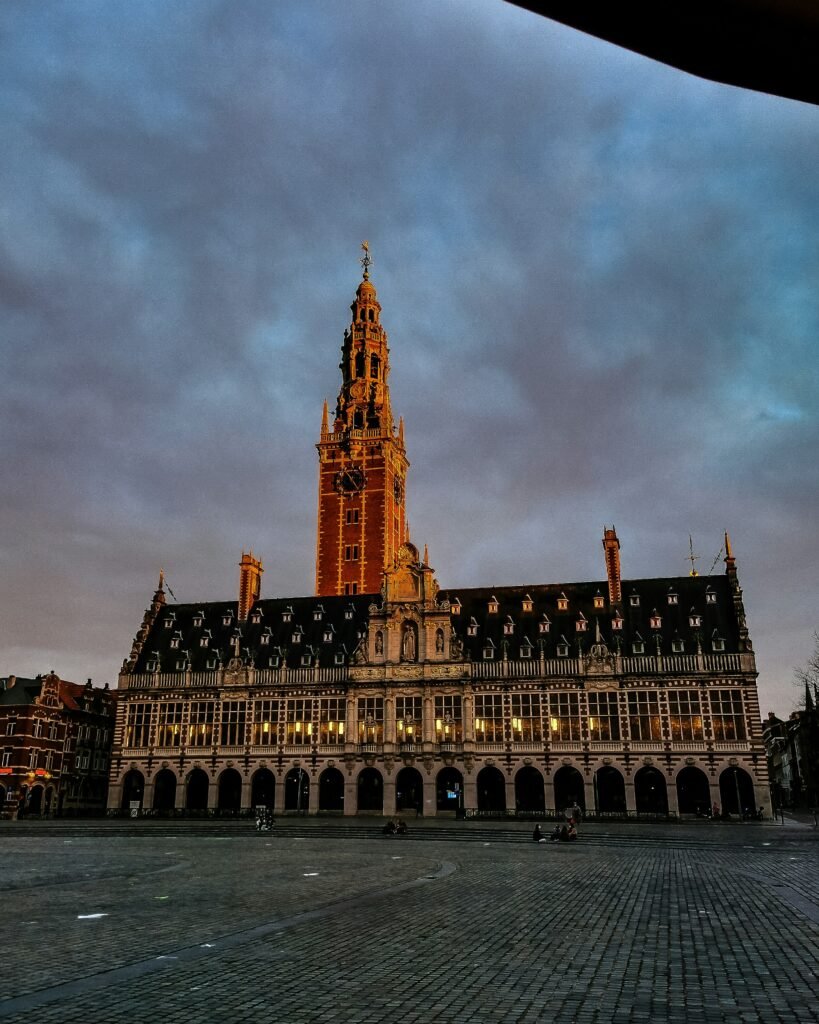
Eight European universities currently deliver the NOHA Joint Master’s programme.
| University | Country | Selected Area of Specialisation |
|---|---|---|
| Aix-Marseille Université | France | Legal and Geopolitical Approach of Humanitarian Action |
| University of Malta | Malta | Forced Migration and Human Security |
| University of Groningen | Netherlands | Humanitarian Analysis and Intervention Design |
| Ruhr University Bochum | Germany | Humanitarian Policy and Practice |
| University of Deusto | Spain | Protection in Humanitarian Action |
| University College Dublin | Ireland | Resilience and Localising the Aid Effort |
| University of Warsaw | Poland | Armed Conflicts and Humanitarian Action |
| Uppsala University | Sweden | Conflict, Peace-building and Religion |
This means NOHA students can potentially study in countries including France, Malta, the Netherlands, Germany, Spain, Ireland, Poland and Sweden.
The wider NOHA network also works with partner universities outside Europe, including institutions in countries such as Australia, Colombia, Guatemala, India, Indonesia, Jordan, Lebanon, Qatar, Sierra Leone, Thailand and the United States.
How the NOHA Master’s Programme Is Structured
The Erasmus Mundus NOHA Master is a two-year programme comprising four semesters and 120 ECTS credits.
Students do not simply remain at one institution throughout the degree. International mobility is a key part of the programme.
Semester 1: Foundation Period
Students begin at their selected home university.
The foundation period develops multidisciplinary knowledge in areas connected to humanitarian action.
Subjects can cover areas such as:
- World politics and humanitarian action
- Legal dimensions of humanitarian action
- Management in humanitarian action
- Public health in humanitarian contexts
- Anthropology and intercultural dimensions of humanitarian action
Semester 2: Specialisation Period
Students move to another NOHA university to pursue a specialisation.
Available areas include forced migration, humanitarian policy, humanitarian analysis, armed conflict, protection, peace-building, resilience and legal and geopolitical approaches to humanitarian action.
Semester 3: Contextualisation and Professional Development
The third semester allows students to further contextualise their learning.
Depending on the programme arrangements and track, this stage can involve regional training, professional experience and other forms of practical or contextual learning.
Semester 4: Research Period
The final semester focuses strongly on research and completion of the master’s thesis.
Therefore, NOHA combines academic knowledge, international mobility, professional development and independent research.
Erasmus Mundus NOHA Scholarship Benefits
Successful Erasmus Mundus scholarship recipients receive substantial financial support throughout the programme.
| Benefit | Coverage |
|---|---|
| Monthly Erasmus Mundus Scholarship | €1,400 |
| Maximum Duration | Up to 24 months |
| Maximum Monthly Support Over 24 Months | €33,600 |
| Tuition/Participation Costs | Covered for Erasmus Mundus scholars |
| Travel Costs | Supported through the Erasmus Mundus scholarship |
| Visa Costs | Supported through the scholarship contribution |
| Installation Costs | Supported through the scholarship contribution |
| Living/Subsistence Costs | Supported through monthly scholarship |
| Programme Insurance | Included within programme participation arrangements |
| International Mobility | Integrated into the programme |
At €1,400 per month for 24 months, the monthly scholarship component can total €33,600 over the two-year programme.
However, applicants should understand how Erasmus Mundus funding works. The €1,400 monthly scholarship is designed as a contribution towards the scholar’s costs, including living expenses, travel, visa and installation expenses.
It should therefore not be interpreted as €1,400 per month plus separate unlimited reimbursements for every travel, visa and living expense.
Is the Erasmus Mundus NOHA Scholarship Fully Funded?
For selected Erasmus Mundus scholars, NOHA can reasonably be described as a fully funded master’s opportunity.
Erasmus Mundus scholarship holders are not charged tuition fees or other mandatory participation costs associated with the programme.
In addition, scholars receive the €1,400 monthly scholarship contribution for the period covered by their award.
However, applicants who receive admission to NOHA without receiving an Erasmus Mundus scholarship should not assume that their studies will automatically be funded.
Admission and scholarship selection are not the same thing.
An applicant can be academically admitted to NOHA but not selected for an Erasmus Mundus scholarship.
How Many NOHA Erasmus Mundus Scholarships Are Available for 2027?
For the 2027–2029 intake, NOHA indicates the following Erasmus Mundus scholarship distribution:
| Scholarship Category | Number of Scholarships |
|---|---|
| Candidates from Programme Countries | 4 |
| Candidates from Partner Countries | 8 |
| Candidates from Targeted Regions | 4 |
| Total indicated scholarships | 16 |
The four additional scholarships target candidates from specified Erasmus+ regions.
Applicants should also note that geographic balance forms part of Erasmus Mundus scholarship allocation. NOHA states that no more than 10% of total scholarships may be awarded to students of the same nationality.
Competition should therefore be expected to be strong.
Who can apply for the Erasmus Mundus NOHA Scholarship in 2027?
The programme welcomes applicants from a range of countries and academic backgrounds.
At a minimum, applicants should:
- Hold a completed first-cycle university degree, normally a bachelor’s degree or equivalent
- Have studied a discipline relevant to humanitarian action
- Meet the language requirements for their selected universities
- Complete the NOHA online application
- Submit all compulsory documents before the relevant deadline
- Meet any additional national or university-specific admission requirements
Candidates applying specifically for the Erasmus Mundus scholarship must have completed their undergraduate degree by the scholarship application deadline.
Therefore, applicants who have not yet graduated by 15 December 2026 should pay particular attention to this requirement.
Which Academic Backgrounds Are Eligible?
NOHA is multidisciplinary. Consequently, applicants do not necessarily need a previous degree titled “Humanitarian Action”.
Relevant backgrounds may include areas such as:
- International relations
- Political science
- Development studies
- Economics and management
- Law
- Social sciences
- Sociology
- Anthropology
- Public health
- Medical sciences
- Food sciences
- Engineering
- Education
- Humanities
- Peace and conflict studies
- Migration studies
- International development
- Disaster and emergency management
What matters is whether the applicant’s academic preparation is relevant to humanitarian action and whether it meets the programme’s admission requirements.
Applicants from less obvious disciplines should use their application to explain clearly how their academic background, experience and future goals connect to humanitarian issues.
Can African Students Apply for the NOHA Scholarship?
Yes.
The Erasmus Mundus NOHA Scholarship is open internationally, and eligible African applicants can compete for the available scholarships.
Applicants from countries such as:
- Cameroon
- Nigeria
- Ghana
- Kenya
- Uganda
- Rwanda
- South Africa
- Tanzania
- Zambia
- Ethiopia
- Senegal
- Sierra Leone
- The Gambia
- Malawi
- Zimbabwe
- Botswana
- Namibia
and other eligible countries can apply, provided they meet the programme requirements.
In fact, the international nature of Erasmus Mundus makes the programme particularly attractive to applicants seeking a degree that combines study in multiple countries with an internationally orientated career.
Can Cameroonian Students Apply?
Yes. Eligible applicants from Cameroon can apply for the 2027 NOHA Erasmus Mundus Scholarship.
A Cameroonian applicant will still need to satisfy the same academic, documentation and language requirements applicable to the programme.
Applicants should not assume that nationality alone guarantees access to one of the regionally targeted scholarships. When applying, you should always check scholarship categories and Erasmus+ regional classifications carefully.
NOHA Language Requirements
This is one area where applicants need to be particularly careful.
The NOHA Erasmus Mundus programme does not simply have a universal “no IELTS required” rule.
Language requirements depend partly on the universities selected for the applicant’s mobility pathway.
| Language of Instruction | General Required Level |
|---|---|
| English | C1 |
| French | C1 |
| Spanish | B2 |
Most participating universities offer the NOHA programme in English.
The English-language universities include:
- Ruhr University Bochum
- University College Dublin
- Uppsala University
- University of Groningen
- University of Warsaw
- University of Malta
Aix-Marseille Université uses French for the relevant programme route, while the University of Deusto may require Spanish for first-semester study.
Applicants therefore need recognised proof of proficiency in the language or languages required by their chosen universities.
Is IELTS Required for NOHA?
Not necessarily IELTS specifically, but recognised evidence of the required language proficiency is needed.
Applicants should not interpret this as a scholarship with no English-language requirement.
For English-taught routes, applicants need to demonstrate the required level of English through qualifications accepted by the relevant universities.
Depending on the applicable university rules, accepted evidence may include recognised English tests or other approved evidence of proficiency.
For example, NOHA’s programme rules identify English proficiency at approximately C1 level, with recognised routes including qualifications such as IELTS, TOEFL or another accepted C1-level certification, subject to the requirements of the relevant universities.
Applicants should therefore check the current language requirements for both their preferred home and host universities before submitting their application.
Choosing Your Home and Host Universities
Applicants should not select universities only because they like the country.
Your choices should reflect:
- Your academic interests
- Your preferred humanitarian specialisation
- Your language qualifications
- University-specific admission requirements
- Your long-term career goals
For example, someone strongly interested in forced migration may find the University of Malta pathway particularly relevant.
An applicant interested in armed conflict may find the University of Warsaw specialisation particularly relevant.
Meanwhile, someone focused on protection may find the University of Deusto particularly relevant.
The strongest application should show that the applicant understands the programme structure and has selected universities for both academic and professional reasons.
Required Documents for Erasmus Mundus NOHA Scholarship 2027
Applicants should begin preparing documents well before December.
The online application generally requires academic, identification, language and supporting documents.
| Document | Why It Is Required |
|---|---|
| Passport | Identification and nationality |
| Bachelor’s Degree Certificate | Proof of completed first-cycle degree |
| Academic Transcripts | Evidence of academic performance |
| CV in English | Academic and professional profile |
| Language Certificate/Evidence | Proof of required language proficiency |
| Two Reference Letters | Academic/professional assessment |
| Proof of Residence | Relevant particularly for Erasmus Mundus scholarship requirements |
| Diploma Supplement | Where available |
| Certified Translations | Where required for documents not in accepted languages |
| Publications | If applicable |
Applicants should ensure that required copies and translations meet NOHA’s certification rules.
A normal photocopy may not necessarily satisfy a requirement for a certified copy.
Reference Letters for NOHA
Two reference letters are required.
These can generally be:
- Two academic references
- Two professional references
- One academic and one professional reference
Where possible, a combination of academic and professional references can provide a broader picture of the candidate.
References should come from people who genuinely know the applicant’s academic work, professional ability, leadership, humanitarian engagement or potential.
Family members should not be used as referees.
Reference letters should also be properly dated and prepared according to the current application instructions.
Proof of Residence for Erasmus Mundus Applicants
Proof of residence can be particularly important for Erasmus Mundus scholarship applicants because geographic classification can affect scholarship allocation.
Applicants should therefore follow the programme’s instructions carefully.
A passport or national identity card should not automatically be assumed to constitute acceptable proof of residence.
Depending on the rules, applicants may need an official residence certificate or an appropriate certificate from their place of work, study or training.
The document must also satisfy the programme’s recency and format requirements.
NOHA Scholarship Selection Criteria
Meeting the minimum eligibility requirements does not guarantee selection.
NOHA evaluates applicants using several factors.
| Selection Area | What It Means for Applicants |
|---|---|
| Academic Qualifications | Strength and relevance of previous studies |
| Research Experience | Evidence of research ability where applicable |
| Professional Experience | Relevant work or practical exposure |
| Humanitarian Experience | Experience with humanitarian or related organisations can strengthen an application |
| Motivation | Clear reasons for choosing humanitarian action and NOHA |
| Language Ability | Ability to study successfully in chosen programme languages |
| Recommendations | Strength and relevance of references |
| Interview | May be considered where applicable |
| International Balance | Nationality and gender balance can form part of cohort selection. |
Professional experience is therefore valuable, but applicants should not assume that years of humanitarian employment are an absolute requirement for every candidate.
Strong academic candidates with relevant volunteering, research, community engagement or other meaningful experience may still build competitive profiles.
How Competitive Is the Erasmus Mundus NOHA Scholarship?
The scholarship is highly competitive.
There are only 16 indicated Erasmus Mundus scholarships for the 2027–2029 intake, while applications can come from candidates around the world.
Applicants should therefore approach the application as a competitive international scholarship rather than simply a university admission form.
A strong academic record helps, but academic grades alone may not be enough.
The selection process also considers professional and research experience, humanitarian motivation, language abilities, recommendations and the overall quality of the candidate’s profile.
How to Strengthen Your NOHA Scholarship Application
A competitive application should create a clear connection between your past experience, the NOHA programme and your future humanitarian impact.
Do not simply write that you want to help people.
Instead, identify the humanitarian issues that genuinely interest you.
For example, you might have experience or interests related to:
- Refugees and internally displaced persons
- Food insecurity
- Climate-related displacement
- Conflict
- Public health emergencies
- Human rights
- Disaster response
- Gender and humanitarian action
- Humanitarian logistics
- Child protection
- Migration
- Community resilience
Then explain how NOHA’s curriculum, international mobility and specific specialisation can help you develop the expertise needed to address those challenges.
Specificity usually makes for a stronger application than broad statements about wanting to “make the world a better place”.
Can You Apply Without Humanitarian Work Experience?
Relevant professional experience can strengthen an application because it forms part of NOHA’s selection considerations.
However, the programme’s eligibility criteria centre on having a relevant university degree, meeting language requirements and submitting a complete application.
Applicants without full-time humanitarian employment can therefore still examine their broader experience.
Relevant evidence might include:
- Volunteering
- Community projects
- NGO involvement
- Research
- Internships
- Advocacy
- Development projects
- Public health activities
- Refugee or migration-related projects
- Disaster-response activities
- Human rights initiatives
The important thing is to present genuine experiences and explain their relevance.
Can Previous Erasmus Mundus Scholars Apply?
Applicants who have previously received an Erasmus Mundus Joint Master scholarship are not eligible to receive another Erasmus Mundus Joint Master scholarship under the applicable rules.
Therefore, candidates who previously benefited from an EMJM scholarship should carefully check their funding eligibility.
Erasmus Mundus Mobility Requirement
International mobility is not optional for Erasmus Mundus scholarship holders.
Students must complete physical study periods in at least two countries, which must be different from the student’s country of residence at enrolment.
At least one of the study countries must be either an EU member state or another country associated with the Erasmus+ Programme.
The required mobility cannot simply be replaced with online study.
This is one of the defining features of Erasmus Mundus Joint Master’s programmes.
How to Apply for the Erasmus Mundus NOHA Scholarship 2027
Applications are submitted through the NOHA Joint Application System.
Applicants can follow these steps:
- Visit the official NOHA Master’s programme website.
- Study the programme structure and the participating universities.
- Review the specific national admission requirements for your preferred universities.
- Decide on your preferred home and host universities.
- Confirm the language requirements for those universities.
- Prepare your bachelor’s degree certificate and academic transcripts.
- Arrange any necessary certified copies and translations.
- Prepare your CV in English.
- Obtain the required language evidence.
- Request two strong reference letters.
- Obtain acceptable proof of residence where required.
- Create and complete your application through the NOHA online application system.
- Upload all compulsory documents in the required format.
- Review your application carefully.
- Submit the complete application before the Erasmus Mundus scholarship deadline.
There is no separate collection of additional documents simply because you want the Erasmus Mundus scholarship. Candidates seeking the scholarship follow the NOHA joint application procedure and must meet the scholarship eligibility requirements by the scholarship deadline.
Important NOHA Application Dates for 2027
| Stage | Date |
|---|---|
| Applications Open | 1 October 2026 |
| Erasmus Mundus Scholarship Deadline | 15 December 2026 at 23:59 GMT |
| Scholarship Application Review | After the December deadline |
| Scholarship Selection Results | Expected around March 2027 |
| Central Deadline for Ordinary/Self-Funded Applications | 1 April 2027 |
| Later Deadline for Applicants Without EU Citizenship or Valid EU Residence Permit | 1 July 2027 |
| Programme Intake | 2027–2029 |
Applicants seeking the Erasmus Mundus scholarship should focus on the 15 December 2026 deadline.
Waiting for the later self-funded admission deadlines will mean missing consideration for the Erasmus Mundus scholarship.
What Happens After You Apply?
The NOHA Secretariat and participating universities first review applications to determine whether they are complete and satisfy the minimum eligibility requirements.
Eligible applications then proceed through the selection process.
The Joint Admissions Board is responsible for admission decisions, while participating universities contribute to evaluating candidates.
Successful Erasmus Mundus candidates are expected to receive the outcome around March 2027.
Candidates who are admitted but not selected for an Erasmus Mundus scholarship may continue as self-funded applicants.
Career Opportunities After the NOHA Master
NOHA is designed particularly for people who want to build careers connected to humanitarian action and international cooperation.
Graduates may pursue opportunities in areas such as:
- Humanitarian organisations
- United Nations agencies
- International NGOs
- National NGOs
- Government agencies
- International development organisations
- Refugee and migration organisations
- Disaster management
- Humanitarian policy
- Human rights
- Conflict and peace-building
- Humanitarian research
- Public health and emergency response
- International institutions
- Academic and research organisations
The programme’s international mobility and multidisciplinary structure can also help graduates develop cross-cultural experience and professional networks in different countries.
Common Mistakes to Avoid
1. Assuming “No IELTS” Means No Language Proof
NOHA has clear language requirements. Applicants need recognised evidence that is appropriate for their chosen universities.
2. Waiting Until the Self-Funded Deadline
If you want Erasmus Mundus funding, 15 December 2026 is the important deadline.
3. Applying Before Completing Your Bachelor’s Degree
For the Erasmus Mundus scholarship, the undergraduate degree must be completed by the scholarship deadline.
4. Choosing Universities Randomly
Your university choices should match your academic interests, language abilities and career objectives.
5. Writing a Generic Motivation
Show a clear humanitarian problem or area you care about and explain why NOHA is relevant to your development.
6. Ignoring Document Certification Requirements
Check whether certificates, transcripts and translations need certification.
7. Assuming Admission Guarantees Funding
Admission to NOHA and receiving an Erasmus Mundus scholarship are separate outcomes.
8. Submitting at the Last Minute
Reference letters, certified documents, translations and language evidence can take time. Start preparing early.
Frequently Asked Questions
Is the Erasmus Mundus NOHA Scholarship 2027 fully funded?
Yes, selected Erasmus Mundus scholars receive substantial funding. Scholarship holders are exempt from tuition and mandatory programme participation costs and can receive €1,400 per month for up to 24 months as a contribution towards living, travel, visa and installation expenses.
How much is the NOHA Erasmus Mundus scholarship?
The Erasmus Mundus individual scholarship is €1,400 per month for the duration of the award, up to 24 months for this two-year programme.
What is the NOHA Scholarship 2027 deadline?
Candidates seeking an Erasmus Mundus scholarship must submit their complete application by 15 December 2026 at 23:59 GMT.
When do applications open?
Applications for the 2027–2029 cohort open on 1 October 2026.
How many scholarships are available?
NOHA indicates 16 Erasmus Mundus scholarships for the 2027–2029 intake: four for candidates from Programme Countries, eight targeted at Partner Country candidates and four additional scholarships for specified targeted regions.
Can Nigerians apply?
Yes. Eligible Nigerian applicants can apply.
Can Cameroonians apply?
Yes. Eligible applicants from Cameroon can apply.
Can Ghanaians apply?
Yes. Eligible Ghanaian applicants can apply.
Do I need IELTS?
Not necessarily IELTS specifically. However, you must provide recognised evidence of the language proficiency required by the universities you have selected. English-taught routes generally require proof at the C1 level.
Can final-year bachelor’s students apply?
Applicants seeking the Erasmus Mundus scholarship must have completed their undergraduate degree by the 15 December 2026 scholarship deadline.
Is work experience compulsory?
Professional and humanitarian experience can strengthen an application and is part of the selection considerations, but applicants should assess the programme’s minimum eligibility criteria separately from the factors used to rank competitive applications.
Is there a separate Erasmus Mundus scholarship application?
The Erasmus Mundus scholarship is handled through the NOHA joint application procedure. Applicants seeking funding must submit the complete required application by the scholarship deadline and satisfy the scholarship eligibility rules.
Can I study in more than one European country?
Yes. International mobility is a central part of the programme, and Erasmus Mundus students must complete qualifying physical study periods in at least two countries.
Final Advice for Applicants
The Erasmus Mundus NOHA Scholarship 2027 is particularly suitable for applicants who want to build professional careers in humanitarian action, international development, migration, conflict response, public health, human rights, disaster management and related fields.
However, the programme is a competitive scholarship with a limited number of awards.
Applicants should therefore avoid treating the application as a simple form-filling exercise.
Start early. Research the universities carefully. Understand the specialisation you want to pursue. Secure your references and language documentation in good time. Most importantly, build an application that clearly connects your previous education and experience with the humanitarian problems you want to address in the future.
For candidates seeking full Erasmus Mundus funding, remember the most important date:
Scholarship application deadline: 15 December 2026 at 23:59 GMT.
Official Links
NOHA Master’s Programme:
https://nohanet.org/masters
NOHA Application Portal:
https://apply.nohanet.org/