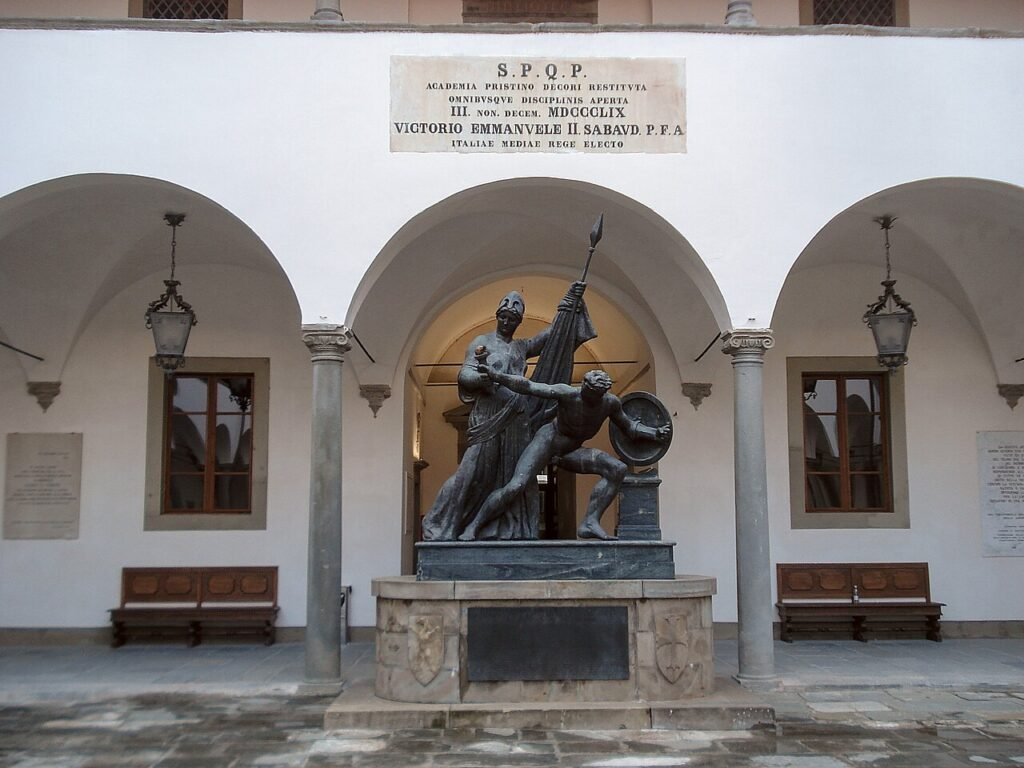
The University of Pisa has opened applications for its English-taught master’s degrees for the 2027/28 academic year. In fact, most programmes opened on 9 and 10 November 2026, and the earliest deadline for non-EU applicants is 1 February 2027. So if you’re planning to study in Italy next September, this is one of the first strong public universities to open, and it’s worth moving early.
This guide lists every English-taught master’s at Pisa with its opening date and deadline, explains the €30 application fee and the two-application limit, and walks you through the portal, the English requirement and the scholarships that can cover your tuition and housing. I work with students applying to Italian universities every year, so I’ve also added the practical points that usually decide whether an application goes through smoothly.
Why Study at the University of Pisa?
Founded in 1343, the University of Pisa is one of the oldest universities in Europe. Today, however, it’s a large public university with twenty departments and research centres across many fields. According to the Academic Ranking of World Universities (ARWU), it consistently ranks among the top 300 universities in the world and among the top four in Italy, as the university notes in its own admission calls.
For international students, in particular, Pisa has three clear advantages:
- Low tuition. As a public university, its fees for 2026/27 ranged from €446 to €2,900 a year, depending on your country of origin.
- Generous regional support. The Tuscany region’s DSU scholarship can cover accommodation, meals and tuition for students who qualify on income.
- Strong programmes in tech and engineering. Above all, its English-taught offer is heavily weighted towards computer science, data, AI, cybersecurity and engineering, which are fields with good job prospects in Europe.
Beyond that, Pisa is a small, walkable city in Tuscany, with lower living costs than Milan or Rome and a train connection to Florence in about an hour.
University of Pisa English-Taught Master’s Degrees 2027/28
Below are the master’s programmes the university lists as taught in English, with their application dates. Note that the university’s page still carries an “a.a. 2026-2027” label, but the dates (opening in November 2026, deadlines in 2027) are for the intake starting in autumn 2027.
| Programme | Applications opened | Non-EU deadline | EU deadline |
|---|---|---|---|
| Artificial Intelligence and Data Engineering | 10 Nov 2026 | 1 Feb 2027 | 1 Feb 2027 |
| Communications Engineering | 10 Nov 2026 | 1 Feb 2027 | 1 Feb 2027 |
| Computer Engineering | 10 Nov 2026 | 1 Feb 2027 | 1 Feb 2027 |
| Cybersecurity | 10 Nov 2026 | 1 Feb 2027 | 1 Feb 2027 |
| Data Science and Business Informatics | 9 Nov 2026 | 1 Feb 2027 | 31 Aug 2027 |
| Computer Science | 9 Nov 2026 | 1 Feb 2027 | 31 Aug 2027 |
| Informatics for Digital Health | 9 Nov 2026 | 1 Feb 2027 | 31 Aug 2027 |
| Nuclear Engineering | 9 Nov 2026 | 1 Feb 2027 (12:00 noon) | 31 May 2027 (12:00 noon) |
| Economics | 9 Nov 2026 | 30 Apr 2027 | 30 Apr 2027 |
| Digital Intelligence and Change Management | Opens 1 Dec 2026 | 30 Apr 2027 | 30 Apr 2027 |
| Exploration and Applied Geophysics | 9 Nov 2026 | 5 Sep 2027 | 30 Sep 2027 |
All deadlines close at 23:59 unless stated otherwise. In addition, two more English-taught programmes, Space Engineering and Materials and Nanotechnology, use separate application systems, so check their own pages for dates.
The pattern is clear. Specifically, most tech and engineering programmes close on 1 February 2027 for non-EU students, while Economics and Digital Intelligence and Change Management close at the end of April. Geophysics is the only one that stays open until September, although the university strongly advises non-EU students to apply as soon as possible.
Who Can Apply?
Each programme sets its own academic requirements, so first read the call (the “bando”) for your course carefully. Still, some rules apply across the board.
A relevant bachelor’s degree
You need a bachelor’s degree, or an equivalent foreign qualification, in a field related to the master’s. In practice, programmes check this through minimum credits in specific subject areas. For example, the 2027/28 call for Exploration and Applied Geophysics asks for:
- at least 20 ECTS in maths, physics, chemistry or informatics, and
- at least 60 ECTS in engineering, physics or geology.
Similarly, last year’s call for Artificial Intelligence and Data Engineering required exams in algorithms and programming, computer architecture, operating systems, computer networks and database systems, and stated that missing any of them made the application ineligible. So if you’re aiming at a computing programme, compare your transcript with the call line by line before you pay the fee.
Final-year students
In general, you can apply before finishing your bachelor’s degree, as long as you graduate in time. However, each call sets the exact cut-off date, so confirm it for your programme.
English at B2 level
Since all these programmes are taught in English, you need at least B2 level on the Common European Framework (CEFR). For non-EU students who need a study visa, the 2027/28 call specifies that the certificate must come from an internationally recognised institution and cover all four skills: listening, reading, speaking and writing.
No English Certificate? Take Pisa’s Own B2 Test
This is also one of the most useful features of Pisa’s admissions. If you don’t have an accepted B2 certificate, you can take an English test run by the University of Pisa Language Centre (CLI). Then, if you pass, you’ll receive a statement of language proficiency that the university accepts for admission.
| Session | Written test | Oral test |
|---|---|---|
| First session | 1 December | 2 December |
| Second session | 14 December | 15 December |
| Third session | 12 January | 13 January |
You must take and pass both the written and the oral test. To take part, register through the CLI website. However, keep one caveat in mind: the university states that accepting this certificate for visa purposes is up to the Italian embassy or consulate. In my experience with Italian applications, embassies vary in what they accept, so if you already have IELTS, TOEFL or another recognised certificate, use it.
The €30 Application Fee and the Two-Application Limit
Since 2025/26, Pisa charges an application fee of €30 for each application on the international portal. However, it applies only to applicants with a foreign qualification.
- You can submit up to two applications on the portal.
- The fee is charged separately for each one, so two applications cost €60.
- You pay directly on the portal at the end of the application, and your application only reaches the evaluation committee after payment.
Even so, the two-application limit is the part students underestimate. In other words, you can’t spread yourself across five Pisa programmes and hope one works. Instead, choose the two where your transcript matches the requirements best.
Moreover, many African students struggle to pay Italian university fees online with local bank cards. If your card is rejected, don’t leave the payment until the last day, because the portal won’t submit your application without it.
How to Apply: Step by Step
- Choose your programmes. Read the call for each one and confirm you meet the credit and subject requirements.
- Prepare your documents. Calls generally ask for your degree certificate and transcripts (translated into English or Italian if needed), a copy of your passport, a detailed CV and proof of English. Check your programme’s call for the exact list, since missing documents usually make an application invalid.
- Register on the portal. Most programmes use applymscenglish.unipi.it. The university also provides a video tutorial for the application process.
- Complete the form and upload everything as PDFs.
- Pay the €30 fee and submit before your programme’s deadline.
- Prepare for evaluation. First, a committee checks your eligibility and reviews your CV and qualifications. Many programmes add an online interview or test; the Geophysics call, for example, includes an online video interview with an assessment test on maths and physics.
- After admission, start the visa route. Non-EU students then complete pre-enrolment through Italy’s Universitaly portal and apply for a study visa.
Scholarships for International Students at the University of Pisa
Pisa’s master’s programmes don’t come with automatic full scholarships. Still, two kinds of support matter most: regional, income-based funding through the DSU, and merit-based funding from the university itself. Together with government schemes, they can make your studies almost free.
DSU Toscana regional scholarship
For most students, this is the most important one. The Tuscany regional agency for the right to university study (DSU Toscana) offers grants based on financial need. According to the university, a DSU grant can include:
- free accommodation
- free meals at university dining halls
- a monthly allowance for other expenses
- exemption from university tuition fees
You apply for it separately, online, at dsu.toscana.it. The DSU call usually comes out in summer and requires income and family documents, so start gathering those early. Most of the Italy students I work with rely on this kind of regional, income-based scholarship rather than merit awards.
MAECI Italian Government Scholarships
Italy’s Ministry of Foreign Affairs and International Cooperation (MAECI) offers scholarships each year to international students. Its call comes out separately and is very competitive, but it’s worth applying alongside your Pisa admission.
Invest Your Talent in Italy
Several Pisa master’s programmes, including Exploration and Applied Geophysics, take part in the Invest Your Talent in Italy (IYT) programme. Students from eligible countries who are admitted can apply separately for an IYT scholarship, which includes a tuition fee exemption and three free Italian language courses. However, eligible countries change each year, so check the current list.
UNIPI Merit Scholarships
Pisa also runs its own UNIPI Merit Scholarships for international students admitted to its English-taught master’s degrees. Unlike the DSU, you don’t submit a separate application. Instead, every admitted international student is automatically considered, and each programme picks the most suitable candidates.
So far, the latest scheme the university has published, for 2024/25, offered 17 merit scholarships with the following benefits:
| Year | Award | Condition |
|---|---|---|
| 1st year | €6,500 (gross) and full exemption from university fees | Selected at admission |
| 2nd year | €8,000 (gross) and a 50% tuition fee exemption | At least 36 CFU earned by the set date |
In particular, programmes select winners on three indicators: your CV, the outcome of your admission interview and your CGPA. In other words, the interview isn’t only about getting admitted; it also decides who gets the money. That’s why I always tell students to prepare for it properly.
However, two points deserve attention. First, the merit scholarship is compatible with the DSU scholarship in the first year only. Second, the newest programme calls, including the 2027/28 Geophysics call, describe the merit award differently: a scholarship for the best-performing student at the end of the first year, paid at the start of the second year to students with at least 45 CFU. So the scheme may vary by programme and year. Therefore, check your programme’s call and the university’s merit scholarship page before counting on a specific amount.
Tuition Fees at the University of Pisa
For 2026/27, tuition ranged from €446 to €2,900 a year, depending on the student’s country of origin. Because the university’s board sets the fees annually and usually announces the next year’s figures in June, check unipi.it/tuition-fees for the 2027/28 amounts. Moreover, if you win the DSU or an IYT scholarship, you’re exempt from tuition fees.
Practical Tips Before You Apply
- Apply in November or December, not January. Non-EU students need time after admission for pre-enrolment, document legalisation and a visa appointment. In the last Italian cycle, I saw admitted students lose their place simply because they couldn’t get an embassy appointment in time.
- Use your two applications wisely. Pair a strong match with a second, slightly broader option in the same area, such as Computer Science with Data Science and Business Informatics.
- Translate early. If your transcripts are in French, as for many students from Cameroon, Côte d’Ivoire or Senegal, you’ll need an English or Italian translation.
- Prepare for the interview. Expect questions on your bachelor’s courses, especially maths and core subjects, and remember that the interview also counts towards merit scholarships. After all, students often treat these interviews as a formality and fail from nerves, not lack of ability.
- Book the CLI English test now if you need it, since the first session is on 1–2 December.
If you’re comparing Italian universities for 2027, read our guides to University of Padua Admissions 2027 and Politecnico di Milano Admissions 2027. Both have English-taught programmes with their own deadlines, so you can plan applications across several universities.
Frequently Asked Questions About University of Pisa Admissions 2027/28
When do University of Pisa applications open for 2027/28?
Most English-taught master’s opened on 9 or 10 November 2026. However, Digital Intelligence and Change Management opens on 1 December 2026.
What is the University of Pisa application deadline for international students?
For most tech and engineering programmes, the non-EU deadline is 1 February 2027. Economics and Digital Intelligence and Change Management close on 30 April 2027, and Exploration and Applied Geophysics on 5 September 2027.
Is there an application fee at the University of Pisa?
Yes. Applicants with a foreign qualification pay €30 per application on the international portal, and you can submit up to two applications.
Does the University of Pisa accept students without IELTS?
You need B2 English. However, if you don’t have an accepted certificate, you can take the University of Pisa Language Centre’s own B2 test. Its acceptance for visa purposes depends on the Italian embassy or consulate.
Are the University of Pisa master’s programmes free?
Not automatically. Tuition was €446 to €2,900 a year in 2026/27. However, the DSU Toscana and Invest Your Talent scholarships can exempt you from fees, the DSU can also cover housing and meals, and admitted students are automatically considered for UNIPI Merit Scholarships.
Does the University of Pisa offer merit scholarships?
Yes. International students admitted to an English-taught master’s are automatically considered for UNIPI Merit Scholarships, based on CV, interview and CGPA. For example, in 2024/25 the award was €6,500 plus full fee exemption in the first year.
Can I apply to more than two programmes?
No. In fact, the international portal allows a maximum of two applications per applicant, each with its own €30 fee.
Is the University of Pisa good for international students?
Yes. It’s a historic public university ranked among the top 300 in the world by ARWU, with low fees, regional scholarships and a strong English-taught offer in computing, data and engineering.
Official sources: University of Pisa – Master’s Degrees held in English, UNIPI Merit Scholarships, the 2027/28 call for the MSc in Exploration and Applied Geophysics, and the University of Pisa international application portal. Always read the call for your specific programme before applying.