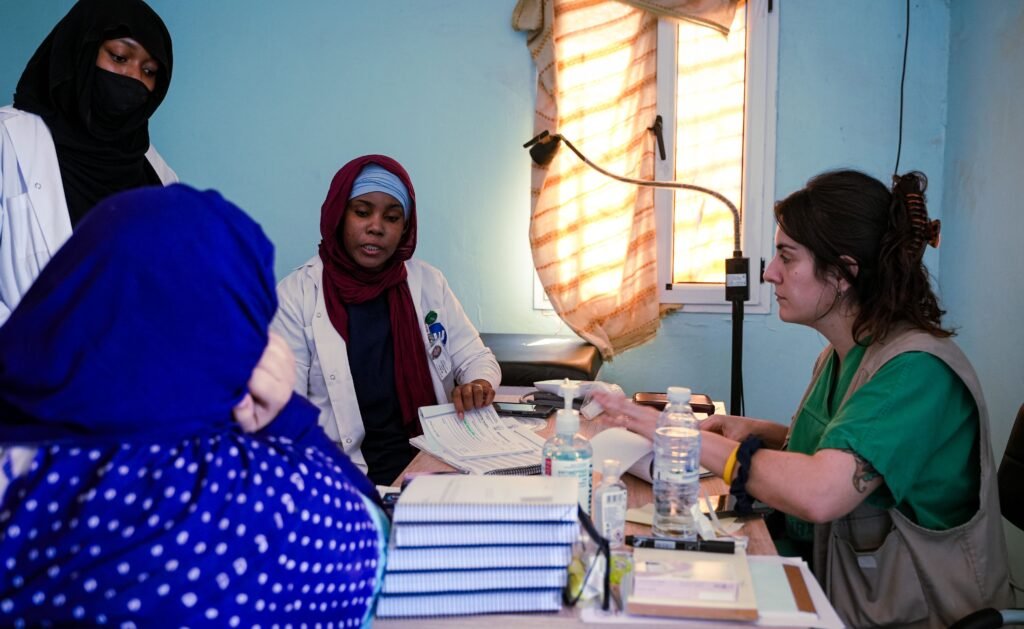

Applications are open for the Princeton in Africa Fellowship 2027–2028, a 12-month professional fellowship that places talented young professionals with organisations working across the African continent.
The programme is particularly relevant to African graduates because Princeton in Africa’s Nexus Program allows eligible graduates of African universities who are citizens and residents of African countries to participate. Applicants from Cameroon, Nigeria, Ghana and other African countries can apply if they meet the general eligibility requirements.
Applications for the 2027–2028 fellowship opened on 26 August 2026 and close on 26 October 2026 at 11:59 p.m. Eastern Daylight Time.
Princeton in Africa Fellowship 2027–2028 Overview
Princeton in Africa, often abbreviated as PiAf, connects young professionals with organisations working in Africa for year-long, full-time placements.
Despite its name and affiliation with Princeton University, applicants do not need to be Princeton University students or graduates. Princeton in Africa is an independent nonprofit organisation affiliated with Princeton University, and no fellowship places are reserved specifically for Princeton alumni.
Since 1999, the programme has supported more than 790 Fellows, worked with over 140 host organisation partners, and operated across 37 African countries.
For recent graduates and early-career professionals interested in gaining meaningful professional experience in Africa, the programme offers an opportunity to work directly with organisations addressing economic, social and development challenges.
What Does the Princeton in Africa Fellowship Cover?
The Princeton in Africa Fellowship 2027–2028 is a funded professional placement, but applicants should understand that fellowship packages vary depending on the host organisation and location.
Princeton in Africa and participating host organisations generally aim to provide:
- Housing
- A living stipend
- Certain visa and work-permit costs
- Medical insurance
- Medical evacuation insurance
- Security evacuation insurance
- Mid-year retreat accommodation and meals
- Partial travel support for attending the mid-year retreat
- Ongoing professional and personal support
The living stipend is intended to cover basic living expenses in the fellow’s placement location. Therefore, stipend amounts differ depending on local costs and benefits provided directly by the host organisation.
Applicants should not view the programme as a high-paying international job. Instead, it is structured as a professional-development fellowship, with fellows expected to live relatively modestly during their placements.
Costs Fellows May Need to Cover
The programme does not necessarily cover every expense.
Selected fellows should expect to pay a $350 non-refundable programme placement fee after accepting a fellowship position.
Depending on the specific placement, Fellows may also be responsible for:
- Round-trip airfare to and from the host country
- Pre-departure medical expenses
- Vaccinations and preventive medications
- Personal medications
- Medical clearance costs
- Some visa or work-permit expenses
- Personal and recreational expenses
- Part of the travel cost for attending the mid-year retreat
However, Princeton in Africa states that financial assistance may be available after placement for fellows with demonstrated financial need.
Therefore, it is more accurate to describe Princeton in Africa as a funded fellowship rather than claiming that every placement is completely fully funded.
Who Can Apply for the Princeton in Africa Fellowship 2027–2028?
Applicants must satisfy several general eligibility requirements.
Candidates should:
- Be young professionals or current undergraduate students who will graduate by June 2027
- Hold, or be completing, an eligible university degree
- Have full professional proficiency in English
- Be no older than 35 during the fellowship year
- Hold a passport valid for at least six months beyond the end of the fellowship
- Be available for a full 12-month placement
- Not be enrolled in a graduate, doctoral or equivalent advanced academic programme during the fellowship year
For the 2027–2028 cycle, eligible applicants must have a Bachelor’s, Master’s or PhD from either a four-year U.S.-accredited university or a locally accredited university based in an African country.
Applicants must also demonstrate English proficiency at approximately the CEFR C1 level or above.
For some fellowship positions, professional proficiency in languages such as French, Portuguese, Arabic or Kiswahili can be particularly useful.
Princeton in Africa Age Requirement
Applicants must be 35 years old or younger throughout the fellowship year.
For the 2027–2028 cycle, Princeton in Africa specifies that applicants should have been born on or after:
1 September 1992
Therefore, applicants should confirm that they satisfy this requirement before spending significant time preparing the application.
Can Africans Apply for Princeton in Africa?
Yes.
One of the most important developments in the programme is the Princeton in Africa Nexus Program, which was introduced to expand access for young African professionals who are educated and living on the continent.
Nexus applicants are generally recent graduates or graduating students from Bachelor’s, Master’s or PhD programmes at African universities who:
- Are citizens of an African country
- Reside on the African continent
- Hold or are completing a degree from a locally accredited African university
- Meet the general Princeton in Africa eligibility requirements
Consequently:
🇨🇲 Cameroonians can apply.
🇳🇬 Nigerians can apply.
🇬🇭 Ghanaians can apply.
Eligible applicants from other African countries can also participate.
African applicants use the same fellowship application portal and selection process as other candidates.
Importantly, Nexus Fellows cannot be placed in their own home countries. Selected candidates should therefore be prepared to relocate to another African country for their fellowship.
Do You Need to Be a Princeton University Graduate?
No.
This notion is one of the most common misconceptions surrounding the programme.
You do not need to have studied at Princeton University.
The programme accepts eligible graduates from locally accredited African universities as well as qualifying U.S.-accredited universities.
Therefore, an eligible graduate from a university in Cameroon, Nigeria, Ghana, Kenya, Uganda, South Africa or another African country can potentially apply through the Nexus pathway.
Where Do Princeton in Africa Fellows Work?
Fellows work with host organisations operating across Africa.
Recent Princeton in Africa cohorts have worked in approximately 12 African countries, although the exact countries and host organisations for 2027–2028 will depend on available placements.
Opportunities can involve fields such as:
- Business and economic development
- Education and youth development
- Public and community health
- Environmental conservation
- Sustainability
- Civil society
- Research and analysis
- Communications
- Programme management
- Technology and innovation
Applicants do not apply directly for one specific organisation or country.
Instead, they apply to the overall Princeton in Africa Fellowship and can indicate preferences concerning regions, countries and types of work.
Princeton in Africa then considers applicants’ skills, backgrounds and preferences alongside the needs of participating host organisations.
New Innovation Fellowship Opportunities for 2027–2028
The 2027–2028 cycle also includes an increased focus on innovation fellowships.
These placements aim to connect emerging professionals with organisations and investors involved in Africa’s growing innovation economy.
Potential areas include startups, technology-driven initiatives, public-private partnerships and venture capital.
Relevant skills can include:
- Data analysis
- Product development
- Technology management
- Business development
- Innovation strategy
Applicants interested in Innovation Fellowship positions can indicate their preference in the application and complete the relevant supplemental essay.
Princeton in Africa Nexus Program
The Nexus Program deserves particular attention from African applicants.
Launched in 2023, Nexus was created to increase participation among young professionals who study and live in Africa.
The programme integrates Nexus Fellows into the wider Princeton in Africa community rather than creating a completely separate fellowship.
Nexus applicants follow the same general application requirements and selection process.
Applicants who have obtained an African university degree and also hold another degree from an institution outside Africa may still qualify for Nexus if they meet the programme’s other requirements.
Documents Required for the Application
Applicants should prepare their documents early because Princeton in Africa does not accept incomplete or late applications.
Important application materials include the following:
- Resume or CV
- Letter of recommendation
- Academic transcript
- Proof of enrolment where applicable
- Passport information
- Responses to application questions and essays
The CV, or resume, must be in English, submitted as a PDF, and should not exceed two pages.
Applicants should include relevant professional experience as well as a section highlighting technical or hard skills.
Only one recommendation letter is accepted per applicant. The recommender submits the letter through the application system after receiving instructions by email.
The recommendation should specifically address the candidate’s Princeton in Africa application.
How to Apply for the Princeton in Africa Fellowship 2027–2028
The application process is completed online.
Step 1: Check Your Eligibility
Confirm your degree, age, English proficiency, passport and availability for the full fellowship period.
African applicants should also determine whether they fall under the Nexus category.
Step 2: Create an Application Account
Access the official application system through Princeton in Africa and create an account.
Use an email address you regularly monitor, as it will serve as your application username and may also be used for important programme communications.
Step 3: Prepare Your Application Documents
Prepare your two-page CV, transcript, and any other requested documents.
You should also contact your recommender early enough to ensure the recommendation reaches Princeton in Africa before the deadline.
Step 4: Complete the Application Questions
Provide accurate information about your education, professional experience, skills and interests.
Applicants can indicate preferences regarding locations and types of placements. However, flexibility can be important because specific placements cannot be guaranteed.
Step 5: Submit Before the Deadline
Submit all required materials by:
26 October 2026 at 11:59 p.m. Eastern Daylight Time
Incomplete applications will not be reviewed.
Selection and Interview Process
After applications close, Princeton in Africa reviews candidates during November and December.
Applicants selected for the next stage are expected to receive interview notifications in December 2026.
Virtual fellowship interviews are scheduled for January 2027.
Placement activities then take place primarily between February and May 2027.
Importantly, reaching the interview or candidate stage does not automatically guarantee placement with a host organisation.
The programme seeks to match candidates’ qualifications and preferences with the specific needs of participating organisations.
Princeton in Africa Fellowship Timeline
Key dates for the 2027–2028 cycle include:
26 August 2026: Applications opened
26 October 2026: Application deadline
December 2026: Interview notifications
January 2027: Virtual interviews
February–May 2027: Placement process
4–6 June 2027: Mandatory virtual orientation
June–August 2027: Fellowship placements begin.
Fellowships last approximately 12 months, ending during the corresponding period in 2028.
Frequently Asked Questions
Is the Princeton in Africa Fellowship fully funded?
The programme covers significant expenses, including housing, a living stipend, insurance and certain placement-related costs. However, Fellows may need to cover airfare, the $350 placement fee and some other expenses depending on their placement. Therefore, it is more accurate to describe it as a funded fellowship rather than universally fully funded.
Can Cameroonians apply?
Yes. Eligible Cameroonian graduates can apply. Those who are citizens and residents of an African country and graduated from an eligible African university may qualify through the Nexus pathway.
Can Nigerians and Ghanaians apply?
Yes. Eligible Nigerian and Ghanaian applicants can apply under the same programme requirements.
Do I need to graduate from Princeton University?
No. Applicants do not need to be Princeton University graduates.
Can master’s and PhD graduates apply?
Yes. Eligible candidates can hold Bachelor’s, Master’s or PhD degrees. However, applicants may not remain enrolled in a graduate or doctoral programme during their fellowship year.
Is there an application fee?
There is no fee to submit the initial fellowship application. However, candidates who accept a fellowship placement are expected to pay a non-refundable programme placement fee of $350.
Can I choose the country where I want to work?
Applicants can indicate preferences, but Princeton in Africa does not guarantee placement in a particular country or organisation.
Can an African Nexus Fellow work in their home country?
No. Nexus Fellows are placed outside their home countries.
How long does the fellowship last?
The fellowship lasts approximately 12 months.
What is the application deadline?
The deadline is 26 October 2026 at 11:59 p.m. Eastern Daylight Time.
Final Thoughts
The Princeton in Africa Fellowship 2027–2028 offers young professionals an opportunity to spend a year gaining practical experience with organisations operating across Africa.
For African graduates in particular, the Nexus Program has made the fellowship considerably more accessible to candidates educated at African universities. Applicants from Cameroon, Nigeria, Ghana and other African countries can participate if they meet the programme’s eligibility requirements.
With placements spanning development, health, education, business, sustainability, civil society and a growing innovation-focused track, the programme can be particularly attractive to graduates seeking substantial professional experience before their next career or academic step.
Interested applicants should prepare their documents and recommendation early and submit the complete application before 26 October 2026.
Official Links
Princeton in Africa – How to Apply:
https://www.princetoninafrica.org/applicants/how-to-apply/
Princeton in Africa Nexus Program:
https://www.princetoninafrica.org/nexus/