
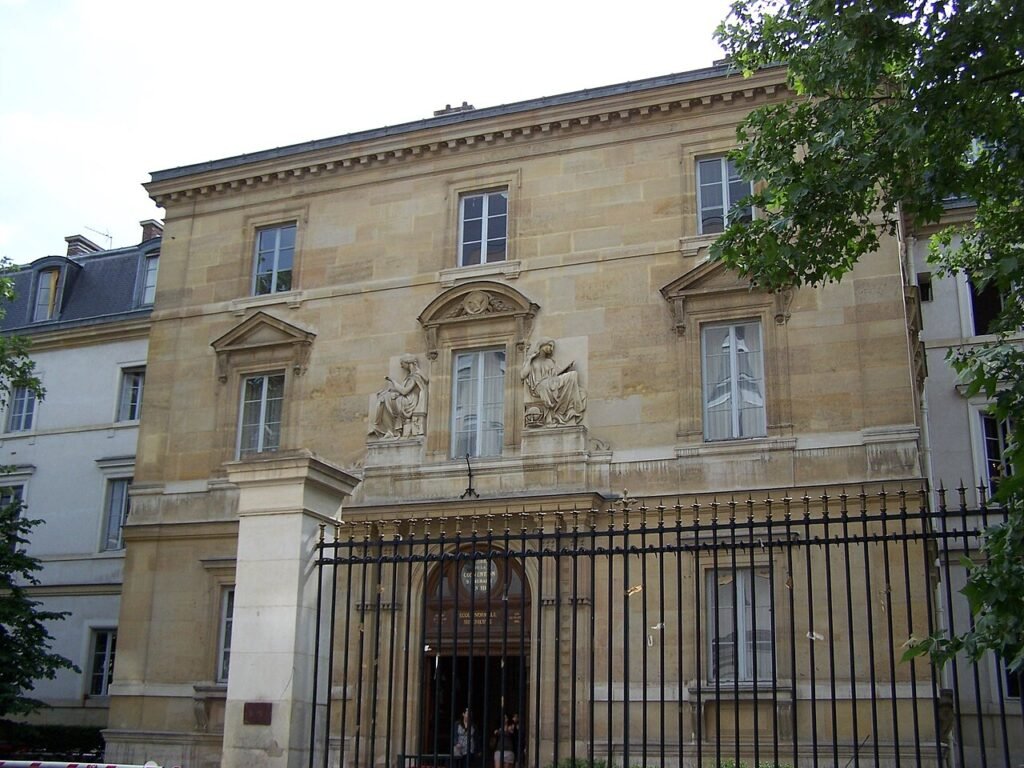
The ENS International Selection 2027 is one of the most prestigious routes into French higher education for students outside France. If you succeed, you study for three years at the École normale supérieure – PSL in Paris, receive a €1,000 grant paid monthly for three years and get a room on one of the ENS-PSL campuses. Applications opened on 16 October 2026 and close on 15 December 2026 at 14:00 Paris time.
This guide explains what the International Selection is, who can apply, how the two tracks differ, what the tests look like and how to prepare. Most guides treat Arts & Humanities and Sciences as one programme, but they have different eligibility rules, document lists and tests. Mixing them up is one of the fastest ways to waste your only attempt.
ENS International Selection 2027 at a Glance
| Institution | École normale supérieure – PSL (ENS-PSL), 45 rue d’Ulm, Paris |
| Entry level | 3rd year of bachelor’s (licence 3) or 1st year of master’s (master 1) |
| Duration | 3 years |
| Grant | €1,000 for 3 years, paid monthly |
| Accommodation | A room on one of the ENS-PSL campuses |
| Degrees on completion | A master’s degree in your speciality and the ENS diploma |
| Tracks | Arts & Humanities, and Sciences |
| Age limit | Under 26 on the day applications open |
| Application period | 16 October 2026 (14:00) to 15 December 2026 (14:00), Paris time |
| Platform | OnePSL30 |
What Is the ENS International Selection?
The International Selection (often shortened to “SI”) is a competitive examination that ENS-PSL runs every year for young graduates from foreign universities. It aims to bring students with varied profiles, from every country and discipline, into the community of normaliens.
Admitted students study at ENS-PSL and at a partner university at the same time. They receive research-orientated training from leading researchers, take courses outside their main discipline and finish with two qualifications: a master’s degree in their speciality and the diploma of the École normale supérieure.
The examination runs in two steps. First, a jury selects candidates on the basis of their application. Then shortlisted candidates take written and oral tests remotely, and their marks decide the final list of admitted students.
ENS Ulm, ENS Paris, ENS-PSL or ENS Lyon?
You’ll see several names in search results, so let’s clear this up. “ENS Ulm” and “ENS Paris” both refer to the École normale supérieure – PSL, named after its historic address on rue d’Ulm. This is the school that runs the International Selection described here. ENS de Lyon, by contrast, is a separate institution with its own admissions, so don’t confuse the two when you apply.
ENS International Selection Grant and Benefits
- A €1,000 grant for three years. The first payment arrives in October and covers September and October. After that, ENS pays the grant monthly, between the 5th and the 10th of each month.
- A room on an ENS-PSL campus, in the heart of Paris
- A welcome programme: a one-day welcome event, then three weeks of conferences and debates in sciences and humanities, department visits, intensive French lessons and cultural visits to Paris
- French courses for foreigners, which begin before the academic year
- Personalised training, including a mentoring system and laboratory internships for science students
Put simply, ENS removes the two biggest worries for an international student in Paris: rent and monthly income. That’s why the competition is so intense.
ENS International Selection 2027 Eligibility
The two tracks share some rules but differ on others. Read the column for your track carefully.
| Requirement | Arts & Humanities | Sciences |
|---|---|---|
| Age | No older than 25 on the opening date (must not have turned 26) | Under 26 on the opening date |
| Prior study | At least three years of study towards a foreign university degree, shown by complete transcripts. You may apply while in your third year. | At least one year of undergraduate study at a foreign university, and at least two years by the time you enrol. |
| Time in France | No more than 10 months’ residence in France during the competition year or the year before | No more than 6 months (in total) registered at a French school or higher education institution during the competition year or the year before |
| Previous applications | You must never have applied to the International Selection before. | |
That last rule deserves emphasis: you get one attempt in your life. So don’t apply with a rushed file just to “try”. If your research project or recommendations aren’t ready, it may be wiser to wait a year, as long as you’ll still meet the age limit.
In rare cases, the Director of ENS may authorise applications from candidates with a non-standard academic background.
Arts & Humanities Disciplines
Anthropology, archaeology, classical studies (Greek, Latin), cinema, theatre studies, history of art, musicology, cognitive sciences, economics, political studies, geography, history, history and philosophy of law, history and philosophy of sciences, linguistics, literature, philosophy and sociology.
ENS recommends that Arts & Humanities candidates be fluent in French, and much of the application and testing takes place in French.
Science Disciplines
Biology, Chemistry, Earth Science, Computer Science, Mathematics, Physics and Cognitive sciences. You choose a single discipline for the competition. ENS also runs a separate curriculum for medallists of the International Mathematical and Physics Olympiads.
ENS International Selection 2027 Dates
One warning first. The schedule tables on the ENS website currently show “16 October 2027 – 15 December 2027”, but the same page states that the deadline is 15 December 2026 at 14:00 Paris time, and the key dates confirm it. Work with 2026.
Arts & Humanities Timeline
| Date | What happens |
|---|---|
| 16 October – 15 December 2026 (14:00 Paris time) | Applications on OnePSL30 |
| From 21 January 2027 | Shortlist (admissibility) results |
| 15 – 26 February 2027 | Tests by videoconference: one written test and two oral tests |
| From 9 March 2027 | Admission results |
Sciences Timeline
| Date | What happens |
|---|---|
| 16 October – 15 December 2026 (14:00 Paris time) | Applications on OnePSL30 |
| From 27 January 2027 | Shortlist (admissibility) results |
| 28 January – 2 March 2027 | Personal invitations to the tests sent by email |
| 3 – 19 March 2027 | Oral tests by videoconference, scheduled by each department |
| From 26 March 2027 | Admission results |
After Admission (Both Tracks)
| When | What happens |
|---|---|
| Spring 2027 | Admitted students receive an invitation letter, a visa attestation and a list of registration documents. They apply for a long-stay student visa if needed, and French courses begin. |
| September 2027 | Administrative registration, grant set-up and residence permit file |
| October 2027 | First grant payment (covering September and October) |
All candidates receive an email at each stage, whether they pass or not, so you won’t be left guessing.
ENS International Selection Application Documents
Arts & Humanities Documents
Upload these on the platform, in this order:
- Curriculum vitae
- Motivation letter: 1 to 3 pages, Times New Roman 12 pt, 1.5 line spacing, written in French. Candidates in economics, linguistics or cognitive studies must submit it in both French and English.
- Research project: 3 pages maximum (10,000 characters including spaces), plus a bibliography of 10 books, articles or literary works that shaped your intellectual path. Write it in French. Candidates in economics, linguistics or cognitive studies may use French or English.
- University transcript
- High school diploma
- 2 to 4 letters of recommendation, requested through OnePSL30 by entering your referees’ email addresses
ENS is explicit that the research project is not a cover letter. It must address a well-defined topic and a core issue, develop arguments and hypotheses, describe the material it relies on (fieldwork, corpus, database, archives) precisely, and engage with existing scholarship through a small set of relevant references.
Science Documents
- High school diploma
- University transcript
- Curriculum vitae
- Argued cover letter: 1 to 3 pages, Times New Roman 12 pt, 1.5 line spacing, in French or English. Explain your interest in ENS and in your chosen department, and briefly present your study plan: particular interests, planned courses, research themes and any secondary discipline.
- 2 to 4 letters of recommendation, requested through OnePSL30
Science candidates merge these documents into a single PDF. They upload it on a platform whose link ENS sends after they complete the initial application form.
Rules That Apply to Everyone
- ENS ignores incomplete applications.
- ENS doesn’t process applications sent by email.
- Don’t use an @icloud.com email address, either for yourself or for your referees.
- Contact your referees early. ENS itself advises applicants not to wait until the last days, particularly for recommendation letters.
ENS International Selection Tests Explained
After the shortlist, the jury designs tests that measure how well you analyse, conceptualise and synthesise information. It also looks at your scientific or literary culture, your intellectual curiosity and the relevance of your project. There’s no set reading list.
Arts & Humanities Tests
| Test | Format | Weight |
|---|---|---|
| Written exam | In French, related to your discipline | 1 |
| Oral exam | In front of a panel from your discipline | 2 |
| Interview | About your academic background and project, in front of a single panel for all candidates, in 20 to 30 minutes | 2 |
The oral exam and the interview take place in French, although candidates may use English. ENS forbids dictionaries and personal documents during the tests, and it publishes the regulations for remote tests on its website.
Science Tests
| Test | Format | Weight |
|---|---|---|
| Scientific oral test | In your chosen field. It may include a preparatory part, which can involve a written test. | 6 |
| Oral interview | On your scientific culture and motivation | 3 |
Each department sets the exact form of its tests and publishes details on its own website. During the oral tests, you choose whether to answer in French or English.
For both tracks, ENS publishes jury reports and past questions each year. They’re the closest thing to an insider’s guide, because they explain what the examiners expect, so read the reports for your discipline before you write a single line of your application.
How to Apply for the ENS International Selection
- Choose your track and discipline, then check the eligibility rules for that track.
- Confirm your age: you must be under 26 on 16 October 2026.
- Ask two to four referees now and warn them that the request will come through OnePSL30.
- Read the jury reports and past questions for your discipline.
- Draft your motivation letter (and, for Arts & Humanities, your research project) following the exact format rules.
- Create your application on the OnePSL30 platform, linked from the official ENS International Selection page, and enter your referees’ email addresses.
- Upload every document and submit before 15 December 2026 at 14:00 Paris time.
Writing a Strong ENS International Selection Research Project
For Arts & Humanities candidates, the research project is where most applications are won or lost. Here’s a structure that follows what ENS asks for:
- A precise question. “Urbanisation in Africa” is a theme, not a research question. Instead, try something like “How did informal land markets shape the growth of a particular district of Douala after 2000?”
- Your core argument and hypotheses. State what you expect to find and why.
- Your material. Describe exactly what you’ll work with: interviews, archives, a corpus of texts, a dataset. ENS wants this described precisely.
- Your place in the literature. Engage with a few well-chosen references rather than listing everything you’ve read.
- Your bibliography of 10 works that genuinely shaped your intellectual path. Choose works you can discuss confidently, because the interview may come back to them.
Sciences candidates don’t write a research project, but the cover letter still needs a clear study plan. Name the courses, research themes and laboratories that interest you, and show that you’ve looked at what your chosen department actually does.
Common Mistakes That Cost ENS Applicants
- Applying too early in life. You can apply only once, so a weak first attempt closes the door permanently.
- Mixing up the track rules. Arts & Humanities requires three years of study and a French-language file. Sciences requires one year and allows English.
- Writing the research project as a cover letter. ENS explicitly rejects this approach.
- Ignoring the format rules. Page limits, character counts, font and spacing are all specified.
- Using an @icloud.com address for yourself or your referees.
- Underestimating French in Arts & Humanities. The written test is in French, and ENS recommends fluency.
Is the ENS International Selection Worth It?
For a strong student with research ambitions, it’s one of the best offers in Europe. You get three years in Paris with a monthly grant and a room, research-oriented training and two qualifications at the end. Moreover, the remote tests mean you don’t need to travel to France before you’re admitted.
However, it suits a specific profile: young, academically outstanding and genuinely drawn to research. If you’re older than 25, already have a master’s degree or want a professional rather than research-focused programme, look at other French and European options instead. Good examples are the Aix-Marseille University Eiffel Scholarship 2027 or Erasmus Mundus programmes such as the CLMCE Erasmus Mundus Scholarship 2027.
ENS International Selection FAQs
When can I apply for the ENS International Selection 2027?
Between 16 October 2026 at 14:00 and 15 December 2026 at 14:00, Paris time, through the OnePSL30 platform.
What is the ENS International Selection scholarship?
Admitted students receive a €1,000 grant for three years, paid monthly, and a room on one of the ENS-PSL campuses. They study for a master’s degree and the ENS diploma.
What is the competitive examination of the ENS International Selection?
It’s a two-step process. A jury first shortlists candidates based on their application, then shortlisted candidates take written and oral tests remotely. Their marks decide who gets admitted.
Can I apply in English?
In Sciences, yes: you can write your cover letter and answer the oral tests in French or English. In Arts & Humanities, the motivation letter, research project and written test are in French, with some exceptions for Economics, Linguistics and Cognitive studies.
Is ENS Ulm the same as ENS-PSL?
Yes. ENS Ulm, ENS Paris and ENS-PSL all refer to the École normale supérieure at 45 rue d’Ulm. ENS de Lyon is a separate school.
Can I apply more than once?
No. You must never have applied to the International Selection before, so you have one chance.
Who do I contact with questions?
Contact the Pôle Concours (Service des concours, de la scolarité et des thèses) at the École normale supérieure, 45 rue d’Ulm, 75230 Paris cedex 05, by phone on +33 (0)1 44 32 28 60.
Always check the official ENS International Selection page and its FAQ before you submit. For more funded study options, browse our latest master’s scholarships.
Pingback: Université Paris-Saclay Eiffel Scholarship 2027