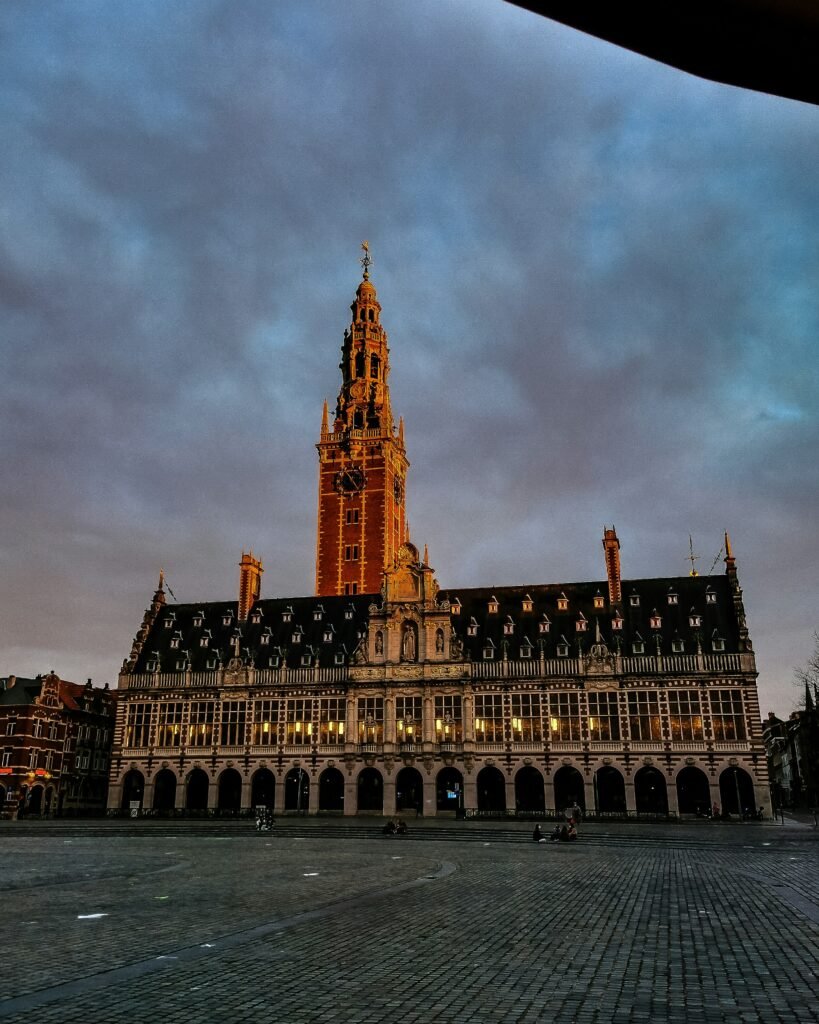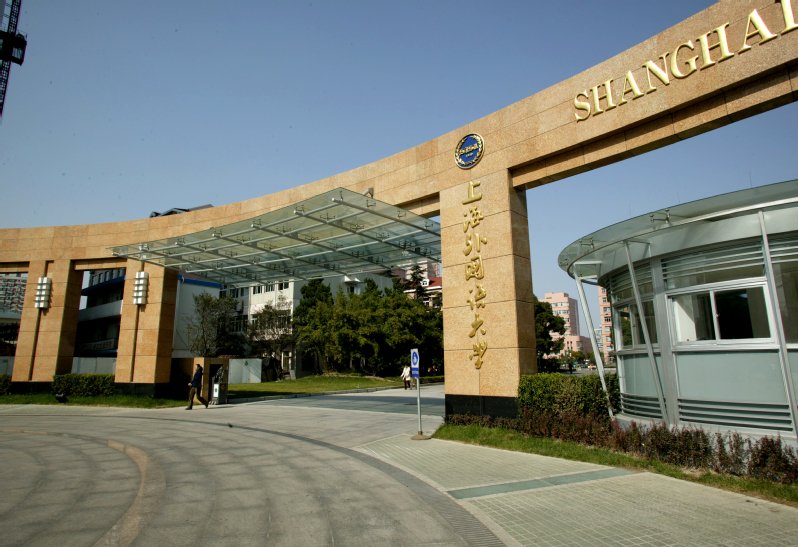

The Mundus Journalism Erasmus Mundus Scholarship 2027–2029 offers international students the opportunity to study journalism, media, and globalization at leading European universities with financial support from the European Union.
Successful scholarship recipients receive €1,400 per month for up to 24 months, a complete tuition fee waiver and free health and liability insurance. Therefore, the monthly scholarship contribution can total €33,600 over the two-year program.
The Erasmus Mundus Master’s in Journalism, Media, and Globalization combines academic study, international mobility, and professional development. Students begin their studies at Aarhus University in Denmark and then continue through the program’s international study structure.
Importantly, the 2027–2029 application period begins on 1 November 2026. Applicants must submit their complete applications by 10 January 2027 at 13:00 Central European Time (CET).
This guide explains the scholarship benefits, eligibility requirements, participating universities, required documents, selection criteria, and application process. It also provides practical advice to help candidates prepare a competitive application.
Mundus Journalism Erasmus Mundus Scholarship 2027 Overview
| Scholarship Details | Information |
|---|---|
| Program | Erasmus Mundus Master’s in Journalism, Media, and Globalization |
| Common name | Mundus Journalism |
| Scholarship | Erasmus Mundus Joint Master Scholarship |
| Academic intake | 2027–2029 |
| Degree level | Master’s |
| Duration | 2 years |
| Main study location in Year 1 | Aarhus, Denmark |
| Additional study destinations | European partner universities |
| Monthly scholarship | €1,400 |
| Scholarship duration | Up to 24 months |
| Maximum monthly contributions | €33,600 |
| Tuition fees | Fully waived for scholarship recipients |
| Insurance | Health and liability insurance included |
| Eligible nationalities | All nationalities |
| Expected scholarships | Approximately 10–15 |
| Applications open. | 1 November 2026 |
| Application deadline | 10 January 2027, 13:00 CET |
| Expected admission results | 1 March 2027 |
| The program begins. | 1 September 2027 |
| Application method | Online through Aarhus University |
What Is the Mundus Journalism Master’s Programme?
Mundus Journalism is a two-year international master’s program that focuses on journalism, media, and globalization.
Unlike a conventional journalism degree, the program combines journalism studies with political science, media research, and international affairs. As a result, students examine how media institutions operate in changing political, economic, and social environments.
The curriculum develops research skills, critical thinking, and a more profound understanding of global communication. Furthermore, students explore the relationship between journalism, democracy, political power, conflict, and culture.
The program also emphasizes international mobility. Students study in more than one country and interact with classmates from diverse academic, cultural, and professional backgrounds.
This international structure helps participants compare media systems and understand journalism beyond their national contexts.
What Will Students Study?
The program covers several interconnected academic areas, including
- Journalism theory and professional practice.
- Media systems and globalization.
- Political communication and democracy.
- Research methods and critical analysis.
- International affairs and media institutions.
- Conflict, authoritarianism, and political transitions.
- Cultural differences and global communication.
Students also select a second-year specialization that reflects their academic interests and career plans.
Consequently, the program can appeal to journalists, media professionals, communication specialists, and graduates interested in international research.
Mundus Journalism Erasmus Mundus Scholarship Benefits
One of the program’s main attractions is the Erasmus Mundus funding package.
The scholarship supports selected students throughout the two-year master’s program. In addition, it removes tuition costs and provides monthly financial assistance.
Scholarship Funding Breakdown
| Scholarship Benefit | Coverage |
|---|---|
| Monthly living contribution | €1,400 |
| Maximum funding period | 24 months |
| Total potential monthly payments | €33,600 |
| First-year tuition | Fully waived |
| Second-year tuition | Fully waived |
| Health insurance | Included |
| Liability insurance | Included |
| Housing expenses | Can be paid from the monthly contribution |
| Travel and visa expenses | Can be paid from the monthly contribution |
| Other living expenses | Supported through the monthly contribution |
The €1,400 payment is a monthly contribution rather than a guarantee that every individual expense will be paid separately.
For example, students may use this amount for accommodation, food, transportation, visa-related costs, and other living expenses.
Nevertheless, living expenses vary across European countries and cities. Applicants should therefore prepare a realistic budget for each study destination.
How Much Is the Scholarship Worth Over Two Years?
The maximum monthly scholarship contribution can be calculated as follows:
€1,400 × 24 months = €33,600
This amount excludes the additional value of the tuition fee waiver and insurance.
For non-EU students, the published tuition fees for the 2027–2029 program are €9,000 for the first year and €12,000 for the second year.
Therefore, a scholarship recipient who would otherwise pay non-EU tuition avoids €21,000 in program tuition fees.
Combined with the maximum monthly contributions, the funding package can represent substantial financial support.
However, applicants should distinguish the cash contribution from the tuition waiver. The waived tuition fees are not paid directly to students.
Who can apply for the Mundus Journalism Scholarship in 2027?
The Erasmus Mundus Journalism Scholarship welcomes applicants from all nationalities.
Therefore, eligible candidates from Africa, Asia, Europe, the Americas, and other regions can compete for funding.
However, nationality alone does not establish eligibility. Applicants must also satisfy the program’s academic, professional, and language requirements.
1. Academic Qualifications
Applicants must hold a recognized bachelor’s degree or meet the program’s conditions for completing their degree before enrollment.
The selection committee expects above-average academic performance.
Consequently, applicants should provide complete academic transcripts and certificates that demonstrate their preparation for postgraduate study.
Academic merit plays an important role in both admission and scholarship selection.
2. Journalism or Media Experience
Candidates should demonstrate relevant experience in journalism, media, or communications.
The program requires at least three months of journalistic experience or its equivalent.
Relevant activities may include professional reporting, editing, broadcast journalism, digital media production, and other qualifying journalistic work.
Applicants must also provide evidence of their experience.
For example, an employer may issue a signed confirmation letter stating the applicant’s role and employment period.
In addition, candidates must submit three samples of journalistic work.
3. English Language Proficiency
Applicants must demonstrate English proficiency equivalent to CEFR C1 or higher, unless an applicable native-speaker exemption is recognized by the relevant specialization university.
The program requires accepted evidence of English proficiency.
Therefore, applicants should verify the official language requirements before booking a test or preparing their application.
Importantly, the accepted tests, minimum scores, and exemptions may differ depending on the second-year specialization.
Applicants should not assume that studying previously in English automatically removes the testing requirement.
4. Scholarship Eligibility Restrictions
The program identifies additional restrictions for the consideration of Erasmus Mundus scholarships.
Applicants who have already completed a two-year master’s degree are not eligible for this scholarship under the program’s published rules.
Similarly, applicants who have previously received an Erasmus Mundus Scholarship cannot receive another scholarship through this program.
However, such candidates may still be considered for self-funded admission if they satisfy the relevant entry requirements.
These restrictions are particularly important for applicants who already hold postgraduate qualifications.
Which Universities Participate in Mundus Journalism?
The Mundus Journalism consortium brings together universities with expertise in journalism, communication, media studies, and international affairs.
All students begin their studies in Aarhus, Denmark.
Subsequently, they pursue a second-year specialization at a participating university.
Main Universities and Study Destinations
| University | Country | Program Role |
|---|---|---|
| Aarhus University | Denmark | Main first-year study location |
| University of Amsterdam | Netherlands | Second-year specialisation partner |
| Charles University | Czech Republic | Second-year specialisation partner |
| Ludwig Maximilian University of Munich | Germany | Second-year specialisation partner |
| City, St George’s, University of London | United Kingdom | Second-year specialisation partner |
Students select their second-year specialization during the application process.
This choice is binding. Once admission has been granted for a particular specialization, applicants cannot change to another specialization at the university.
Therefore, candidates should compare the academic content, language requirements, career opportunities, and immigration conditions before making their selection.
Available Academic Specializations
The program includes academic pathways that explore areas such as
- Authoritarianism and Transition.
- Crisis and Conflict.
- Politics and Communication.
- Cultures and Contexts.
These pathways allow students to develop expertise in different dimensions of journalism and international communication.
However, applicants should confirm the available tracks and their host universities for the 2027–2029 intake before submitting their applications.
Documents Required for the Erasmus Mundus Journalism Scholarship 2027
Preparing the correct documents is one of the most important parts of the application process.
The programme requires applicants to combine their supporting documents into a single, organised application package.
Incomplete documentation can make an otherwise competitive application ineligible.
Required Application Documents
| Document | Main Requirement |
|---|---|
| Official application form | Complete the application form for the programme. |
| Curriculum Vitae | Maximum two pages |
| Degree certificate | Official proof of completed university studies, where applicable |
| Academic transcripts | Records from previous university or college studies |
| Journalism experience evidence | Signed confirmation of relevant experience |
| Journalism work samples | Three examples of journalistic work |
| English proficiency evidence | Accepted test or qualifying exemption |
| Academic reference | Signed letter from an academic referee |
| Professional reference | Signed letter from a current or former employer |
| Passport | Uploaded separately from the application package |
| Application reflections | Completed within the official application form |
Academic Certificates and Transcripts
Applicants should submit official records from their previous university studies.
If the documents are not in English, they must include appropriate certified English translations.
Furthermore, transcripts should clearly show the courses studied, grades awarded and academic qualifications obtained.
Candidates who attended more than one university should prepare the required records from each institution.
Curriculum Vitae Requirements
The programme requires a CV that is no more than two pages long.
A strong CV should clearly present academic qualifications, journalism experience, relevant skills and extracurricular activities.
Applicants may also include awards, volunteer work, professional memberships and other achievements that demonstrate their suitability.
However, the CV should remain concise and factual.
Rather than listing responsibilities alone, candidates can explain the outcomes of their journalism or communication work.
Journalism Work Samples
Applicants must provide three examples of their journalistic work.
These may include published articles or other accepted journalistic outputs.
Where possible, candidates should select samples that demonstrate reporting ability, analytical thinking and clear communication.
If the samples are available online, applicants may provide the relevant links according to the official instructions.
For work produced in another language, a short English summary is required.
Similarly, applicants with radio or television samples should provide suitable descriptions and accessible links where possible.
Academic and Professional References
The programme requires two reference letters to be submitted.
The first must come from an academic referee who can assess the applicant’s academic ability and potential for postgraduate study.
The second must come from a professional referee who can evaluate relevant journalism or media experience.
Both letters should appear on official letterhead and include the referee’s signature.
Unsigned reference letters will not be accepted.
Therefore, applicants should contact their referees early and explain the programme requirements.
Is a Motivation Letter Required?
A separate motivation letter is not required for the Mundus Journalism application.
Instead, applicants complete an ‘Application Reflections’ section within the official application form.
This section allows candidates to discuss their academic background, journalism experience and future career expectations.
The selection committee evaluates these reflections for their content, clarity, writing quality and critical thinking.
Therefore, applicants should treat the reflections as an important component of the scholarship selection process.
How to Prepare Strong Application Reflections
First, consider how your previous academic and professional experiences relate to the programme.
Next, identify the journalism issues, research questions or global challenges that genuinely interest you.
Then, reflect on how the programme’s international academic structure aligns with your career ambitions.
For example, an applicant interested in investigative journalism may explain how studying different media systems could strengthen their understanding of press freedom and accountability.
Another applicant might discuss experience reporting on migration, conflict or public policy.
However, these are only examples. Each candidate should develop their own reflections from personal experience.
Important: The programme explicitly advises applicants not to use AI tools to complete their reflection tasks. Applicants should write their responses independently and follow that instruction.
How to Apply for the Mundus Journalism Erasmus Mundus Scholarship 2027
The application process is completed online through Aarhus University.
Importantly, admission and Erasmus Mundus scholarship consideration are handled through the same application.
As a result, applicants are not required to submit a separate application for the scholarship.
Step 1: Check Your Eligibility
Begin by reviewing the academic, professional and English-language requirements.
Also, verify whether your previous master’s degree or scholarship history affects your eligibility for Erasmus Mundus funding.
Next, review the available specialisations for the second year.
This preparation will help you avoid choosing a study track that does not match your qualifications or language documentation.
Step 2: Create an Aarhus University Account
Create an account in the Aarhus University online application system.
This account provides access to the submission platform.
Applicants should use an active email address and retain their login details.
Step 3: Review the Official Application Forms
Read the programme application instructions before completing the forms.
The official application form becomes available during the application period.
Pay particular attention to the Application Reflections section and the selection of your second-year specialisation.
Remember that the chosen specialisation cannot be changed after admission.
Step 4: Prepare Your Supporting Documents
Gather your degree certificates, academic transcripts, CV, journalism samples and language evidence.
In the meantime, please request your academic and professional reference letters.
Ensure that all required translations and signatures are included.
Step 5: Prepare Your Application Package
Combine the required supporting documents into one PDF file.
The programme currently specifies a maximum combined PDF size of 10 MB.
Applicants must follow the official document order and file-naming instructions.
The application form should appear first in the package.
Before submission, review the completed PDF carefully to confirm that every required page is readable.
Step 6: Upload Your Passport Separately
The passport copy must be uploaded as a separate document.
Do not insert it into the combined application package PDF.
Ensure that the passport is valid at the time of application and that the personal information is clearly visible.
Step 7: Complete the Online Registration Form
Enter the requested personal and academic information.
You may also need to provide verification details for your English-language test.
Afterwards, upload the required application files.
Please ensure that the documents match the information entered in the registration form.
Step 8: Submit Before the Deadline
Submit the complete application before 10 January 2027 at 13:00 CET.
After successful submission, applicants should receive an automatic confirmation email.
Save this confirmation for future reference.
Avoid waiting until the final hours, since large uploads or unstable internet connections may cause technical problems.
Mundus Journalism Scholarship 2027 Application Timeline
The application process follows a defined schedule.
| Application Stage | Date |
|---|---|
| Application preparation | Before November 2026 |
| Applications open | 1 November 2026 |
| Application period | November 2026 – January 2027 |
| Final deadline | 10 January 2027, 13:00 CET |
| Expected results | 1 March 2027 |
| The programme begins. | 1 September 2027 |
| Expected graduation | 2029 |
Applicants should note that the deadline is expressed in Central European Time.
Therefore, candidates applying from other time zones should convert the deadline carefully.
Submitting several days early can also provide time to resolve unexpected document or technical difficulties.
How Competitive Is the Erasmus Mundus Journalism Scholarship?
The scholarship is highly competitive.
The programme expects to offer approximately 10–15 Erasmus Mundus Scholarships for the 2027–2029 intake.
Meanwhile, the programme receives several hundred applications and admits around 80–90 students.
Consequently, gaining admission does not automatically mean receiving an Erasmus Mundus Scholarship.
The scholarship selection process focuses on the highest-ranking eligible applicants.
Main Scholarship Selection Criteria
The selection committee considers three important areas.
Academic background: Applicants should demonstrate strong academic performance and readiness for postgraduate study.
Journalism experience: Relevant professional experience, quality of work and career development are important considerations.
Application reflections: Candidates must demonstrate thoughtful motivation, clear writing and a strong connection between their experiences and the programme.
References and supporting documents also help the committee assess applicants.
How to Strengthen Your Application
A competitive application should present a consistent academic and professional profile.
For instance, the CV, journalism samples and reference letters should reinforce the same evidence of ability and achievement.
Applicants should also select work samples that demonstrate different journalistic strengths where possible.
Furthermore, candidates should carefully review the academic content of their chosen second-year specialisation.
This can help them make a well-informed decision about the suitability of the programme.
Finally, strong applicants should avoid exaggerating their achievements or submitting inaccurate information.
Authentic evidence of academic ability, professional experience and intellectual curiosity is more valuable than unsupported claims.
Can Applicants Without Journalism Degrees Apply?
The programme welcomes applicants from a range of academic backgrounds, provided they meet the admission requirements.
Therefore, a journalism bachelor’s degree is not necessarily the only possible academic route.
However, relevant journalism or media experience remains an important requirement.
For example, a graduate in political science, sociology or international relations who has qualifying journalism experience may have a relevant profile.
Nevertheless, applicants should confirm their eligibility against the official admission requirements.
A degree in another subject does not automatically establish eligibility.
Can African Students Apply for Mundus Journalism 2027?
Yes. The Erasmus Mundus Journalism Scholarship is open to applicants of all nationalities, including candidates from African countries.
For example, eligible applicants from Cameroon, Nigeria, Ghana, Kenya, Rwanda, Uganda and South Africa may apply.
However, all applicants must satisfy the same academic, professional and language requirements.
African applicants should pay particular attention to the preparation of official transcripts, certified translations, journalism experience letters and English-language documentation.
In addition, candidates should investigate the residence permit requirements for Denmark and their selected second-year destination.
Preparing these documents early can reduce difficulties later in the admission and immigration process.
Visa and Residence Permit Considerations
International mobility is a central part of Mundus Journalism.
Therefore, non-EU students generally need to obtain the appropriate immigration permission for Denmark and their second-year study destination.
The requirements vary by country.
For example, some immigration authorities may request financial evidence, criminal record documentation or additional supporting documents.
The programme provides guidance through its university support teams after admission.
Nevertheless, applicants remain responsible for meeting the relevant immigration requirements.
Candidates who intend to travel with family members should also investigate the rules for accompanying dependants.
Importantly, scholarship funding does not automatically guarantee approval of a student visa or residence permit.
What Happens If You Do Not Receive the Scholarship?
Applicants who are admitted without an Erasmus Mundus Scholarship may still consider other funding arrangements.
The programme provides access to Erasmus+ mobility stipends for eligible students.
These stipends generally support the second year of study at the specialisation university.
However, Erasmus+ stipend availability depends on funding conditions and eligibility requirements.
Therefore, candidates should not assume that an Erasmus+ stipend is equivalent to the fully funded Erasmus Mundus Scholarship.
Self-funded students must also consider tuition costs and other expenses.
Tuition Fees for Self-Funded Students
The published tuition structure for the 2027–2029 intake is:
| Student Category | First-Year Tuition | Second-Year Tuition |
|---|---|---|
| EU/EEA students | No first-year tuition | €12,000 |
| Non-EU/EEA students | €9,000 | €12,000 |
| Erasmus Mundus scholarship recipients | Waived | Waived |
Applicants considering self-funded admission should prepare a realistic financial plan before accepting an offer.
Other Erasmus Mundus Scholarships to Consider in 2027
Mundus Journalism is particularly suitable for applicants interested in journalism, media, politics and global communication.
However, Erasmus Mundus offers other interdisciplinary programmes that may appeal to applicants with similar interests.
For example, students interested in migration, international development and intercultural relations can explore our Erasmus Mundus EMMIR Scholarship 2027 guide. The programme examines migration and intercultural relations within an international academic framework.
Similarly, applicants interested in international law, peace, security and political challenges may find our Erasmus Mundus ILSPSD Scholarship 2027 guide useful. It explains another interdisciplinary master’s opportunity involving several European universities.
Comparing these programmes can help applicants identify the scholarship that best matches their qualifications, experience and career objectives.
Common Application Mistakes to Avoid
Even qualified candidates can weaken their applications through avoidable errors.
One common mistake is submitting incomplete academic records. Therefore, applicants should ensure that every required certificate and transcript is included.
Another problem is choosing a second-year specialisation without first reviewing its language requirements.
Applicants may also submit unsigned reference letters or fail to provide sufficient evidence of journalism experience.
Furthermore, submitting more than the permitted number of journalism samples can create unnecessary complications.
Candidates should also avoid preparing a separate motivation letter when the programme instead requires Application Reflections.
Finally, applicants must follow the official PDF preparation instructions and submit before the deadline.
Careful preparation is particularly important because the scholarship is competitive and the documentation requirements are detailed.
Frequently Asked Questions About Mundus Journalism Scholarship 2027
Is the Erasmus Mundus Journalism Scholarship open for 2027?
The 2027–2029 application period is scheduled to open on 1 November 2026. Applicants can prepare their documents before that date.
What is the Mundus Journalism Scholarship 2027 deadline?
The application deadline is 10 January 2027 at 13:00 Central European Time.
Is the Mundus Journalism Scholarship fully funded?
Yes. Selected Erasmus Mundus scholarship recipients receive a complete tuition fee waiver, €1,400 per month for up to 24 months, and free health and liability insurance.
How much money will scholarship recipients receive?
Recipients can receive up to €33,600 in monthly contributions over 24 months. This amount is separate from the tuition fee waiver.
Can applicants from Cameroon and other African countries apply?
Yes. The scholarship is open to all nationalities. However, applicants must meet the academic, professional and English-language requirements.
Is IELTS compulsory?
Applicants must provide accepted evidence of C1-level English proficiency unless they qualify for an applicable exemption. They should consult the official language requirements to find out which tests are accepted for their chosen specialisation.
Is journalism work experience required?
Yes. The selection criteria expect at least three months of journalistic experience or its equivalent. Applicants must also provide relevant evidence and work samples.
How many scholarships are available?
The programme expects to offer approximately 10–15 Erasmus Mundus Scholarships for the 2027–2029 intake.
Do applicants need a separate scholarship application?
No. The same application process covers both programme admission and consideration for the Erasmus Mundus scholarship.
Is a motivation letter required?
No separate motivation letter is required. Instead, candidates complete the Application Reflections section of the official application form.
Can someone with a previous master’s degree apply?
Applicants who have already completed a two-year master’s degree are not eligible for the Erasmus Mundus Scholarship under the programme’s published rules. However, they may still be considered for self-funded admission.
When will applicants receive their results?
The programme expects to communicate the application results on 1 March 2027.
Can students work in Europe after graduation?
Post-graduation employment opportunities depend on the immigration regulations of the relevant country. Graduates should consult the applicable residence and work permit requirements rather than assuming that graduation automatically guarantees employment.
Final Thoughts
The Mundus Journalism Erasmus Mundus Scholarship 2027–2029 provides a valuable opportunity for international students seeking advanced education in journalism, media and globalisation.
Its funding package combines full tuition coverage with monthly financial support of €1,400 for up to two years. Furthermore, students gain international academic experience through study at universities in different European countries.
However, the scholarship is highly competitive. Strong academic records, relevant journalism experience, carefully selected work samples and authentic application reflections can all contribute to a competitive application.
Prospective candidates should begin preparing their documents before applications open on 1 November 2026.
Most importantly, complete applications must reach the programme by 10 January 2027 at 13:00 CET.
Official Application Links
1. Mundus Journalism – Official Application Process
https://mundusjournalism.com/admissions/application-process/
2. Mundus Journalism – Scholarships, Tuition and Stipends
https://mundusjournalism.com/admissions/tuition-stipends-and-scholarships/
Editorial note: This guide is based on the programme’s published information for the 2027–2029 intake. Applicants should consult the official website before submission, as the university may update requirements, scholarship arrangements, and application procedures.