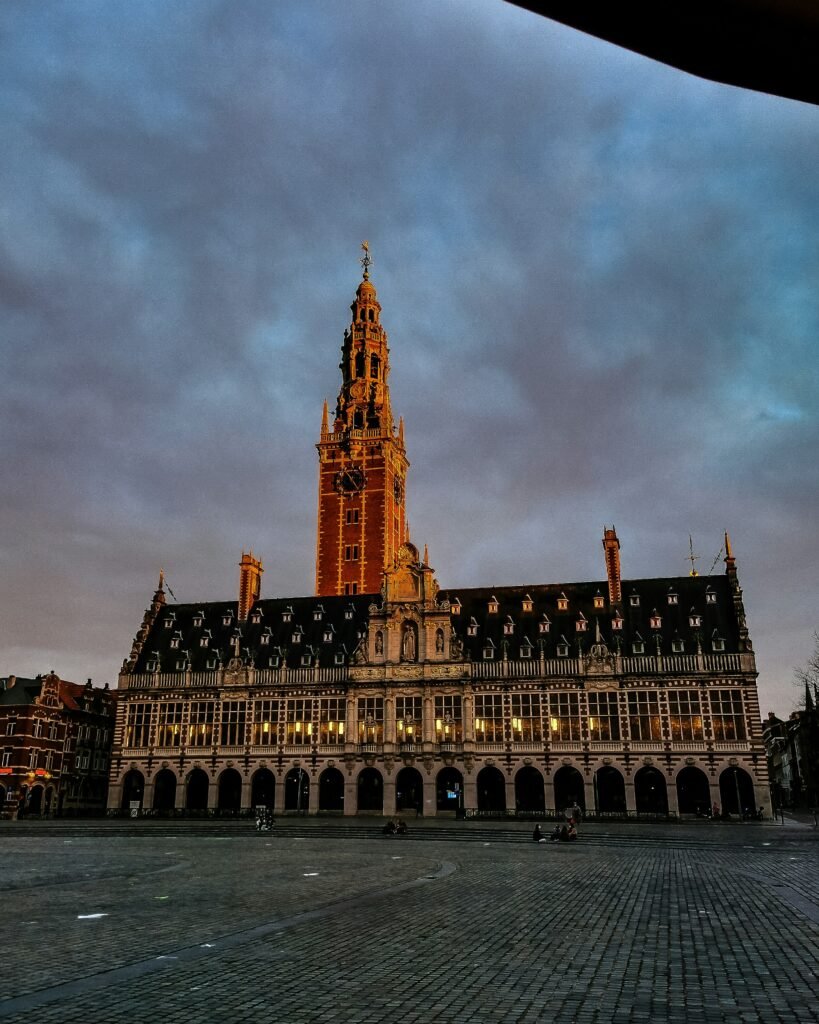
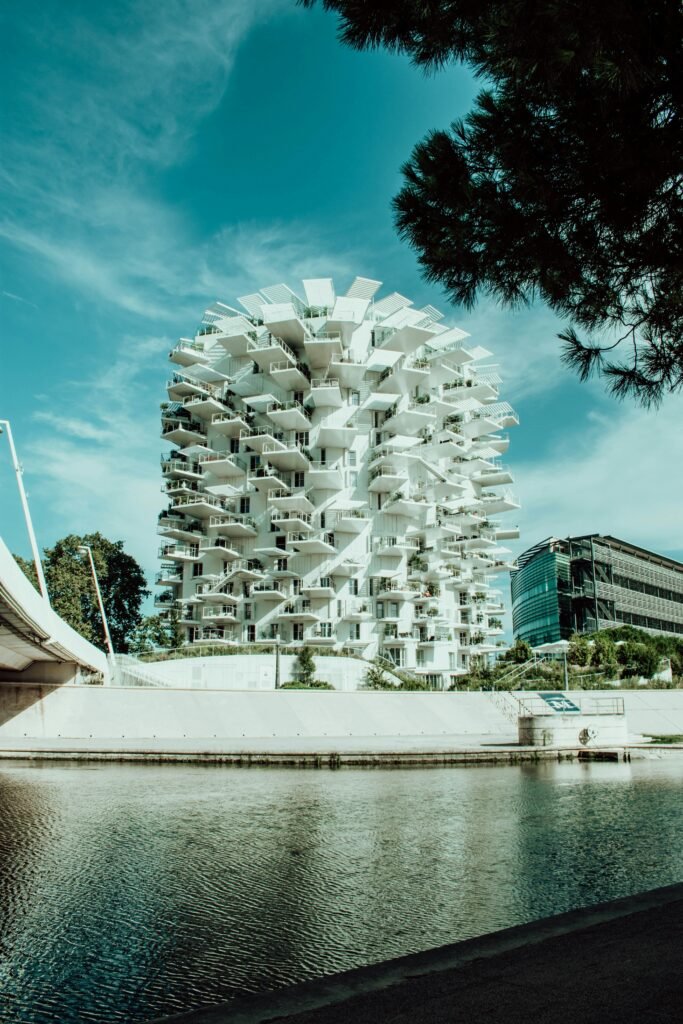
The University of Montpellier Eiffel Scholarship 2027 offers outstanding international students the opportunity to pursue eligible Master’s, Engineering and PhD programmes in France with financial support through the French government’s France Excellence Eiffel Scholarship Programme.
The University of Montpellier has announced its participation in the 2027 scholarship campaign and established an internal deadline of 11 December 2026 for faculty-supported applications.
Unlike scholarships that allow students to apply directly through an online funding portal, the Eiffel programme requires candidates to obtain support from a French higher education institution.
At the University of Montpellier, this means that Master’s and Engineering applicants must contact the director of their intended programme, while doctoral applicants must secure the involvement of a university co-supervisor.
Faculty members are responsible for submitting supported applications to the university’s international cooperation office.
The national deadline for French institutions to submit Eiffel applications is 6 January 2027, but students interested in the University of Montpellier must complete the necessary academic and institutional arrangements much earlier.
This guide explains the university’s nomination procedure, eligibility requirements, scholarship benefits, eligible academic disciplines, required documents and application deadlines for the 2027 campaign.
About the University of Montpellier
The University of Montpellier, formally known as Université de Montpellier, is a public research university located in Montpellier, southern France.
The institution has an extensive academic and research environment covering science, technology, engineering, medicine, health sciences, economics, management, law and other disciplines.
Its academic structure includes faculties, schools, institutes, research laboratories and doctoral schools.
The university offers undergraduate, postgraduate and doctoral programmes, including degrees involving advanced scientific research and professional specialisation.
For international students interested in research-intensive education, the university provides opportunities to study in an environment connecting academic training with scientific research and professional development.
The University of Montpellier also maintains international academic partnerships, including research collaborations and exchange arrangements with institutions outside France.
These partnerships are particularly relevant to the Eiffel Scholarship’s doctoral component, which can support qualifying research arrangements involving international academic cooperation.
Important: The University of Montpellier is a separate institution from Montpellier Paul-Valéry University and Institut Agro Montpellier. Their Eiffel Scholarship application procedures and internal deadlines are different.
University of Montpellier Eiffel Scholarship 2027 Overview
| Scholarship information | Details |
|---|---|
| Scholarship name | France Excellence Eiffel Scholarship |
| Host institution | University of Montpellier |
| Host country | France |
| Academic intake | 2027–2028 |
| Study levels | Master’s, Engineering and PhD |
| Funding authority | French Ministry for Europe and Foreign Affairs |
| Scholarship administrator | Campus France |
| Eligible applicants | Outstanding international students |
| Master’s monthly allowance | €1,200 |
| PhD monthly allowance | €2,100 on the main programme information page; confirm the applicable award amount |
| University internal deadline | 11 December 2026 |
| National institutional deadline | 6 January 2027 |
| Scholarship results | From 12 April 2027 |
| Application procedure | Faculty-supported institutional nomination |
| University scholarship contact | bourse-eiffel@umontpellier.fr |
The university’s internal deadline applies to applications submitted by faculty members who wish to support prospective master’s, engineering or doctoral candidates.
Students should therefore contact the relevant academic staff well before 11 December 2026.
What Is the Eiffel Scholarship at the University of Montpellier?
The Eiffel Scholarship is a French government funding programme that aims to attract outstanding international students to French higher education institutions.
It supports postgraduate studies in selected academic disciplines and seeks to develop future leaders in scientific, economic, professional and public-sector fields.
The University of Montpellier participates by identifying academically strong international candidates and submitting applications on their behalf.
The scholarship is not automatically awarded when a student is admitted to a university programme.
Candidates must first obtain academic support and satisfy the institution’s nomination requirements.
Students seeking a deeper understanding of the national scholarship programme can read our France Excellence Eiffel Scholarship 2027 guide, which outlines the overall eligibility rules, benefits, and national selection process.
For the University of Montpellier, the most important first step is to secure support from the academic department responsible for the intended programme.
University of Montpellier Eiffel Scholarship 2027 Benefits
Successful candidates selected for the Eiffel Scholarship receive financial assistance according to their academic level and approved scholarship duration.
The programme provides monthly living allowances alongside additional services relating to travel, insurance, accommodation and cultural activities.
Master’s Scholarship Benefits
Master’s recipients receive a monthly allowance of €1,200.
The maximum duration of the scholarship depends on whether the student enters the first or second year of the Master’s programme.
| Programme | Monthly allowance | Maximum duration |
|---|---|---|
| Master’s Year 1 (M1) | €1,200 | 24 months |
| Master’s Year 2 (M2) | €1,200 | 12 months |
| Eligible engineering degree | €1,200 | 36 months |
A student receiving the scholarship for a two-year Master’s programme could receive up to €28,800 in living allowances, subject to continued eligibility and scholarship conditions.
This financial support can help recipients manage accommodation, food, transportation and other everyday expenses while studying in France.
Doctoral Scholarship Benefits
Doctoral scholarship recipients receive a higher monthly allowance than master’s students.
The main Eiffel programme information lists a doctoral allowance of €2,100 per month, while another official implementation page displays €2,000. Candidates should therefore confirm the applicable amount under the 2027 award regulations.
Doctoral scholarships may support approved periods of 12, 18 or 36 months.
The duration depends on the candidate’s eligibility, research arrangements and the conditions attached to the award.
Not every doctoral applicant automatically qualifies for 36 months of funding.
Additional Scholarship Support
Eligible Eiffel recipients may benefit from:
- International travel assistance, subject to the programme’s conditions.
- Certain domestic transportation services.
- Health insurance and related support.
- Assistance with accommodation searches.
- Cultural activities are organised for scholarship recipients.
- Administrative guidance relating to their scholarship stay.
These benefits are subject to the applicable programme rules.
Does the Eiffel Scholarship Cover Tuition Fees?
The Eiffel Scholarship itself does not directly cover tuition fees.
However, eligible recipients pursuing qualifying national degrees at French public institutions may benefit from tuition exemptions under French regulations.
Applicants should confirm whether their intended programme at the University of Montpellier qualifies for such an exemption.
Additional institutional charges or programme-specific fees may still apply in some cases.
Who Can Apply for the University of Montpellier Eiffel Scholarship in 2027?
The programme is intended for academically outstanding international candidates who meet the national Eiffel eligibility conditions and receive support from the University of Montpellier.
Nationality Requirements
The scholarship is intended for foreign applicants.
French nationals are not eligible, and candidates holding dual nationality that includes French nationality are subject to the programme’s restrictions.
Applicants from African countries, including Cameroon, Nigeria, Ghana, Kenya, Senegal and other eligible countries, may be considered.
The scholarship is not restricted exclusively to applicants from developing countries.
Age Requirements
| Scholarship level | Maximum age |
|---|---|
| Master’s and Engineering | 29 years |
| PhD | 35 years |
Applicants must satisfy the exact date-of-birth requirements established for the 2027 campaign.
Candidates approaching the maximum age should verify their eligibility carefully before seeking institutional support.
Academic Requirements
Master’s applicants must possess qualifications that meet the admission requirements for their intended programme.
Depending on the degree, the process generally involves an appropriate undergraduate qualification or equivalent academic preparation.
Engineering applicants must meet the admission requirements for the relevant engineering programme.
Doctoral applicants must possess the qualifications necessary for PhD admission and demonstrate suitable research preparation.
The University of Montpellier may assess academic performance, qualifications, research experience and the relevance of the applicant’s proposed programme.
Academic Excellence
The Eiffel Scholarship is highly competitive.
Strong grades, academic distinctions, class rankings, research achievements and relevant professional accomplishments can strengthen an application.
However, meeting the minimum admission requirements does not guarantee that the university will support a candidate’s nomination.
The institution must first decide whether the applicant is sufficiently competitive to be nominated for national scholarship consideration.
Eligible Fields of Study
The Eiffel Scholarship supports seven priority academic fields.
These fields are divided into science and technology, and into humanities and social sciences.
Science and Technology
| Priority field | Examples of relevant interests |
|---|---|
| Biology and Health | Biomedical sciences, biological research, health-related sciences |
| Ecological Transition | Environmental sciences, sustainability, climate-related research |
| Mathematics and Digital Sciences | Mathematics, statistics, computing and digital technologies |
| Engineering Sciences | Engineering, applied sciences and technological research |
Humanities and Social Sciences
| Priority field | Examples of relevant interests |
|---|---|
| History, French Language and Civilisation | History, French studies and related disciplines |
| Law and Political Science | Law, governance and political studies |
| Economics and Management | Economics, business, finance and management-related disciplines |
The University of Montpellier has academic offerings across several of these broad areas.
However, the national list of eligible disciplines should not be interpreted as confirmation that every degree offered by the university qualifies for Eiffel nomination.
Applicants must identify an actual programme and confirm its eligibility with the relevant programme director or academic department.
For example, a candidate interested in quantitative finance should investigate whether a suitable Master’s programme exists within the university’s economics, management or quantitative disciplines and whether the programme director supports Eiffel nominations.
Similarly, candidates interested in environmental science, biomedical research or engineering should verify the requirements of their intended degrees.
How to Apply for the University of Montpellier Master’s Eiffel Scholarship 2027
The university has established a faculty-supported application procedure for master’s and engineering candidates.
Students must first obtain support from the director of the programme they wish to pursue.
Step 1: Identify a Suitable Master’s Programme
Begin by reviewing the University of Montpellier’s academic programme catalogue.
Select a programme that aligns with your previous education, academic interests and future professional objectives.
Consider the curriculum, language of instruction, admission requirements and programme structure.
A strong academic match is particularly important, as the programme director must decide whether to support your scholarship application.
Step 2: Verify Eiffel Eligibility
Before contacting the university, review the national Eiffel eligibility requirements.
Verify your nationality, age, academic qualifications and any restrictions concerning previous studies or scholarships.
You should also verify that your chosen degree is eligible for consideration under the Eiffel programme.
Step 3: Contact the Programme Director
The University of Montpellier specifically instructs Master’s and Engineering candidates to contact the director of their intended programme.
Applicants should introduce themselves and explain why they wish to pursue the selected degree.
Your initial email should contain:
- A brief introduction and your academic background.
- The exact master’s or engineering programme you intend to pursue.
- A concise explanation of your academic interests.
- Relevant achievements or experience.
- Your motivation for studying at the University of Montpellier.
- A clear request for consideration under the Eiffel Scholarship 2027 campaign.
A well-prepared academic CV may also be useful when introducing yourself.
However, candidates should follow any document requirements communicated by the programme director rather than assuming that every department uses the same preliminary checklist.
Step 4: Demonstrate Academic and Professional Fit
The programme director must be convinced that your background and objectives align with the intended degree.
A generic email expressing interest in a scholarship is unlikely to communicate your suitability effectively.
Instead, explain why the programme is relevant to your academic preparation and professional goals.
For example, a graduate in economics interested in financial risk management could explain how previous training in economics, statistics or finance has prepared them for advanced quantitative studies.
An applicant interested in environmental sciences could discuss relevant academic projects, research experience or professional exposure.
The explanation should reflect genuine experience and a clear understanding of the intended programme.
Step 5: Prepare the Required Application Documents
The university’s published announcement directs applicants to the relevant academic staff but does not provide one universal student document checklist for every department.
Candidates should be prepared to supply documents commonly requested for Eiffel’s consideration.
| Document | Purpose |
|---|---|
| Academic CV | Presents academic achievements and relevant experience |
| Academic transcripts | Demonstrates academic performance |
| Degree certificates | Confirms completed qualifications |
| Academic ranking evidence | Supports claims of excellence |
| Motivation or professional project statement | Explains study objectives and future plans |
| Passport or identification | Establishes identity and nationality |
| Language proficiency evidence | Demonstrates readiness for the programme |
| Additional departmental documents | Satisfies programme-specific requirements |
The programme director or university office may request additional documentation.
Applicants should confirm the exact requirements before submitting their files.
Step 6: Obtain Faculty Support
If the programme director agrees to support the application, the candidate can then proceed through the university’s internal nomination arrangements.
The university requires a faculty member to support Eiffel applications.
Support from the programme director does not automatically guarantee final selection for the scholarship.
It is an essential institutional step that allows the application to be considered for nomination.
Step 7: Faculty Submission by 11 December 2026
Faculty members must submit the applications of students they wish to support by 11 December 2026.
The university’s designated Eiffel contact is:
This is the university’s faculty submission contact.
Prospective students should first approach their programme director, as instructed by the university, rather than treating the institutional email address as a direct student application portal.
Step 8: National Scholarship Selection
The University of Montpellier submits approved nominations through the national Eiffel application system.
The national deadline is 6 January 2027.
Results are expected in the week of 12 April 2027.
How to Apply for the University of Montpellier PhD Eiffel Scholarship 2027
The doctoral application process differs from the master’s procedure.
PhD candidates must establish appropriate research supervision and obtain support from a University of Montpellier co-supervisor.
Step 1: Identify a Relevant Doctoral Programme
Begin by investigating the university’s doctoral schools, research laboratories and academic departments.
Identify a research area that aligns with your academic background and intended doctoral project.
Doctoral applicants should assess the availability of appropriate research expertise rather than choosing a university solely because it participates in the Eiffel Scholarship Programme.
Step 2: Identify a Prospective Co-Supervisor
The University of Montpellier requires doctoral applicants to work through a university co-supervisor.
Candidates should therefore identify an academic whose research expertise relates closely to their proposed doctoral project.
Before making contact, review the academic’s research profile and relevant publications.
A carefully targeted approach is more likely to demonstrate genuine research alignment than a generic request for scholarship assistance.
Step 3: Prepare a Research Proposal
A strong doctoral proposal should explain the research problem, its academic significance and the proposed methodology.
Depending on the discipline, applicants may need to address:
- The central research question.
- The relevant academic literature.
- The originality of the proposed study.
- The intended research methodology.
- Potential data sources or research materials.
- Expected scientific or practical contributions.
- The feasibility of the proposed research.
The proposal should be developed in consultation with the prospective academic supervisor.
Candidates should avoid presenting research objectives that they cannot realistically achieve within the intended doctoral period.
Step 4: Obtain Co-Supervisor Support
The university states that the University of Montpellier co-supervisor must contact the International Cooperation Office for doctoral Eiffel applications.
This requirement means that students cannot independently complete the institutional nomination procedure without appropriate academic involvement.
The co-supervisor plays an important role in establishing the research arrangement and communicating with the university’s international office.
Step 5: Clarify the Doctoral Research Arrangement
The Eiffel programme offers different doctoral funding durations based on the candidate’s circumstances.
Some doctoral arrangements involve joint supervision or cooperation between a French institution and a foreign partner institution.
Candidates should clarify whether their proposed research involves cotutelle, co-direction or another eligible arrangement.
The academic and administrative requirements may differ according to the structure of the doctorate.
Step 6: Prepare the Supporting Documents
Doctoral candidates should be ready to provide relevant academic and research documentation.
| Document | Purpose |
|---|---|
| Academic CV | Demonstrates qualifications and research experience |
| Master’s degree certificate | Confirms eligibility for doctoral studies |
| Academic transcripts | Provides evidence of academic performance |
| Research proposal | Explains the proposed doctoral project |
| Research achievements | Demonstrates previous scientific or academic work |
| Language proficiency evidence | Confirms suitability for the research environment |
| Supervisor support | Establishes institutional academic endorsement |
| Joint-supervision documents | Supports relevant international research arrangements |
| Other requested documents | Meets the university’s nomination requirements |
The precise checklist must be confirmed with the prospective co-supervisor and university office.
Step 7: Complete Institutional Arrangements Before 11 December 2026
The university’s internal deadline for faculty-supported Eiffel applications is 11 December 2026.
Doctoral candidates should secure academic support and prepare their documentation sufficiently early for the university to complete its internal procedures.
The co-supervisor must communicate with the International Cooperation Office as required.
Step 8: Await the National Decision
Once the university submits an approved doctoral nomination, the application proceeds to national scholarship consideration.
The relevant institutional and scholarship communication channels will inform successful candidates.
University of Montpellier Eiffel Scholarship 2027 Deadlines
| Application activity | Deadline |
|---|---|
| The National Eiffel 2027 campaign opens. | October 2026 |
| Contact programme director or co-supervisor | As early as possible |
| University faculty submission deadline | 11 December 2026 |
| National institutional submission deadline | 6 January 2027 |
| Scholarship results | From 12 April 2027 |
Important: The 11 December deadline is the university’s deadline for faculty-supported submissions. It should not be interpreted as a guarantee that students can first contact programme directors on that date.
Academic departments may need additional time to review qualifications, assess programme suitability and prepare nomination materials.
Applicants should begin contacting the relevant academic staff well in advance.
How Competitive Is the University of Montpellier Eiffel Scholarship?
The Eiffel Scholarship is designed for outstanding international candidates.
The University of Montpellier must identify applicants whose academic achievements and potential justify institutional nomination.
Meeting the minimum programme requirements is therefore only the starting point for applicants.
Strong Academic Performance
Applicants should demonstrate academic excellence through transcripts, rankings, distinctions and other verifiable achievements.
Where possible, include evidence of academic standing within your graduating cohort.
Relevant Academic Preparation
The proposed degree should connect logically with the applicant’s previous qualifications.
Candidates changing disciplines should explain how their academic preparation supports the transition.
Clear Professional Objectives
Master’s applicants should demonstrate how the intended degree contributes to realistic professional goals.
The application should explain the specific knowledge or skills the candidate intends to acquire.
Research Alignment
Doctoral candidates should establish a meaningful connection between their research interests and the university’s academic expertise.
A proposal that fits an established research environment may be easier to support than one without an identifiable academic connection.
Early Communication
Because the university requires faculty support, contacting the relevant academic staff early is particularly important.
A well-prepared initial message gives programme directors and prospective supervisors more time to assess the applicant’s qualifications.
Common Mistakes to Avoid
Applying Directly to Campus France
Students cannot submit their Eiffel nominations to Campus France.
The application must be supported and submitted by an eligible French institution.
Contacting the Wrong University
The University of Montpellier, Montpellier Paul-Valéry University and Institut Agro Montpellier are separate institutions.
Applicants must follow the procedure of the institution offering their intended programme.
Waiting Until 11 December to Contact a Programme Director
The internal deadline applies to faculty-supported submissions.
Applicants should establish contact considerably earlier.
Sending Generic Emails
Programme directors and prospective supervisors need to understand why an applicant is interested in their specific programme or research area.
Generic scholarship requests may not provide enough information for an academic assessment.
Assuming Every Programme Is Eligible
The national Eiffel priority fields do not automatically make every university degree eligible.
Candidates should confirm eligibility with the relevant academic department.
Assuming Faculty Support Guarantees Funding
Institutional support allows an application to proceed toward national nomination.
It does not guarantee selection for the Eiffel Scholarship.
Other Eiffel Scholarship Opportunities in France
Applicants researching the University of Montpellier may also wish to compare other institutions participating in the 2027 Eiffel campaign.
For example, Paris-Panthéon-Assas Eiffel Scholarship 2027–2028 provides another university-specific application route for eligible international candidates.
However, universities establish different internal deadlines, academic requirements and nomination procedures.
Applicants should also remember that the Eiffel programme restricts multiple institutional nominations.
Researching different institutions is sensible, but candidates should ensure that only one institution ultimately submits their Eiffel nomination.
Frequently Asked Questions
Is the University of Montpellier Eiffel Scholarship 2027 open?
Yes. The university has announced its arrangements for applying to the Eiffel scholarship for the 2027 campaign.
What is the University of Montpellier Eiffel Scholarship deadline?
The university’s internal deadline for faculty-supported applications is 11 December 2026.
Can Cameroonian students apply?
Yes. Eligible Cameroonian applicants may be considered if they meet the national Eiffel requirements and obtain the necessary support from the University of Montpellier.
How do master’s students apply?
Master’s candidates must contact the director of their intended programme, introduce themselves and explain their interest in being considered for an Eiffel scholarship.
How do PhD students apply?
Doctoral candidates must obtain support from a University of Montpellier co-supervisor, who is responsible for contacting the International Cooperation Office.
Can I apply directly by emailing the university’s Eiffel address?
The university instructs prospective students to approach their relevant academic contacts first. The designated Eiffel email address is used for faculty-supported institutional submissions.
Is the scholarship fully funded?
The Eiffel programme provides monthly allowances and additional services, but it does not cover tuition fees directly. Certain recipients may qualify for tuition exemptions under French regulations.
Does the University of Montpellier guarantee admission to Eiffel scholarship recipients?
Candidates must satisfy the relevant academic admission requirements. Eiffel nomination and academic admission are related but distinct institutional processes.
Do I need IELTS or TOEFL?
Language requirements depend on the programme you intend to apply for. Applicants should verify the university’s specific admission requirements.
Can I apply for both master’s and PhD scholarships?
Applicants must satisfy the eligibility and academic requirements for the relevant scholarship component. The appropriate route depends on the candidate’s qualifications and intended level of study.
When will the Eiffel Scholarship 2027 results be announced?
Results are expected in the week of 12 April 2027.
Final Advice for Applicants
The University of Montpellier Eiffel Scholarship 2027 provides a valuable opportunity for academically outstanding international students interested in pursuing postgraduate education and research in France.
However, its application process depends on academic support from the university.
Master’s and Engineering applicants must approach the directors of their intended programmes, explain their academic interests and demonstrate why they are suitable candidates.
Doctoral applicants must establish a relevant research connection with a University of Montpellier co-supervisor, who will communicate with the university’s International Cooperation Office.
For both categories, strong academic qualifications and a convincing academic project are essential.
Most importantly, 11 December 2026 is the university’s internal deadline for faculty-supported submissions, not an invitation for students to begin contacting academic staff at the last minute.
Applicants should identify their programmes, prepare their documents and seek academic support as early as possible.
Official Links
- University of Montpellier – Official International Funding and Eiffel Scholarship Information
https://www.umontpellier.fr/international/etudier-a-letranger/financements-de-projets - Campus France – Official France Excellence Eiffel Scholarship Programme
https://www.campusfrance.org/en/france-excellence-eiffel-scholarship-program