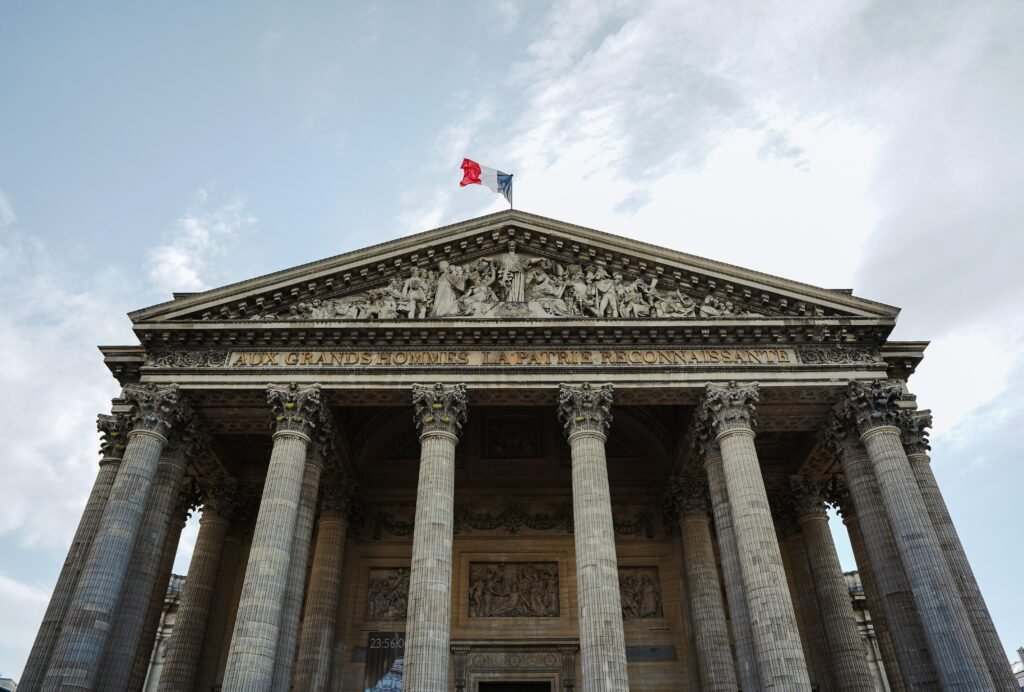
The Paris-Panthéon-Assas Eiffel Scholarship 2027–2028 offers outstanding international students an opportunity to pursue eligible master’s and doctoral studies in France with financial support from the French government.
Université Paris-Panthéon-Assas has officially announced its application campaign for the 2027–2028 academic year. Applications will be accepted from 19 October to 5 November 2026, with the final deadline set at 3:00 p.m. Paris time.
The university participates in the France Excellence Eiffel Scholarship Programme, an initiative developed by the French Ministry for Europe and Foreign Affairs to attract academically exceptional international students to French higher education.
However, the application process requires careful preparation. Candidates must satisfy both the national Eiffel Scholarship requirements and the specific conditions established by Paris-Panthéon-Assas University.
This guide explains the scholarship benefits, eligibility criteria, academic requirements, necessary documents, application procedure, selection process, and common mistakes applicants should avoid.
What Is the Paris-Panthéon-Assas-Eiffel Scholarship 2027–2028?
The France Excellence Eiffel Scholarship Programme supports talented international students pursuing postgraduate education at participating French higher education institutions.
The program aims to develop future decision-makers in the public and private sectors. It therefore prioritizes academic excellence, professional potential, and clearly defined educational objectives.
The scholarship is funded by the French Ministry for Europe and Foreign Affairs and administered by Campus France.
Université Paris-Panthéon-Assas participates by identifying and nominating eligible candidates for the national scholarship selection process.
Unlike scholarships that accept direct individual applications, the Eiffel program requires institutional nomination.
Consequently, candidates must first satisfy the university’s internal selection requirements before their applications can be considered nationally.
Paris-Panthéon-Assas-Eiffel Scholarship 2027–2028 Overview
| Scholarship information | Details |
|---|---|
| Scholarship name | France Excellence Eiffel Scholarship |
| Participating institution | Université Paris-Panthéon-Assas |
| Host country | France |
| Academic year | 2027–2028 |
| Study levels | Master’s and doctorate |
| Funding authority | French Ministry for Europe and Foreign Affairs |
| Program administrator | Campus France |
| Eligible applicants | Qualified international students |
| Master’s monthly allowance | €1,200 |
| Doctoral monthly allowance | €2,000 |
| University application opening | 19 October 2026 |
| University application deadline | 5 November 2026, 3:00 p.m. Paris time |
| National institutional submission deadline | 6 January 2027 |
| Application method | University selection and nomination |
The university deadline is especially important because applications submitted after the internal selection period may not be considered, even though the national Campus France deadline falls later.
Benefits of the Paris-Panthéon-Assas Eiffel Scholarship 2027
The Eiffel Scholarship provides financial and practical support to help selected international students undertake postgraduate studies in France.
Nevertheless, applicants should understand the distinction between the scholarship’s financial benefits and university tuition arrangements.
1. Monthly Allowance for Master’s Students
Successful master’s-level recipients receive €1,200 per month, under the official Eiffel regulations updated in September 2026.
This allowance helps students meet living expenses during their approved scholarship period.
The total amount received depends on the length of the eligible degree program.
2. Monthly Allowance for Doctoral Students
Doctoral scholarship recipients receive €2,000 per month.
This allowance supports approved doctoral study and research activities in France.
The duration depends on the candidate’s doctoral registration, research arrangements, and approved scholarship category.
3. International Travel Support
The Eiffel program provides eligible international travel assistance.
Travel arrangements are subject to the official regulations, including conditions concerning economy-class transportation and the scholar’s country of residence.
Students should follow Campus France instructions before purchasing tickets independently.
4. Domestic Transportation
Selected scholars may receive transportation assistance for eligible journeys within France.
For example, the program can support travel between the arrival airport and the student’s host city, subject to applicable conditions.
5. Health Insurance Support
Eiffel scholars receive support with health coverage during their stay.
Campus France provides temporary protection while eligible students complete registration with the French social security system.
Additional health insurance arrangements may also be available under the program regulations.
6. Accommodation Assistance
Campus France assists scholarship recipients with finding suitable accommodation.
Students may receive information about university residences, CROUS accommodation, or private housing options.
However, accommodation assistance should not be confused with a guarantee of free housing.
7. Cultural Activities
The program also facilitates participation in cultural and recreational activities.
These opportunities help international students become familiar with French society and interact with other scholarship recipients.
Summary of Eiffel Scholarship Benefits
| Benefit | Master’s recipients | Doctoral recipients |
|---|---|---|
| Monthly allowance | €1,200 | €2,000 |
| International travel assistance | Available under program rules | Available under program rules |
| Domestic transportation | Eligible support | Eligible support |
| Health insurance assistance | Available | Available |
| Accommodation search assistance | Available | Available |
| Cultural activities | Available | Available |
| Direct tuition fee payment | Not provided | Not provided |
| Eligible public-institution registration fee exemptions | May apply | May apply |
Does the Eiffel Scholarship Cover Tuition Fees?
The Eiffel Scholarship does not directly pay university tuition or training fees.
However, beneficiaries enrolled in qualifying national degree programs at eligible French public higher education institutions may benefit from registration fee exemptions under French regulations.
Applicants should therefore verify the fee arrangements for their particular degree.
Additional program-specific charges may remain payable.
Before accepting an offer, students should request clarification about any compulsory fees that are not covered.
Who Is Eligible for the Paris-Panthéon-Assas Eiffel Scholarship 2027?
Applicants must meet the eligibility requirements of both the national Eiffel program and Université Paris-Panthéon-Assas.
These conditions concern nationality, age, academic qualifications, previous scholarship applications, language proficiency, and the intended degree program.
1. Nationality Requirements
The scholarship is reserved for foreign nationals.
Candidates holding French nationality are not eligible.
This restriction also applies to applicants with dual nationality when one nationality is French.
Therefore, eligible students from Cameroon, Nigeria, Ghana, Kenya, Senegal, Morocco, Tunisia, and other countries may be considered if they meet the remaining requirements.
Nationality alone does not guarantee eligibility or selection.
2. Age Requirements
The university has published specific birth-date requirements for the 2027–2028 campaign.
| Study level | Maximum age | Required birth date |
|---|---|---|
| Master’s | 29 years | Born after 31 March 1997 |
| Doctorate | 35 years | Born after 31 March 1991 |
Candidates close to the age limit should check their date of birth carefully before preparing an application.
3. Academic Requirements
Applicants must demonstrate excellent academic performance.
For master’s admission, candidates should possess or be completing an appropriate foreign qualification.
Applicants seeking admission to Master 1 must hold, or be in the process of obtaining, a foreign qualification equivalent to at least 180 ECTS credits.
Doctoral candidates must demonstrate the academic qualifications and research preparation necessary for the proposed doctoral program.
In both cases, the university assesses whether the applicant’s academic background is suitable for the selected program.
4. Current Study Location
For the master’s component, applicants currently studying in France are not eligible.
Doctoral applicants are subject to different rules. Certain candidates already pursuing doctoral studies in France may qualify under approved research arrangements.
Therefore, applicants should not assume that the same geographical restrictions apply to both scholarship categories.
5. Previous Eiffel Applications
Candidates whose previous Eiffel application was unsuccessful are generally not eligible to submit another application at the same study level.
Additional restrictions apply to applicants who have previously received Eiffel funding.
Students should disclose their previous scholarship history accurately.
6. Other French Government Scholarships
Applicants must not simultaneously benefit from another incompatible French government scholarship.
The Eiffel program also restricts combinations with certain other funding arrangements.
Candidates who already receive financial support should confirm compatibility before proceeding.
Language Requirements at Paris-Panthéon-Assas University
Language proficiency is one of the most important requirements for this particular university campaign.
The university has established specific French-language requirements for master’s applicants.
| Master’s entry level | Language requirement |
|---|---|
| Master 1 | French proficiency at the C1 level |
| Master 2 | French proficiency at the C2 level |
The university also identifies certain alternative evidence, including successful completion of 60 ECTS credits through French-taught university studies in France or possession of an eligible French national diploma.
Applicants should consult the official instructions to establish whether their qualifications meet the exemption conditions.
A candidate who intends to apply for an English-taught degree should not assume that the programme is included in the university’s Eiffel selection.
The university’s published list of eligible Master’s programmes and its language requirements must take priority over general information about degrees offered at the institution.
Eligible Master’s Programmes for the 2027–2028 Campaign
Paris-Panthéon-Assas University has published a specific list of Master’s programmes eligible for Eiffel Scholarship consideration.
Candidates must select one programme from the university’s approved list.
The university states that selection normally takes place at Master 1 level.
However, two named programmes allow entry at Master 2 level:
- French and European Law.
- French and Foreign Law.
Applicants should consult the official eligible-programme document for the complete list and exact degree titles.
A programme offered by the university is not automatically eligible for Eiffel nomination.
How to Choose a Suitable Master’s Programme
Students should begin by examining their previous academic qualifications.
For example, an applicant with a background in law should identify a degree that builds logically on previous legal studies.
Similarly, applicants interested in economics, management, or public policy should confirm whether an appropriate programme appears on the university’s eligible list.
Before selecting a programme, evaluate its curriculum, language requirements, academic prerequisites, career outcomes, and admission procedure.
Choosing a programme that matches your qualifications is more important than selecting a degree simply because it appears on a scholarship announcement.
Doctoral Opportunities Under the Eiffel Scholarship
The doctoral component supports eligible research activities in France.
At Paris-Panthéon-Assas University, applicants must demonstrate that their proposed research fits the institution’s academic and supervisory arrangements.
The university distinguishes between doctoral applicants beginning their studies and candidates undertaking research through international supervision arrangements.
Doctoral Scholarship Duration
The national Eiffel regulations provide for doctoral awards of up to 12, 18, or 36 months, depending on the candidate’s circumstances.
| Doctoral category | Maximum scholarship duration |
|---|---|
| Eligible first-year doctoral entrants newly arriving in France | 36 months |
| Eligible first- or second-year doctoral candidates under qualifying arrangements | 18 months |
| Eligible second- or third-year doctoral candidates | 12 months |
The 36-month award is reserved for qualifying first-year doctoral candidates who are new arrivals and meet the programme’s conditions.
The shorter doctoral awards generally involve approved international supervision or joint research arrangements.
Applicants should verify the precise duration and research structure with the university before preparing their applications.
Research Proposal Requirements
Doctoral applicants must submit a research proposal explaining the proposed thesis.
The university requests a document of approximately one to five pages in French.
The proposal should clearly identify the research topic, objectives, hypotheses, originality, expected contribution, and potential benefits.
A competitive research proposal should demonstrate that the applicant understands the research problem and has identified a feasible approach to investigating it.
It should also explain how the proposed work contributes to existing academic knowledge.
Documents Required for Master’s Applicants
Paris-Panthéon-Assas University requires Master’s applicants to submit supporting documents in PDF format.
These documents enable the university to assess academic excellence, eligibility, language proficiency, and programme suitability.
Master’s Application Checklist
| Required document | Important instructions |
|---|---|
| Identification document | Include the required official translation into French or English |
| Curriculum vitae | Maximum two pages; written in French |
| Academic certificates | Include qualifications, classifications, and relevant academic distinctions |
| Academic transcripts | Cover the last three years of higher education |
| Language certificate | C1 for Master 1 or C2 for Master 2, unless an accepted alternative applies |
| Professional project | Written in French |
| Candidate declaration and commitment charter | Complete and sign the required form |
| ENIC-NARIC recognition statement | Required for applicable foreign qualifications outside the ECTS system |
| Double-degree documentation | Required where relevant |
Translations must comply with the university’s official requirements.
Applicants should not submit untranslated academic documents when certified translations are required.
Preparing the Academic CV
The Master’s CV must be written in French and should not exceed two pages.
It should present academic qualifications, relevant achievements, professional experience where applicable, research activities, and other evidence of excellence.
Avoid filling the CV with unrelated personal information.
Instead, prioritise achievements that demonstrate suitability for the selected Master’s programme.
Preparing the Professional Project
The professional project is another important application component.
Applicants should explain their academic interests, career direction, reasons for choosing the programme, and how the proposed degree supports their professional development.
A strong professional project connects previous education with future ambitions.
It should also provide concrete evidence of motivation rather than relying on generic statements.
Documents Required for Doctoral Applicants
Doctoral candidates must prepare a more extensive application because research quality and supervision arrangements are central to the selection process.
Doctoral Application Checklist
| Required document | Important instructions |
|---|---|
| Identification document | Official translation where required |
| Academic CV | French or English |
| Academic certificates | Include qualifications and evidence of academic excellence |
| Academic transcripts | Last three years of higher education |
| Language certificate | Where applicable |
| Professional project | French |
| Thesis proposal | One to five pages, written in French |
| Candidate declaration and commitment charter | Signed document |
| External expert assessment | Must meet the university’s independence and expertise requirements |
| External expert CV | Maximum two pages |
| Doctoral financing plan | Explain the overall research funding arrangement |
| Joint supervision or co-direction agreement | Required for applicable doctoral arrangements |
Why the External Expert Assessment Matters
The university requires an independent expert opinion on the scientific quality of the proposed doctoral research.
The expert must possess appropriate academic qualifications and relevant subject expertise.
Importantly, the expert must be external to the institution submitting the application and satisfy the programme’s independence requirements.
Applicants should not assume that any lecturer or previous supervisor can provide this assessment.
The university’s official instructions should be consulted before selecting an expert.
Paris-Panthéon-Assas Eiffel Scholarship 2027 Application Deadline
The university’s internal application period is shorter than the overall national Eiffel Scholarship campaign.
Candidates should distinguish between the university’s deadline and the deadline for institutions to submit their nominations to Campus France.
Official Application Timeline
| Application stage | Date |
|---|---|
| Paris-Panthéon-Assas application opening | 19 October 2026 |
| University application deadline | 5 November 2026 |
| Final submission time | 3:00 p.m. Paris time |
| Campus France institutional nomination deadline | 6 January 2027 |
| Intended academic year | 2027–2028 |
The 5 November 2026 deadline is the date prospective applicants should prioritise.
The later national deadline is intended for French higher education institutions submitting their selected candidates.
Students should not interpret it as permission to submit their applications to Paris-Panthéon-Assas in January.
How to Apply for the Paris-Panthéon-Assas Eiffel Scholarship 2027
The application process involves university-level assessment followed by national nomination.
Candidates should follow the steps below.
Step 1: Read the Official University Announcement
Begin with the university’s official Eiffel Scholarship 2027–2028 announcement.
Read the eligibility requirements and download the relevant documents.
Pay particular attention to the university’s instructions for your chosen study level.
Master’s and doctoral applications have different supporting-document requirements.
Step 2: Identify an Eligible Programme
Master’s applicants should consult the university’s official list of eligible programmes.
Select one degree that corresponds to your previous qualifications and professional goals.
Doctoral applicants should identify an appropriate research area and confirm the relevant supervision arrangements.
Step 3: Verify Your Eligibility
Before preparing documents, confirm that you satisfy the nationality, age, academic, geographical, and language requirements.
Also check whether previous Eiffel applications or existing scholarship arrangements affect your eligibility.
This early assessment can prevent unnecessary preparation costs.
Step 4: Prepare Your Documents
Gather academic certificates, transcripts, identification documents, language evidence, and other required materials.
Arrange official translations where necessary.
Master’s applicants should prepare their French-language CV and professional project.
Doctoral applicants should begin their research proposal, expert assessment, and supervision documentation sufficiently early.
Step 5: Prepare the Separate Master’s Admission Application
This is a particularly important requirement at Paris-Panthéon-Assas.
An Eiffel Scholarship application does not replace the university’s normal Master’s admission application.
Master’s candidates must prepare two parallel applications:
- The Eiffel Scholarship application required for university nomination.
- The ordinary university admission application for the selected Master’s programme.
Applicants should follow the separate instructions and deadlines for each process.
A scholarship nomination does not automatically establish that all academic admission requirements have been satisfied.
Step 6: Submit the Eiffel Application During the University Campaign
Complete the university’s prescribed application procedure between 19 October and 5 November 2026.
Submit the required PDF documents using the official method specified by the university.
The application must reach the university before 3:00 p.m. Paris time on 5 November.
Candidates should not rely on unofficial scholarship websites or third-party application forms.
Step 7: Wait for University Assessment
The university reviews eligible applications and forwards suitable files to the responsible academic professors.
Candidates whose applications receive academic support will be contacted about the next stage.
This internal selection is important because only university-supported candidates can proceed to the national Eiffel nomination process.
Step 8: Institutional Nomination to Campus France
Following internal selection, the university prepares and submits the official nomination.
Individual applicants cannot bypass this stage by submitting their own scholarship application directly to Campus France.
The national institutional submission deadline is 6 January 2027.
Step 9: Await the National Scholarship Decision
Campus France coordinates the national scholarship selection process.
Nomination by the university does not guarantee a scholarship award.
Successful applicants must subsequently follow the university’s and Campus France’s instructions concerning admission, scholarship administration, travel, and arrival in France.
How Competitive Is the Paris-Panthéon-Assas Eiffel Scholarship?
The Eiffel Scholarship is an excellence-based award intended for highly qualified international candidates.
Competition exists at both the university nomination stage and the national selection stage.
Applicants must therefore demonstrate more than basic eligibility.
What Makes a Strong Application?
| Evaluation area | What applicants should demonstrate |
|---|---|
| Academic performance | Excellent results and relevant subject knowledge |
| Programme suitability | Clear alignment between previous studies and the proposed degree |
| Motivation | Convincing reasons for pursuing the selected programme |
| Professional potential | Realistic and well-developed career objectives |
| Academic achievements | Evidence of research, projects, awards, or other distinctions |
| Language proficiency | Ability to meet the university’s specific requirements |
| Doctoral research quality | Originality, feasibility, and scientific relevance |
| Document preparation | Accurate, complete, and properly formatted submissions |
The university’s final selection criteria and the national evaluation process may differ by study level.
Consequently, applicants should treat this table as preparation guidance rather than an official scoring formula.
Practical Tips to Improve Your Application
Understand the Programme Before Writing
Read the academic curriculum and identify the skills and knowledge the degree is designed to develop.
Then explain how these elements relate to your previous studies and future plans.
This approach produces a more convincing application than a generic statement about wanting to study in France.
Demonstrate Excellence With Evidence
Strong applicants support their claims with specific achievements.
For example, mention outstanding grades, academic distinctions, relevant research, successful projects, or professional contributions.
Explain the significance of these achievements instead of simply listing them.
Develop a Coherent Professional Project
Your professional project should explain what you intend to achieve after graduation.
It should also demonstrate how the proposed education contributes to your career development.
Avoid unrealistic claims or broad statements that are not supported by your academic experience.
Respect the French-Language Requirements
Applicants should evaluate their French proficiency before applying.
Because Paris-Panthéon-Assas specifies C1 and C2 requirements for the relevant Master’s entry levels, language preparation cannot be treated as an afterthought.
Start Document Translation Early
Obtaining official translations and qualification recognition documents can take time.
Candidates with foreign qualifications should verify whether ENIC-NARIC recognition is required.
Keep the Two Master’s Applications Separate
Do not assume that submitting an Eiffel Scholarship file completes the university’s normal admission process.
Maintain separate checklists for scholarship nomination and degree admission.
Common Mistakes Applicants Should Avoid
1. Confusing the University Deadline With the National Deadline
The university’s deadline is 5 November 2026.
The Campus France deadline of 6 January 2027 applies to institutional nominations.
Missing the university’s deadline can prevent an applicant from entering the selection process.
2. Applying for a Programme Outside the Eligible List
Not every Master’s degree at Paris-Panthéon-Assas is included in the Eiffel campaign.
Applicants should use the university’s official programme list.
3. Ignoring the Language Requirement
A strong academic profile does not replace the required language qualification.
Candidates must provide the specified French-language evidence or an accepted alternative.
4. Submitting an Incomplete Application
Missing translations, academic records, declarations, or other compulsory documents can delay or invalidate an application.
Review the checklist before submission.
5. Assuming Nomination Guarantees Funding
University nomination is an important achievement, but it is not the final scholarship decision.
The national selection process determines the award.
6. Assuming Tuition and Accommodation Are Automatically Free
The scholarship provides substantial support, but it does not directly pay all tuition charges or guarantee free accommodation.
Applicants should confirm the financial arrangements for their specific programme.
7. Using the Same Documents for Every Programme
Generic CVs and professional statements may fail to demonstrate a convincing academic fit.
Applicants should adapt their documents to the programme’s actual objectives and requirements.
Can African Students Apply?
Yes. The Eiffel Scholarship is open to eligible foreign nationals, including qualified applicants from African countries.
Students from Cameroon, Nigeria, Ghana, Kenya, Senegal, Uganda, Rwanda, and other countries may be considered if they meet the relevant requirements.
However, candidates must distinguish general Eiffel eligibility from the university’s specific admission conditions.
For example, an applicant may satisfy the nationality and age requirements but still be ineligible because the selected programme is not included in the university’s approved list or because the required language qualification is missing.
Students should therefore complete a full eligibility assessment before applying.
Other Scholarship Opportunities Worth Exploring
Applicants who want to understand the wider national programme can read our detailed guide to the France Excellence Eiffel Scholarship 2027. It explains institutional nomination, national eligibility rules, scholarship benefits, and application planning across French higher education institutions.
Students considering alternative postgraduate opportunities in Europe may also explore the Erasmus Mundus NOHA Scholarship 2027, a joint Master’s programme focused on international humanitarian action.
Frequently Asked Questions
Is the Paris-Panthéon-Assas Eiffel Scholarship 2027 open?
The university has announced that applications will open on 19 October 2026 and close on 5 November 2026.
What is the application deadline?
The deadline is 5 November 2026 at 3:00 p.m. Paris time.
Can I apply for a Master’s degree?
Yes. Eligible international applicants can seek nomination for Master’s programmes included in the university’s official 2027–2028 list.
Can I apply for a PhD?
Yes. The university also participates in the doctoral component of the Eiffel Scholarship Programme, subject to its research and supervision requirements.
How much does the Eiffel Scholarship pay?
The official September 2026 regulations provide €1,200 per month for Master’s scholars and €2,000 per month for doctoral scholars.
Does the scholarship pay tuition fees?
The programme does not directly cover tuition or training fees. However, eligible scholarship holders at qualifying French public institutions may benefit from registration-fee exemptions.
Can I apply without French-language proficiency?
Master’s applicants must meet the university’s specified French-language requirements or qualify through an accepted alternative.
Doctoral candidates should review the language conditions applicable to their research programme.
Is IELTS required?
The university’s published Master’s Eiffel requirements emphasise French-language qualifications.
Applicants should follow the language requirements for their specific programme rather than assuming IELTS is sufficient or universally required.
Do I need to apply separately for Master’s admission?
Yes. The university explicitly requires Master’s candidates to prepare the normal degree admission application in addition to the Eiffel Scholarship application.
Can I apply directly to Campus France?
No. Eiffel Scholarship applications must be submitted through eligible French higher education institutions.
Can I choose more than one Master’s programme?
For this university’s Eiffel campaign, applicants must choose one programme from the official eligible list.
Can I apply if I am already studying in France?
Candidates currently studying in France are not eligible for the Master’s component. Different conditions apply to doctoral applicants.
Does the scholarship guarantee admission?
No. Applicants must satisfy the university’s academic admission requirements and the separate Eiffel selection requirements.
What happens after I submit my application?
The university reviews eligible applications and refers suitable candidates to responsible professors. Supported applicants are contacted about subsequent steps.
Is the Eiffel Scholarship guaranteed after university nomination?
No. The final award depends on the national scholarship selection process.
Final Thoughts
The Paris-Panthéon-Assas Eiffel Scholarship 2027–2028 provides an important opportunity for academically outstanding international students seeking postgraduate education in France.
With monthly allowances of €1,200 for Master’s students and €2,000 for doctoral students, the programme can substantially reduce the financial burden of international study.
Nevertheless, the application process is selective and requires careful attention to university-specific requirements.
Master’s candidates must select an eligible programme, meet the required French-language standards, prepare the necessary documents, and complete both the scholarship and normal university admission procedures.
Doctoral candidates must additionally demonstrate the academic quality and feasibility of their proposed research and satisfy the applicable supervision requirements.
Most importantly, applicants should prioritise the 5 November 2026 university deadline, rather than relying on the later national Campus France nomination deadline.
Early preparation, accurate documentation, and a clearly developed academic or research project will help candidates present a stronger application.
Official Links
- Université Paris-Panthéon-Assas — Official Eiffel Scholarship 2027–2028 Announcement: https://www.assas-universite.fr/fr/programme-dexcellence-bourse-eiffel-lannee-2027-2028
- Université Paris-Panthéon-Assas — Official Eiffel 2027 Application Guide: https://www.assas-universite.fr/sites/default/files/eiffel-guide_depot_candidatures_eiffel_2027_v2.pdf