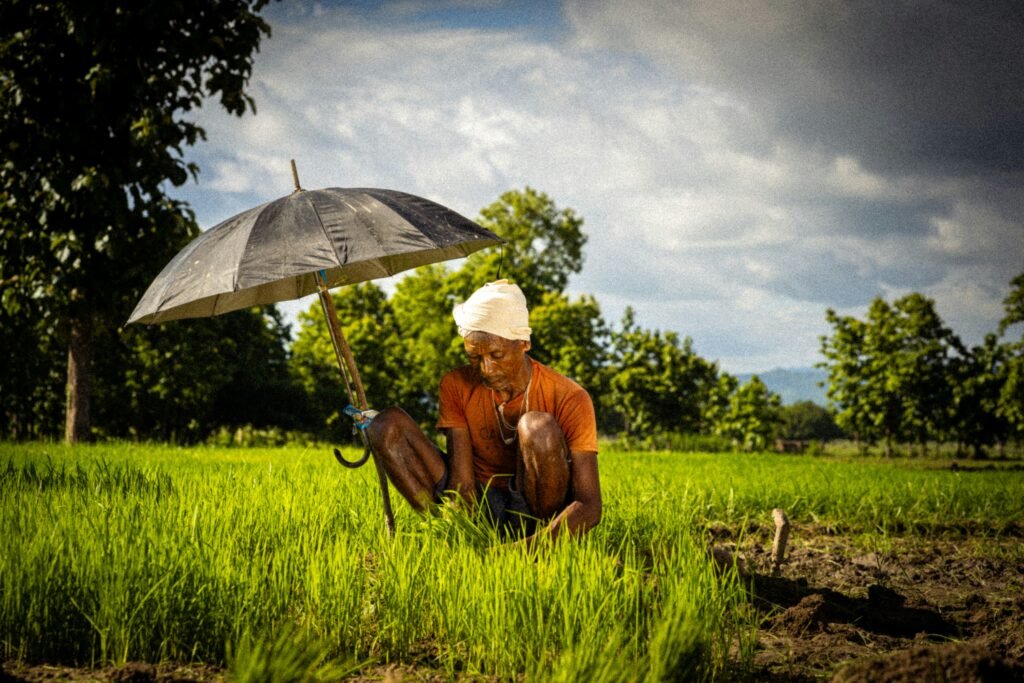
Applications are open for the Germany–CGIAR++ Science and Impact Hub PhD Scholarship 2027, an international doctoral funding opportunity that supports research addressing agricultural development, food security, environmental sustainability and related global challenges.
The programme offers 10 PhD scholarships, each providing €1,800 per month for three years, with the possibility of a further 12 months of support. Successful applicants may also request a research grant of up to €25,000 to finance activities directly related to their doctoral projects.
Unlike many traditional doctoral scholarships, this programme connects academic training at a German university with research undertaken through an international CGIAR++ centre or project. Scholars receive joint supervision, allowing them to combine university-based research with practical experience in development-orientated scientific programmes.
The scholarship is not restricted to agricultural science graduates. Applicants with relevant master’s degrees in economics, geography, biology, sociology, political science, forestry and several other disciplines may also qualify, provided their academic backgrounds and proposed research meet the programme’s requirements.
The application deadline is 30 November 2026, and the selected doctoral projects are expected to begin on 1 March 2027.
For applicants particularly interested in economics and quantitative research in Germany, another opportunity worth exploring is the DIW Berlin Graduate Center PhD Programme 2027, which offers doctoral training in economics and related fields.
This guide explains the Germany CGIAR++ PhD Scholarship 2027, including its funding package, eligibility requirements, supervisory arrangements, selection criteria, required documents and application process. It also examines how applicants can develop a research proposal that fits the programme rather than simply submitting a general doctoral research idea.
Germany CGIAR++ PhD Scholarship 2027 at a Glance
| Scholarship information | Details |
|---|---|
| Scholarship name | Germany–CGIAR++ Science and Impact Hub PhD Scholarship |
| Host country | Germany |
| Programme level | Doctoral (PhD) |
| Scholarships available | 10 |
| Monthly scholarship | €1,800 |
| Initial funding duration | 36 months |
| Possible extension | Up to 12 additional months |
| Potential research grant | Up to €25,000, subject to request and approval |
| Academic institution | Participating German university |
| Research partner | CGIAR++ centre or affiliated research programme |
| Supervision | German university professor and senior CGIAR++ scientist |
| Eligible disciplines | Agricultural sciences and relevant related fields |
| Nationality requirement | International applicants are eligible. |
| Application method | Online application portal |
| Application deadline | 30 November 2026 |
| Expected project commencement | 1 March 2027 |
The programme is particularly relevant to applicants who want their doctoral research to contribute to practical development challenges rather than remain confined to theoretical investigation.
Students exploring other research-intensive doctoral programmes in Europe may also consider the ISTA Fully Funded PhD Programme 2027 in Austria. However, ISTA follows a different admissions and funding structure, so applicants should compare the two programmes according to their academic interests and research goals.
What Is the Germany–CGIAR++ Science and Impact Hub?
The Germany–CGIAR++ Science and Impact Hub is an initiative designed to strengthen cooperation between German scientific institutions and international organisations conducting research for sustainable development.
The Hub is commissioned by Germany’s Federal Ministry for Economic Cooperation and Development (BMZ) through the Deutsche Gesellschaft für Internationale Zusammenarbeit (GIZ). Its implementation involves the Landscape Alliance’s CIFOR office in Bonn.
It works with the international CGIAR research system and additional research organisations, including the World Vegetable Center and the International Centre of Insect Physiology and Ecology (icipe).
Together, these institutions contribute expertise in agricultural research, environmental management, sustainable food systems and development-related scientific innovation.
The Hub’s activities seek to strengthen the relationship between German universities, research institutions and international research centres. They also create opportunities for emerging researchers to contribute to projects that address problems affecting communities, agricultural systems and natural resources.
Why does the programme involve both German universities and CGIAR++ centres?
A doctoral researcher often needs two forms of support: rigorous academic supervision and access to relevant research environments.
German universities provide the academic framework for doctoral enrolment, research training, thesis development and examination.
Meanwhile, CGIAR++ centres contribute expertise, research networks, fieldwork opportunities and connections to ongoing development-orientated projects.
The Germany CGIAR++ PhD Scholarship brings these elements together.
For example, a doctoral candidate studying agricultural market integration might develop an econometric model under the guidance of a German university professor while collaborating with a CGIAR++ research team that investigates agricultural value chains.
Another researcher might examine climate adaptation among smallholder farmers, using data and fieldwork arrangements connected to an existing international research project.
These are illustrative research directions, not pre-approved scholarship topics. Every proposed project must fit an actual CGIAR++ research activity and gain the support of the required supervisors.
What Does the Germany CGIAR++ PhD Scholarship Cover?
The scholarship provides a monthly stipend, potential research funding and access to structured academic training.
Its financial package is substantial, although applicants should distinguish between guaranteed scholarship support and additional funding that requires approval.
1. Monthly scholarship of €1,800
Each selected doctoral candidate receives a scholarship of €1,800 per month for an initial three-year period.
Over 36 months, this amounts to:
€1,800 × 36 months = €64,800
This is the total nominal stipend over the initial funding period, assuming the scholarship continues throughout those 36 months.
The amount can help recipients meet living expenses while pursuing doctoral research. However, applicants should investigate the cost of living in their prospective German university city before deciding whether the stipend will meet their individual needs.
Accommodation, transportation, insurance and other personal expenses can vary considerably between locations.
2. Possible 12-month scholarship extension
The initial scholarship lasts three years, but recipients may qualify for an extension of up to 12 months.
The extension is conditional. The programme considers whether the progress of the doctoral project indicates that the candidate can complete the PhD during the additional period.
If a scholar receives the full extension at the same monthly amount, the additional stipend would total €21,600.
Consequently, the combined stipend over four years could reach €86,400.
Applicants should not interpret the fourth year as automatically guaranteed. They must demonstrate satisfactory progress and meet the conditions for extending the scholarship.
3. Research grant of up to €25,000
In addition to the monthly stipend, scholars may request a research grant of up to €25,000.
This funding is intended for research activities connected to the approved doctoral project.
Depending on the project’s needs and the applicable funding rules, relevant expenses could include fieldwork, research-related travel, data collection, specialised materials or other justified research costs.
The crucial distinction is that €25,000 is a potential research grant, not an automatic cash payment to every scholarship recipient.
Applicants should prepare a credible research budget that explains why particular expenses are necessary and how they contribute to the project’s objectives.
4. Academic training and scientific support
The Hub also provides a scientific support programme involving courses and seminars.
These activities complement the doctoral training offered by the supervising German university.
The programme includes training related to scientific working methods, development-orientated agricultural research and subjects connected to the scholar’s doctoral project.
Such training can strengthen researchers’ methodological abilities and help them communicate findings across different academic and professional environments.
Summary of scholarship benefits
| Benefit | Funding or support |
|---|---|
| Monthly stipend | €1,800 |
| Three-year stipend total | €64,800 |
| Possible fourth-year stipend | €21,600 |
| Maximum stipend over four years | €86,400, if the extension is approved |
| Additional research grant | Up to €25,000 may be requested. |
| Academic supervision | Joint German university and CGIAR++ supervision |
| Scientific training | Courses, seminars and structured research support |
| International research experience | Collaboration with a CGIAR++ research programme |
The monthly scholarship and the possible research grant serve different purposes. Applicants should not combine them into a single guaranteed personal funding figure.
Who Is Eligible for the Germany CGIAR++ PhD Scholarship 2027?
The programme welcomes applicants from several academic backgrounds, but it maintains specific requirements concerning qualifications, research relevance and supervision.
Academic qualifications
Applicants must hold a master’s degree in agricultural sciences or a related field with an above-average final grade.
The official eligibility information identifies several examples of related disciplines.
These include:
- Agricultural sciences
- Biology
- Geography
- Sociology
- Veterinary medicine
- Marine biology
- Forestry
- Political science
- Law
- Economics
The list demonstrates the programme’s interdisciplinary approach.
However, holding a degree in one of these fields does not automatically establish eligibility for every proposed research topic. The applicant must still demonstrate how their academic training connects to the intended doctoral project.
For instance, an economics graduate proposing research on agricultural productivity, rural development, food price transmission or climate-related economic risks may have a more relevant profile than someone proposing an unrelated financial markets study.
Academic performance
Applicants must have an above-average final grade in their master’s degree.
For applicants whose degrees were awarded outside Europe, the Hub also requires a ranking from the degree-awarding university.
This requirement deserves early attention because some universities do not automatically include class rankings on academic transcripts.
Applicants in this situation should contact their university’s academic records or examination office to ask whether an official ranking statement can be issued.
Nationality requirements
The scholarship is open to international applicants. German nationality is not required.
The programme particularly welcomes applicants from CGIAR++ partner countries and encourages applications from women.
Nevertheless, nationality eligibility should not be confused with automatic academic eligibility. All applicants must satisfy the programme’s qualification, supervision and research requirements.
German university enrolment
Successful candidates must enrol in a doctoral programme at a German university.
This requirement is central to the scholarship’s structure because the doctoral degree is pursued through the German university while the research project involves CGIAR++ collaboration.
Applicants should therefore investigate the admission requirements of their prospective German university alongside the scholarship requirements.
A scholarship application does not remove the need to satisfy the university’s doctoral admission rules.
The Most Important Requirement: Forming a Three-Person Research Partnership
One feature makes the Germany CGIAR++ PhD Scholarship significantly different from many other doctoral funding opportunities.
Applicants must establish a research partnership involving three participants before applying.
The Hub refers to this arrangement as a tridem.
It consists of:
- The prospective PhD candidate.
- A professor affiliated with a German university.
- A senior scientist from a CGIAR++ centre.
The candidate and both supervisors must work together to develop the scientific proposal.
Only applications based on this required arrangement are accepted.
Why is this requirement so important?
A conventional scholarship application might allow students to submit a research proposal first and find a supervisor after admission.
That is not how this programme is designed.
The Germany CGIAR++ model expects applicants to identify an appropriate research environment, establish supervisory relationships and develop a project that contributes to ongoing scientific work.
The Hub does not arrange supervisory connections on behalf of applicants. Candidates must identify and contact prospective supervisors themselves.
This means applicants should begin by investigating existing research activities rather than writing a complete proposal without knowing whether a relevant research team can host it.
Finding a suitable CGIAR++ research project
Start by identifying a development challenge that connects to your academic background.
Possible areas of investigation include agricultural productivity, climate adaptation, food security, natural resource management, rural livelihoods and sustainable development.
Next, examine the research programmes of CGIAR++ centres to determine whether an existing project addresses a related issue.
Read the project’s objectives, research methods, geographical focus and recent publications.
Pay particular attention to whether the proposed doctoral study could add a new analytical perspective or answer an unresolved research question.
A strong research proposal should complement the host project’s work rather than duplicate activities already underway.
Approaching a German university professor
After identifying a promising research area, investigate professors at German universities whose publications and research interests align with the proposed project.
An effective first email should demonstrate familiarity with the professor’s research.
Rather than sending a generic supervision request to dozens of academics, explain the particular research problem you want to investigate, why it matters and how the professor’s expertise connects to it.
Mention the Germany–CGIAR++ Science and Impact Hub scholarship and explain that the programme requires joint supervision with a CGIAR++ scientist.
You can also provide a short research concept, your academic CV and a concise explanation of your relevant methodological experience.
Contacting a CGIAR++ senior scientist
The CGIAR++ scientist must be associated with a relevant research activity and willing to participate in the joint supervision arrangement.
Your communication should therefore focus on the value your proposed research could add to the scientist’s existing project.
For example, if the research team is studying agricultural adaptation to climate change, you might propose a complementary analysis of household-level adoption decisions or the economic effects of adaptation measures.
The purpose is not simply to obtain a signature.
Both supervisors need to understand the project, support its development and commit to the required supervisory responsibilities.
What Research Topics Could Fit the Scholarship?
The Hub does not require every candidate to study the same subject.
Instead, it supports development-oriented research that connects to the work of CGIAR++ centres and contributes to broader international development objectives.
Applicants can use the following examples to explore potential directions.
| Research area | Illustrative doctoral research direction |
|---|---|
| Agricultural economics | Effects of improved agricultural technologies on farm productivity and household income |
| Climate change | Economic and environmental consequences of climate adaptation strategies |
| Food security | Relationship between agricultural market disruptions and household food insecurity |
| Development economics | Impact of rural infrastructure or agricultural interventions on livelihoods |
| Environmental science | Sustainable management of land, forests or water resources |
| Agricultural policy | Evaluation of policies supporting resilient food systems |
| Data science | Predictive modelling of agricultural risks using environmental and economic data |
| Gender and development | Barriers affecting women’s access to agricultural resources and technology |
| Rural finance | Role of financial access in agricultural investment and climate resilience |
These topics are examples intended to help applicants think about research fit. They are not an official list of funded projects or confirmation that a particular CGIAR++ centre is recruiting in these areas.
Can economics and quantitative research graduates apply?
Yes. Economics is explicitly identified among the related disciplines that may qualify.
Applicants with backgrounds in economics, statistics, econometrics or quantitative analysis may contribute valuable research methods to development-oriented agricultural projects.
For example, a researcher could investigate the effects of an agricultural policy using causal inference methods, analyse food market integration through time-series techniques or study climate-related risks using spatial and panel data.
However, applicants should demonstrate substantive knowledge of the development problem they intend to study.
Technical skills alone are not enough.
A sophisticated econometric model is less persuasive if the research questions do not address an identifiable gap in the host project’s work.
How Are Applications Evaluated?
The official selection framework assigns a total of 5,900 points across three categories.
This offers applicants a useful indication of where the selection committee places emphasis.
| Evaluation component | Maximum points | Share of total |
|---|---|---|
| Research proposal | 2,500 | 42.4% |
| Candidate profile | 2,200 | 37.3% |
| Supervisory team | 1,200 | 20.3% |
| Total | 5,900 | 100% |
The research proposal carries the largest individual share of the assessment.
Nevertheless, the three components are closely connected. A promising proposal needs a capable applicant and an appropriate supervisory arrangement.
Candidate profile: 2,200 points
The committee considers the applicant’s academic and professional background.
Relevant factors include the master’s degree grade, motivation letter, international orientation, research experience, recommendation letters and future career potential.
Previous experience in research for development or work related to the Sustainable Development Goals can strengthen an application.
Applicants should therefore explain not only what they have studied but also how their experience prepares them to contribute to the proposed research.
Supervisory team: 1,200 points
The supervisory team is assessed on its academic strength and the quality of the proposed collaboration.
The committee considers whether the research proposal was genuinely developed jointly, the supervisors’ expertise and the suitability of the hosting research programme.
Existing collaboration between the relevant institutions can also be valuable.
Each supervisor may support a maximum of two candidates under the programme’s stated arrangements.
This limitation makes it important to contact prospective supervisors early and establish whether they have the capacity to support another applicant.
Research proposal: 2,500 points
The research proposal receives the highest weighting.
The evaluation considers the scientific quality of the proposed study, its development relevance and its contribution to the hosting project.
The committee also examines research questions, hypotheses, methodology, references, project duration, budget justification and potential for publications.
Where relevant, the proposal should address gender considerations and explain how the research could generate practical development benefits.
A strong application therefore needs more than an interesting topic.
It must present a feasible scientific investigation with a clear research gap, appropriate methods and a credible connection to an existing CGIAR++ project.
How to Develop a Competitive Research Proposal
Because the proposal carries more than 40% of the total evaluation points, applicants should devote substantial attention to its preparation.
The following approach can help structure that work.
Identify a specific research problem
Avoid starting with an overly broad topic such as climate change and agriculture.
Instead, identify a particular unanswered question.
For example, a proposal could investigate why smallholder farmers in a particular agricultural system adopt certain climate adaptation practices while rejecting others.
A narrower research question allows applicants to define appropriate methods, identify relevant data and explain the expected contribution more convincingly.
Establish the research gap
Read recent publications from the prospective supervisors and the hosting research programme.
Look for limitations, unanswered questions or methodological gaps that your proposed research could address.
A credible research gap should emerge from existing evidence.
Simply stating that little research has been conducted is not enough without demonstrating what previous studies have already established.
Explain the connection to the host project
This is one of the most important aspects of the application.
The proposed PhD must be attached to an ongoing CGIAR++ research activity and add value to it.
Applicants should explain which existing project their work supports, what the project is already investigating and how the doctoral research would extend its findings.
For example, a CGIAR++ programme might already be collecting data on agricultural production and climate conditions.
A doctoral candidate could potentially contribute an additional economic impact analysis using those data, subject to the project’s needs and approval.
This would provide a clearer justification than proposing an unrelated study that merely shares the same broad subject area.
Choose methods that answer the research questions
The methodology should follow the research problem.
A study examining policy impacts might require a credible causal identification strategy. Research on agricultural markets could use panel data or time-series methods. Environmental studies may require field observations, spatial analysis or laboratory techniques.
Applicants should explain why the chosen approach is appropriate and what data or materials will be needed.
They should also consider whether the proposed methods are feasible within the scholarship’s timeframe.
Demonstrate development relevance
The Hub places importance on research connected to international development goals.
Applicants should therefore identify the practical problem their research addresses and explain who could benefit from its findings.
Relevant beneficiaries might include farmers, local communities, policymakers, research institutions or organisations implementing development programmes.
Avoid exaggerated promises.
A doctoral project rarely solves a complex development problem on its own, but it can produce evidence that improves understanding and supports better decisions.
Prepare a realistic research budget
If the project requires additional research funding, the budget should explain how the requested resources will be used.
Every major cost should connect to a specific research activity.
For instance, field data collection expenses should correspond to the planned sampling strategy, geographical coverage and research timetable.
The budget should also account for resources already available through the host project to avoid unnecessary duplication.
Required Documents for the Germany CGIAR++ PhD Scholarship 2027
Applicants must prepare several documents, while their supervisors have separate responsibilities.
The distinction matters because an otherwise complete personal application may still be ineligible if the required supervisory confirmations are missing.
Documents prepared by the applicant
| Document | Requirement |
|---|---|
| Motivation letter | Signed, maximum one page |
| Curriculum vitae | Tabular format, signed and dated, maximum one page |
| Research proposal | Use the official template |
| Master’s degree certificate | Evidence of the qualifying degree |
| Academic transcript | Issued by the relevant university examination office |
| English proficiency evidence | TOEFL, IELTS or another acceptable certificate |
| University ranking | Required for non-European degrees, according to the Hub’s eligibility guidance |
Applicants should follow the official templates and instructions rather than assuming that a conventional academic CV or research proposal will automatically meet the requirements.
Documents submitted by the supervisors
The programme also requires three documents from the supervisory arrangements:
- A recommendation letter and supervision confirmation from a professor affiliated with a German university.
- A recommendation letter and supervision commitment from a senior CGIAR++ scientist, confirming the project’s connection to an existing research programme.
- A hosting agreement from the relevant CGIAR++ centre.
The official application instructions state that the supervisors must send these documents together as one PDF to hub@landscapealliance.org.
Applicants should coordinate this process carefully with both supervisors and confirm that the required documents reach the Hub before the deadline.
Is IELTS or TOEFL Compulsory?
The application requirements request TOEFL, IELTS or another English proficiency certificate.
However, the Hub’s FAQ indicates that alternative evidence, such as a master’s degree taught in English, can be sufficient for the Hub’s application.
This creates an important distinction between the scholarship’s language requirements and those of the German university.
A German university may impose additional admission conditions, even where the Hub accepts alternative proof of English proficiency.
Applicants who completed an English-taught master’s degree should therefore ask their prospective university supervisor whether an official medium-of-instruction certificate is acceptable for both processes.
They should not assume that every German university applies the same language rules.
How to Apply for the Germany CGIAR++ PhD Scholarship 2027
Applications are submitted through the Hub’s official online application system.
However, prospective candidates should complete several preparatory steps before opening the portal.
Step 1: Check your academic eligibility
Confirm that your master’s degree falls within Agricultural Sciences or a relevant related discipline.
Review your final grade and determine whether your academic record satisfies the above-average performance requirement.
Applicants with non-European degrees should also arrange the required university ranking documentation.
Step 2: Identify a relevant CGIAR++ research programme
Investigate ongoing projects that match your academic interests and methodological experience.
Read about the project’s scientific objectives, geographical focus and research activities.
Choose a programme where your proposed PhD could make a meaningful contribution.
Step 3: Contact potential supervisors
Approach a suitable professor at a German university and a senior CGIAR++ scientist.
Explain your research interests, relevant qualifications and proposed contribution.
Allow sufficient time for discussion, because both supervisors must participate in developing the proposal.
Step 4: Develop the research proposal jointly
Use the official research proposal template.
Work with the prospective supervisors to refine the research questions, methods, timetable and budget.
Confirm that the proposed project complements the CGIAR++ research programme and meets the academic expectations of the German university.
Step 5: Prepare your supporting documents
Complete the signed motivation letter, one-page tabular CV and academic documentation.
Arrange the required proof of English proficiency and any additional documents relevant to your qualifications.
Check that your academic records are readable and consistent with the information in your application.
Step 6: Coordinate the supervisors’ submissions
Both supervisors must provide the required confirmations and recommendations.
The hosting CGIAR++ centre must also provide its hosting agreement.
Use the official templates and ensure the supervisory documents are submitted according to the Hub’s instructions.
Step 7: Complete the online application
Visit the official application portal and select the PhD scholarship application.
Enter the requested information accurately and upload the required documents.
Review the application carefully before submission.
Step 8: Submit before 30 November 2026
The deadline for the current call is 30 November 2026.
Applicants should avoid waiting until the final day, particularly when several institutions and supervisors must coordinate their documents.
The Hub will evaluate applications after the deadline, with the selected doctoral projects expected to begin on 1 March 2027.
Can Applicants From Africa and Other Non-European Countries Apply?
Yes. The programme does not restrict eligibility to German or European nationals.
This makes it relevant to qualified international graduates interested in development-oriented doctoral research.
Applicants from African countries may find opportunities to connect their research interests with challenges involving food security, agricultural productivity, climate resilience, rural development and natural resource management.
However, the geographical relevance of a proposed project must align with an actual CGIAR++ research programme.
The Hub’s guidance also indicates that field research should have an international character rather than being restricted exclusively to the candidate’s home country.
Applicants should discuss the appropriate research location and fieldwork arrangements with their prospective supervisors.
Important considerations for international applicants
International candidates should prepare early for differences in academic documentation and doctoral admission procedures.
For example, a master’s graduate from outside Europe may need to request an official class ranking from their university.
Applicants should also investigate whether their qualifications meet the admission requirements of the German university where they intend to enrol.
Finally, the expected March 2027 start date leaves a relatively short period between the application deadline and project commencement.
Successful international applicants may need to arrange visas, residence documentation and relocation within that period. They should discuss practical timelines with their prospective university and host institution.
How Does This Scholarship Compare With Other International PhD Opportunities?
The Germany CGIAR++ programme is particularly attractive to applicants who want to combine doctoral study with applied international development research.
However, not every prospective PhD student will find its structure suitable.
For example, applicants primarily interested in economics and econometrics may prefer a programme focused more directly on those disciplines.
Others may seek interdisciplinary scientific training without having to establish a supervisory partnership before admission.
Students who are open to destinations beyond Germany and Austria can also explore the Open Doors Russian Scholarship, which includes a doctoral competition pathway for international applicants.
The funding arrangements, admission procedures and research environments differ substantially across these opportunities.
Comparison of doctoral scholarship structures
| Programme | Main academic emphasis | Funding model | Important application feature |
|---|---|---|---|
| Germany CGIAR++ PhD Scholarship 2027 | Agricultural and development-oriented interdisciplinary research | €1,800 monthly scholarship, with potential additional research funding | Joint proposal and two supervisors required before application |
| DIW Berlin Graduate Center PhD 2027 | Economics and related quantitative research | Initial stipend, normally followed by research employment | Research-focused doctoral selection |
| ISTA PhD Programme 2027 | Interdisciplinary natural, mathematical and computational sciences | Salaried doctoral employment | Centralised admission and research rotations |
| Open Doors Russian Scholarship | Multiple academic disciplines, including doctoral fields | Tuition-free study for eligible winners and other support under applicable rules | Competitive online scholarship selection |
Applicants should compare more than the advertised monthly funding.
The most important considerations include research fit, supervisory arrangements, degree requirements, funding conditions, programme duration and the professional opportunities available after graduation.
Common Application Mistakes to Avoid
Writing a proposal before identifying the host project
A research idea may be academically interesting but unsuitable for this scholarship if it has no meaningful connection to an ongoing CGIAR++ activity.
Applicants should investigate the host project and develop their proposal with the required supervisors.
Assuming the Hub will find supervisors
The Hub does not arrange the supervisory partnership for applicants.
Candidates must establish the required connections themselves.
Treating the research grant as guaranteed funding
The €25,000 research grant is available on request and requires appropriate justification.
It should not be presented as an automatic payment or part of the scholar’s personal stipend.
Submitting an excessively long CV
The official application requires a signed, dated CV in tabular form with a maximum length of one page.
Applicants should prioritise relevant academic qualifications, research experience and technical skills rather than attempting to include every activity they have undertaken.
Overlooking the university ranking requirement
Applicants with non-European master’s degrees should arrange the required university ranking documentation early.
Obtaining official academic records can take time, especially when the issuing university has separate administrative procedures.
Neglecting the supervisors’ documents
The application depends on the required supervision confirmations and hosting agreement.
Applicants should not assume that completing the online form is sufficient.
Focusing on technical methods without explaining impact
Advanced statistical or scientific methods can strengthen a proposal, but the selection committee also considers development relevance.
Applicants should clearly explain how their research contributes to the hosting programme and why the findings matter.
Germany CGIAR++ PhD Scholarship 2027: Important Dates
| Event | Date |
|---|---|
| Official call document issued | August 2026 |
| Applications | Open |
| Application deadline | 30 November 2026 |
| Application assessment | After the submission deadline |
| Expected PhD project start | 1 March 2027 |
The Hub’s FAQ indicates that PhD applications take approximately three months to process on average after the initial application deadline.
Applicants should therefore treat 1 March 2027 as the stated intended project commencement date rather than a guarantee that every administrative process or individual placement will be completed by then.
Frequently Asked Questions
Is the Germany CGIAR++ PhD Scholarship 2027 fully funded?
The programme provides a €1,800 monthly stipend for three years, a possible 12-month extension and the opportunity to request additional research funding of up to €25,000.
It offers substantial doctoral financial support. However, applicants should check the arrangements for personal expenses, insurance, university requirements and research costs rather than assuming that every possible expense is automatically covered.
How many PhD scholarships are available?
The current call supports 10 doctoral candidates.
The Hub reports that the previous call attracted a high number of qualified applicants, with an acceptance rate of approximately 5%.
That historical figure illustrates the programme’s competitiveness but does not establish the acceptance rate for the 2027 intake.
Can I apply with a master’s degree in economics?
Yes. Economics is among the related fields explicitly identified in the eligibility guidance.
Your proposed research must still connect to an ongoing CGIAR++ activity and meet the programme’s academic and supervisory requirements.
Do I need a German university supervisor before applying?
Yes. Applicants must establish a supervisory arrangement involving a professor affiliated with a German university and a senior CGIAR++ scientist.
The proposal must be developed jointly.
Does the Hub help applicants find supervisors?
No. The Hub states that applicants are responsible for identifying and contacting prospective supervisors.
Can I apply without an agricultural science degree?
Potentially. The programme accepts several related academic disciplines.
However, applicants must demonstrate the relevance of their qualifications and research interests to the proposed doctoral project.
Is German nationality required?
No. International applicants are eligible, and the programme welcomes applicants from CGIAR++ partner countries.
Do I need IELTS?
The Hub accepts TOEFL, IELTS or other appropriate evidence of English proficiency.
Its FAQ also recognises alternative evidence, such as an English-taught master’s degree. The German university may impose additional requirements.
Can I receive the full €25,000 research grant?
Scholars may request up to €25,000 for research-related activities.
The amount is not automatically awarded. Applicants must justify their research funding needs and follow the applicable approval procedures.
Is the fourth year guaranteed?
No. The possible 12-month extension depends on the doctoral project’s progress and whether completion within the additional period appears feasible.
When is the application deadline?
Applications close on 30 November 2026.
When will the PhD programme begin?
The official call identifies 1 March 2027 as the intended starting date for the funded doctoral projects.
Final Advice for Prospective Applicants
The Germany–CGIAR++ Science and Impact Hub PhD Scholarship 2027 provides an opportunity for researchers who want to connect rigorous doctoral training with practical international development challenges.
Its €1,800 monthly stipend, potential research grant and joint supervisory structure can support meaningful research across agricultural sciences, economics, environmental studies and other relevant disciplines.
Yet the programme demands more preparation than many conventional scholarship applications.
Applicants must establish relationships with a German university professor and a senior CGIAR++ scientist, identify an appropriate ongoing research project and develop a proposal that offers a clear scientific contribution.
The selection framework reinforces this emphasis: the research proposal accounts for 2,500 of the 5,900 available evaluation points, while the candidate’s background and supervisory team account for the remainder.
For prospective applicants, the most productive starting point is therefore not the application form. It is finding a research problem, an existing CGIAR++ project and two supervisors whose expertise can support a credible doctoral investigation.
With only 10 scholarships available, academic qualifications alone may not distinguish an application. The quality of the proposed research, its development relevance and the strength of the collaboration will be central to its competitiveness.
Applications close on 30 November 2026. Interested candidates should review the official requirements, contact suitable supervisors and begin preparing their documents without delay.
Official Links
The following official resources provide the current scholarship requirements, downloadable application templates and application submission system.
1. Germany–CGIAR++ Science and Impact Hub — Official PhD Scholarship Application Requirements
https://hub.landscapealliance.org/phd-research-scholarship/application
2. Germany–CGIAR++ Science and Impact Hub — Official Application Portal