
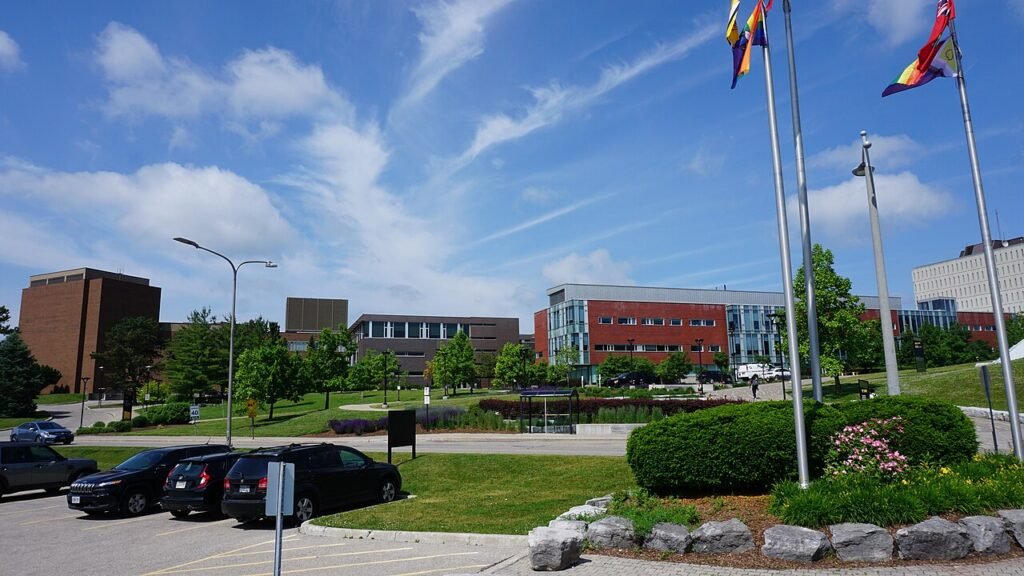
International students can now explore dozens of funded master’s or PhD research opportunities at the University of Waterloo across engineering, science, health, mathematics, environment, and the arts.
The University of Waterloo-funded graduate research opportunities connect prospective master’s and PhD students directly with faculty-led research projects and potential supervisors.
Unlike a conventional scholarship with a single application deadline, Waterloo maintains a centralised database of research projects. Applicants can search for opportunities matching their academic backgrounds, review the qualifications required by individual supervisors and submit an expression of interest.
Funding is another major attraction. Eligible students in Waterloo’s research-based graduate programmes may receive financial support through university funding, graduate research studentships, teaching or research assistantships, scholarships and other sources.
For eligible full-time PhD students, the university’s current minimum funding level is CAD 29,145 per year, while research-based master’s students also commonly receive financial support.
University of Waterloo Graduate Research Opportunities at a Glance
| Category | Details |
|---|---|
| University | University of Waterloo |
| Country | Canada |
| Study Levels | Research Master’s and PhD |
| Eligible Applicants | Domestic and international students |
| Current PhD Minimum Funding | CAD 29,145 per year |
| Master’s Funding | Varies by programme and faculty |
| Fields | Arts, Engineering, Environment, Health, Mathematics and Science |
| Number of Listed Projects | Approximately 47 currently listed |
| Application Type | Research opportunity + graduate programme admission |
| Deadline | Varies by project and graduate programme |
What Are the University of Waterloo Research Opportunities?
This is not a single scholarship called the “University of Waterloo Scholarship.”
Instead, the university operates an official Future Graduate Student Research Opportunities platform where faculty members advertise research projects for prospective graduate students.
The system allows applicants to search for projects by faculty and research area before they contact or express interest in potential supervisors.
At the time of writing, Waterloo’s database contains opportunities across all six major faculties:
- Faculty of Arts
- Faculty of Engineering
- Faculty of Environment
- Faculty of Health
- Faculty of Mathematics
- Faculty of Science
This arrangement makes the opportunity particularly useful for students who want to pursue research but do not yet have a supervisor.
Current Research Opportunities at Waterloo
The available projects cover a remarkably broad range of research areas.
For example, current opportunities include research connected to:
- Artificial intelligence
- Biomedical engineering
- Chemical engineering
- Biotechnology
- Battery and energy-storage technologies
- Climate change and adaptation
- Environmental research
- Psychology and human behaviour
- Mathematics
- Data-driven research
- Microbiology
- Molecular biology
- Coastal processes
- Sustainability
- Nanotechnology
New projects can be added to the university’s research-opportunity database, while existing opportunities can close after suitable candidates are identified.
Therefore, prospective applicants should search based on their academic background rather than focusing on only one advertised project.
How Much Funding Does the University of Waterloo Provide?
This stage is where applicants need to distinguish between the university’s minimum funding policies and the funding attached to individual programmes or research projects.
PhD Funding
Effective May 1, 2026, eligible full-time PhD students in satisfactory academic standing will receive minimum funding of:
CAD 29,145 per year
The university indicates that this support normally applies as long as students remain within the time limits of their programme.
Depending on how a student enters the doctoral programme, the funding can generally cover the first four or five years.
Furthermore, many departments provide funding above the university minimum.
Waterloo reports that the average funding across its doctoral programmes was CAD 45,710 in 2024/25, but applicants should not interpret this historical average as a guaranteed individual award.
Research Master’s Funding
Research-based Master’s programmes are treated differently.
Waterloo’s university-wide recommended minimum for eligible full-time research Master’s students is currently:
CAD 12,000 for the first year
However, funding varies by faculty and programme, and many research master’s programmes provide more than this.
For example, Waterloo’s Faculty of Engineering currently states that eligible full-time MASc students receive a minimum of CAD 18,000 per year for two years, while eligible Engineering PhD students have a faculty minimum of CAD 30,000 per year.
Applicants should therefore verify the funding conditions of their specific programme rather than assume that every Master’s student receives the same amount.
Does the Funding Cover Tuition and Living Expenses?
Funding packages are intended to help students pay tuition and meet living expenses, but applicants should not assume that every Waterloo research opportunity is a separate “fully funded scholarship.”
Funding can come from several sources, including:
- University awards
- Graduate Research Studentships
- Graduate Teaching Assistantships
- Graduate Research Assistantships
- External scholarships and awards
- Supervisor or departmental funding
The amount and composition of the package can therefore differ between students.
Waterloo itself advises students to budget carefully because a funding package may not necessarily cover every living expense.
That distinction is important for international students planning their finances before moving to Canada.
Additional Support for International PhD Students
International doctoral students may have access to another important source of financial support.
Eligible full-time international PhD students may receive the International Doctoral Student Award (IDSA), which is intended to help address the difference between international and domestic tuition.
Where applicable, this support is additional to the university’s minimum doctoral funding package.
Applicants should check their programme and award eligibility when evaluating their overall financial package.
Who Can Apply?
Both Canadian and international students can pursue Waterloo’s research-based graduate opportunities.
Applicants generally need to:
- Meet the admission requirements of the associated graduate programme
- Hold the appropriate previous academic qualification
- Meet programme-specific academic requirements
- Demonstrate the background required for the advertised research project
- Meet the university’s English-language requirements where applicable
- Satisfy any additional criteria specified by the prospective supervisor
Individual projects can impose much more specific requirements.
For example, a current bioprocess-development opportunity in Waterloo’s Faculty of Engineering seeks candidates with a strong background in biochemistry, microbiology and molecular biology, with wet-lab experience considered an asset.
Therefore, applicants should not send the same generic application to every project.
Can Cameroonians, Nigerians, Ghanaians and Other Africans Apply?
Yes.
The University of Waterloo accepts international graduate students, meaning qualified applicants from Cameroon, Nigeria, Ghana and other African countries can pursue relevant research Master’s and PhD opportunities.
There is no general nationality restriction limiting these research opportunities to Canadians.
However, applicants still need to satisfy the academic, language and research-profile requirements of their chosen programme and project.
Do You Need a Supervisor?
The answer depends on the graduate programme.
Some Waterloo research-based Master’s and PhD programmes require applicants to secure a supervisor before submitting their formal graduate application. Other programmes may assign a supervisor at a later stage.
Waterloo therefore encourages prospective research students to explore available research projects and identify faculty members whose work aligns with their academic interests.
When contacting a potential supervisor, applicants should be ready to explain:
- Their intended graduate programme
- Academic background
- Research experience
- Research interests
- Why the professor’s work matches those interests
- Intended admission term
A strong academic CV and current transcripts should also be prepared.
Example: Bioprocess Development Research Opportunity
One currently advertised project demonstrates how Waterloo’s system works.
The Bioprocess Development for Biomanufacturing or Environmental Applications project is based in the Faculty of Engineering.
Its research areas include:
- Biochemical engineering
- Bioprocess engineering
- Genetic engineering
- Metabolic engineering
- Synthetic biology
- Microbial biotechnology
The opportunity is linked to several Chemical Engineering MASc and PhD programmes.
Interestingly, Waterloo lists this particular project as an open and ongoing research opportunity, meaning expressions of interest can be submitted for any admission term.
However, applicants must still observe the application deadlines of the graduate programme through which they eventually apply.
Application Deadlines
There is no single deadline covering every University of Waterloo graduate research opportunity.
Deadlines depend on:
- The research project
- The associated graduate programme
- The intended admission term
For example, several research programmes in chemical engineering currently use the following deadlines:
- February 1 – September admission
- June 1 – January admission
- October 1 – May admission
Other departments may have different deadlines.
This is why applicants should not rely on a blog post that simply claims the “deadline varies”. Always check the programme for your selected research project.
How to Apply for University of Waterloo Graduate Research Opportunities
The process begins with finding a research match.
Step 1: Search the Research Opportunity Database
Visit Waterloo’s official graduate research opportunities platform and browse the projects currently accepting expressions of interest.
You can search by faculty and research area.
Step 2: Read the Project Requirements
Open the research project that interests you and examine:
- Research description
- Required academic background
- Preferred skills
- Degree level
- Supervisor
- Associated graduate programmes
- Important dates
Do not apply merely because funding is available. Your academic and research profile should fit the project.
Step 3: Submit an Expression of Interest
Where available, complete the expression-of-interest form for the project.
This communicates your interest directly to the relevant faculty researcher.
An expression of interest is not the same as formal admission to the University of Waterloo.
Step 4: Establish the Supervisor or Research Match
If the researcher is interested in your profile, please follow the instructions provided regarding supervision and the relevant graduate programme.
Step 5: Apply for Graduate Admission
You must then complete the formal University of Waterloo graduate application for the Master’s or PhD programme associated with the project.
Meet all academic, document and language requirements and submit your application before the programme deadline.
Important Points Before Applying
The opportunity is attractive, but applicants should understand what Waterloo is actually offering.
This is not one universal scholarship competition where every successful applicant receives an identical award.
Instead, Waterloo combines a large catalogue of faculty-led research opportunities with institutional funding policies for eligible research graduate students.
That structure can be particularly valuable because applicants are able to search for research opportunities first, identify potential supervisors and then pursue admission into the relevant research-based graduate programme.
For international students, especially those seeking a funded PhD in Canada, Waterloo’s guaranteed doctoral minimum funding makes these opportunities worth exploring.
Final Thoughts
The University of Waterloo’s funded graduate research opportunities provide international students with a direct route to explore research-based Master’s and PhD programmes at one of Canada’s major research universities.
At present, Waterloo’s centralised research database spans all six faculties and includes dozens of advertised projects.
The strongest financial provision applies to eligible full-time PhD students, who currently receive at least CAD 29,145 per year under Waterloo’s university-wide minimum funding policy. Research Master’s students can also receive financial support, although amounts vary substantially by faculty and programme.
Rather than treating this as a single “fully funded scholarship”, prospective applicants should identify a suitable research project, confirm its academic requirements, investigate the associated funding package and then follow the admission process for the corresponding graduate programme.
Waterloo is a significant option for qualified international researchers, including applicants from Cameroon, Nigeria, Ghana, and other African countries, to consider for graduate study in Canada.
Official Links
University of Waterloo – Graduate Research Opportunities
University of Waterloo – Funding for Research-Based Graduate Programs