
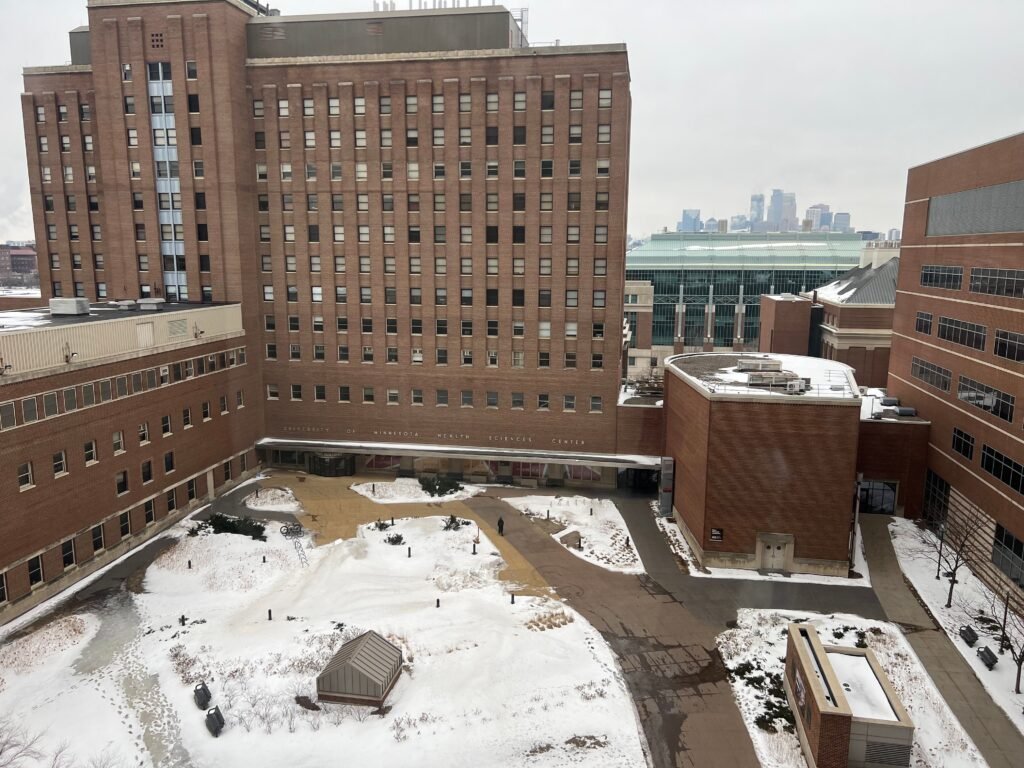
Applications are now open for the University of Minnesota Funded PhD in Conservation Sciences 2027. This opportunity allows students from around the world to pursue advanced graduate research in the United States while competing for fellowships, research assistantships and teaching assistantships.
The Conservation Sciences Graduate Program offers both Master of Science (MS) and Doctor of Philosophy (PhD) degrees. International students are eligible to apply. Moreover, applicants who submit their applications by November 30, 2026, receive maximum consideration for available assistantships and fellowships.
Applications submitted after the priority deadline may still receive consideration if funding and spaces remain. However, the final application deadline is March 15, 2027.
Importantly, this opportunity is not a single scholarship automatically awarded to every admitted student. Instead, the programme supports many incoming students through fellowships, Teaching Assistantships (TAs), Research Assistantships (RAs), or a combination of these funding sources.
University of Minnesota Funded PhD in Conservation Sciences 2027 Overview
Host University: University of Minnesota Twin Cities
Country: United States
Programme: Conservation Sciences Graduate Program
Degree Levels: Master of Science (MS) and Doctor of Philosophy (PhD)
Study Mode: Full-time
Eligible Applicants: Domestic and international students
GRE: Not required
Master’s Required for PhD: No
Funding: Fellowships, Research Assistantships and Teaching Assistantships
Priority Funding Deadline: November 30, 2026
Final Application Deadline: March 15, 2027
Application Method: Online
About the Conservation Sciences Graduate Program
The Conservation Sciences Graduate Program at the University of Minnesota is an interdisciplinary programme that combines biological and social sciences.
Its main goal is to train researchers and professionals who can address complex conservation and natural-resource challenges. As a result, students can examine environmental problems from several perspectives rather than focusing exclusively on biological sciences.
Research and training can involve population biology, ecosystem and landscape ecology, policy, participatory decision-making, ecosystem services and complex data analysis.
Additionally, the programme includes more than 100 faculty members from numerous university departments, colleges and partner organisations. This structure gives graduate students access to expertise across several disciplines.
The programme is therefore suitable for applicants interested in both the scientific and human dimensions of conservation.
Degree Options Available
Students can apply for either an MS or PhD in conservation sciences.
The programme currently offers three major tracks:
- Conservation Science
- Fisheries and Aquatic Biology
- Wildlife Ecology and Management
Both MS and PhD degrees are available within these areas.
Furthermore, the interdisciplinary structure allows students to develop research connecting conservation with subjects such as economics, environmental policy, sustainability, statistics and human behaviour.
Funding for Conservation Sciences Graduate Students
Funding is one of the most attractive aspects of the programme.
Many incoming students receive support through first-year fellowships, departmental teaching assistantships or faculty research assistantships.
In general, applicants do not need to submit separate applications for programme-nominated funding opportunities. Instead, faculty members and the admissions committee identify strong candidates for available financial support.
During the admissions process, the programme also works to identify potential advisers and possible funding sources for competitive applicants.
Consequently, financial packages may differ between students. One applicant might receive a research assistantship, while another could receive a teaching assistantship or fellowship.
Applicants should therefore evaluate the specific funding package included with their admission offer.
Research and Teaching Assistantships
Graduate students may receive funding through a Research Assistantship (RA) or Teaching Assistantship (TA).
A typical 50% graduate assistantship involves approximately 20 hours of work per week.
Most importantly, a 50% graduate assistantship provides a 100% tuition waiver. Eligible graduate assistants also receive health and dental insurance benefits.
In addition to these benefits, assistantships provide paid employment.
For example, the programme’s current funding information lists an hourly rate of $28.19 for the 2026–2027 academic year for students supported through certain Fisheries, Wildlife and Conservation Biology faculty assistantships.
Nevertheless, applicants should not assume that every funding offer will have exactly the same salary. Rates and financial packages can vary depending on the appointment, department, funding source and academic year.
Fellowship Opportunities
Fellowships provide another potential source of graduate funding.
One opportunity listed by the programme is the Diversity of Views and Experiences Fellowship, which is commonly known as the DOVE Fellowship.
The programme describes this fellowship as providing a $25,000 stipend, academic-year tuition support at the general graduate rate for up to 14 credits per semester, and subsidised health insurance for up to one calendar year.
Another potential source of support is the Interdisciplinary Center for the Study of Global Change Fellowship.
This fellowship supports graduate students with interdisciplinary interests related to global change and the Global South.
Therefore, strong international applicants whose research focuses on relevant Global South issues may find the fellowship particularly interesting.
Funding programmes can change between admission cycles. Applicants should always verify the current conditions before submitting their applications.
Is the University of Minnesota Conservation Sciences PhD fully funded?
Many students can receive substantial financial support, but applicants should understand how the funding system works.
The University of Minnesota Funded PhD in Conservation Sciences 2027 is not an automatic scholarship that guarantees identical benefits to every admitted student.
Instead, funding can come from several sources, including:
- Research Assistantships
- Teaching Assistantships
- University fellowships
- Programme fellowships
- Faculty research funding
A 50% graduate assistantship can provide a 100% tuition waiver, paid employment, and health and dental insurance benefits.
Therefore, some students may receive funding packages that cover major study and living expenses. However, the exact package depends on the funding offered to the individual student.
Who Can Apply?
Applicants must hold a bachelor’s degree or an equivalent foreign qualification from a recognised institution.
Interestingly, the programme does not limit admission exclusively to applicants with traditional biology degrees.
Students may come from backgrounds such as biology, social sciences, economics and policy.
This interdisciplinary approach makes the programme accessible to candidates who are interested in studying conservation from different perspectives.
For instance, an economics graduate may be interested in environmental economics, natural-resource management or conservation policy. Similarly, a social-science applicant might focus on human behaviour, communities and environmental decision-making.
Students entering with limited biological training may need to complete selected courses in basic biology or ecology.
Is a master’s degree required for the PhD programme?
No.
Applicants do not need a master’s degree before applying to the PhD programme.
Therefore, candidates with a relevant bachelor’s degree may apply directly for doctoral admission if they meet the programme’s other requirements.
Some students may earn a master’s degree while progressing through their doctoral requirements. Others proceed directly toward completing the PhD.
However, direct admission from a bachelor’s degree does not make the selection process less competitive. Applicants still need to demonstrate strong academic preparation and research potential.
Is the GRE Required?
No. The GRE is not required for admission to the Conservation Sciences Graduate Program.
As a result, applicants do not need to spend additional time and money preparing for the GRE specifically for this programme.
Instead, they can focus on strengthening other important parts of the application. These include academic performance, research experience, recommendation letters, written statements and research alignment with potential advisers.
English Language Requirements
International applicants may need to demonstrate English-language proficiency.
The University of Minnesota accepts several forms of English-language evidence. Depending on the applicant’s circumstances, accepted examinations may include tests such as TOEFL, IELTS, PTE Academic and Cambridge C1 Advanced.
However, English requirements and exemptions depend on the university’s current graduate admission rules and an applicant’s educational background.
Therefore, international applicants should check the current English-language requirements before applying.
Candidates should not automatically assume that previous education in English will qualify them for an exemption.
Can African Students Apply?
Yes.
International students can apply to the Conservation Sciences Graduate Program. Therefore, qualified applicants from African countries are eligible to apply.
This includes students from countries such as Cameroon, Nigeria, Ghana, Kenya, Uganda, Tanzania, Rwanda, Ethiopia, Zambia, Zimbabwe and South Africa, among others.
Furthermore, the programme’s interdisciplinary approach is especially relevant for researchers interested in conservation challenges affecting the Global South.
Applicants from Africa must still meet the same academic and programme-specific admission requirements. Funding is also competitive, so submitting a strong application before the priority deadline is important.
Research Areas Available
The Conservation Sciences Graduate Program covers a broad range of research areas.
These include:
- Climate Change and Adaptation
- Conservation and Biodiversity
- Community Ecology
- Disease Ecology
- Economics
- Fisheries and Aquatic Biology
- Genetics and Evolution
- Habitats and Ecosystems
- Human Dimensions
- Invasive Species
- Management
- Modelling and Statistics
- Planning and Land Use
- Policy and Law
- Population Ecology
- Restoration and Reintroduction
- Sustainability
- Values and Ethics
- Wildlife
Because of this diversity, applicants can explore research topics extending beyond traditional wildlife or ecological research.
For example, students interested in economics can investigate the economic dimensions of conservation. Meanwhile, applicants with policy backgrounds may examine environmental governance, regulation or natural-resource management.
Finding a Potential Faculty Adviser
Finding an appropriate faculty adviser is a critical part of the application process.
The Conservation Sciences Graduate Program strongly encourages prospective applicants to contact faculty members whose research interests overlap with their own before applying.
More importantly, an applicant cannot ultimately receive admission unless a conservation sciences graduate faculty member agrees to serve as the student’s adviser.
For that reason, candidates should begin searching for potential supervisors well before the November deadline.
Start by exploring the programme’s faculty directory. Then identify professors whose current research closely matches your interests.
Afterward, read some of their recent publications and research-project descriptions.
Once you identify a strong match, you can contact the faculty member to ask whether they expect to accept new graduate students for 2027.
How to Contact a Potential Supervisor
A good supervisor email should be brief, personalised and academically focused.
First, introduce yourself and mention your current or most recent degree.
Next, explain your main research interests. You should then identify the connection between those interests and the professor’s research.
Where appropriate, briefly mention relevant research experience, technical skills or previous projects.
Finally, ask whether the professor expects to accept new graduate students for the 2027 intake.
You can also attach a concise academic CV.
Avoid sending exactly the same message to dozens of professors. Personalised communication shows that you have genuinely investigated the professor’s work and understand how your interests connect.
Application Documents
Applicants should prepare their documents carefully before beginning the application.
Important materials include a personal statement or statement of career goals, a diversity statement, a CV and three recommendation letters.
The programme indicates that the personal statement and diversity statement should each be around two to three pages long.
Your personal statement should explain your academic preparation, research interests and career objectives. It should also demonstrate why the University of Minnesota Conservation Sciences Graduate Program fits your goals.
Meanwhile, the diversity statement allows you to discuss the experiences and perspectives you would bring to the graduate community.
Applicants must also provide the academic and supporting documentation required through the University of Minnesota graduate application system.
International candidates should prepare any required English-language documentation as well.
Three Recommendation Letters
Applicants need three letters of recommendation.
Choose referees who know your academic or research abilities well.
Strong referees might include university professors, thesis supervisors, research advisers or professionals who have directly supervised relevant academic or research work.
The most useful recommendation letters provide concrete evidence rather than general praise.
For example, a referee could discuss your research skills, academic performance, analytical abilities, independence and readiness for graduate-level research.
Contact your referees early so they have enough time to prepare strong letters before the deadline.
How to Apply for the University of Minnesota Funded PhD in Conservation Sciences 2027
The application process takes place online through the University of Minnesota Graduate School application system.
Before submitting the application, prospective students should first identify suitable faculty advisers.
Next, prepare your personal statement, diversity statement, CV, academic records and English-language documentation where required.
You should also arrange for three recommendation letters.
After preparing the required materials, please complete the online graduate application and submit everything before the appropriate deadline.
Applicants seeking financial support should aim for November 30, 2026, rather than waiting for the final March deadline.
Application Deadline
There are two important deadlines to understand.
The first is:
November 30, 2026 – Priority Deadline
Applications submitted by this date receive maximum consideration for available fellowships and assistantships.
The second is:
March 15, 2027 – Final Application Deadline
Applications may still be considered after November 30 if programme spaces and funding remain.
However, funding opportunities can become more limited as the admission process progresses.
Therefore, applicants who need financial support should treat November 30, 2026, as their primary deadline.
What Happens After You Apply?
The programme will begin reviewing applications in early December.
During this stage, the admissions committee evaluates candidates and works to identify potential faculty advisers and funding opportunities.
Strong applicants may receive nominations for fellowship opportunities.
Meanwhile, faculty members may consider candidates for available research assistantships connected to funded projects.
Most fellowship decisions are generally made around mid-January.
Later, a limited number of competitive candidates may receive invitations to a recruiting and welcome event.
However, receiving an invitation does not guarantee admission. Similarly, applicants who do not receive an invitation may still gain admission.
Formal admission decisions begin around early March. The programme generally expects MS and PhD applicants to receive their decisions by approximately mid-April.
Why Apply Before November 30?
Submitting early is particularly important for applicants seeking funding.
Although March 15 is the final deadline, the programme gives maximum consideration to applications received by November 30 for assistantships and fellowships.
Many important funding decisions occur earlier in the admission cycle.
Consequently, waiting until February or March could reduce the number of available funding options.
International applicants should also allow additional time for admission processing, visa documentation and relocation arrangements.
Therefore, completing the application before November 30 is strongly advisable whenever possible.
Tips for a Strong Application
Start by defining a clear research interest rather than simply stating that you are passionate about conservation.
Then investigate the programme’s faculty and identify researchers whose work genuinely connects with your proposed area.
Your personal statement should demonstrate how your previous education or experience prepared you for graduate research.
Additionally, explain why the Conservation Sciences Graduate Program provides an appropriate environment for your proposed work.
Strong recommendation letters are equally important. Choose referees who can provide specific examples of your academic and research capabilities.
International applicants should also address English-language requirements early.
Above all, begin contacting potential faculty advisers well before submitting the application. Since a faculty member must eventually agree to advise an admitted student, research fit is a central part of the process.
Why Study Conservation Sciences at the University of Minnesota?
The programme offers an interdisciplinary approach that combines natural sciences with economics, policy, social sciences and quantitative methods.
Students can work with faculty studying topics ranging from wildlife ecology and fisheries to climate change, environmental economics, statistics, sustainability and conservation policy.
Moreover, graduate funding can be substantial.
Students who secure qualifying graduate assistantships can receive paid employment alongside tuition and health-related benefits.
Another advantage is the absence of a GRE requirement.
Furthermore, students do not necessarily need a master’s degree before applying directly to the PhD.
Together, these features make the programme an attractive option for students seeking funded graduate research opportunities in conservation and environmental sciences in the United States.
Important Dates to Remember
Priority Funding Deadline: November 30, 2026
Application Review Begins: Early December 2026
Most Fellowship Decisions: Around mid-January 2027
Final Application Deadline: March 15, 2027
Admission Decisions: Generally by approximately mid-April 2027
Applicants seeking fellowships or assistantships should prioritise the November 30, 2026, deadline.
Official Application and Programme Information
Applicants should use the official University of Minnesota Conservation Sciences pages to verify requirements and complete their applications.
Official Application Information:
https://conssci.umn.edu/prospective/submitting-application
Admission Requirements:
https://conssci.umn.edu/prospective/admin-requirements
Funding Opportunities:
https://conssci.umn.edu/prospective/funding-sources
Preparing Your Application:
https://conssci.umn.edu/prospective/preparing-application
Final Thoughts
The University of Minnesota Funded PhD in Conservation Sciences 2027 is a strong opportunity for students interested in conservation, ecology, wildlife, fisheries, sustainability, environmental economics, policy and related interdisciplinary fields.
Funding may come through research assistantships, teaching assistantships and fellowships. In particular, a qualifying 50% graduate assistantship can provide a 100% tuition waiver together with paid employment and health and dental insurance benefits.
International students are eligible to apply. In addition, the GRE is not required, and applicants can potentially enter the PhD directly from a bachelor’s degree.
However, applicants should pay particular attention to faculty fit. A conservation sciences graduate faculty member must ultimately agree to advise an admitted student.
Therefore, start identifying and contacting potential advisers as early as possible. Most importantly, submit your complete application by November 30, 2026, to receive maximum consideration for available fellowships and assistantships.