
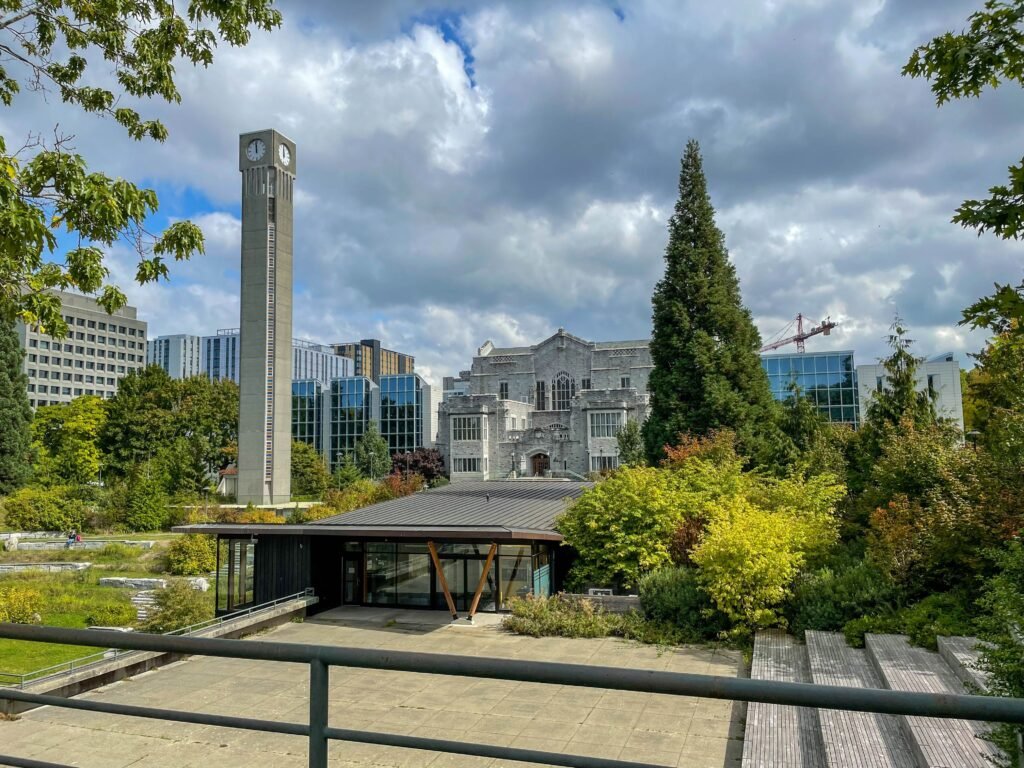
The scholarship targets academically outstanding students who demonstrate strong leadership qualities, meaningful contributions to their communities, and significant financial need. Through the programme, UBC aims to ensure that talented students from different countries can access a world-class education regardless of their financial circumstances.
In contrast to scholarships that are awarded solely on academic performance, the UBC International Scholars Program takes into account both merit and financial need. Consequently, successful applicants may receive financial assistance toward tuition fees and living expenses based on their assessed circumstances.
Applications for the September 2027 intake officially opened on 5 October 2026, and the scholarship application deadline is 15 November 2026.
This guide explains the scholarship benefits, eligibility requirements, award categories, nomination process, required documents, application timeline, and practical steps for preparing a competitive application.
UBC International Scholars Program 2027 Overview
The University of British Columbia is one of Canada’s leading public research universities. With major campuses in Vancouver and the Okanagan, UBC attracts students from around the world to study across a broad range of academic disciplines.
The International Scholars Program supports students who have demonstrated academic excellence and made meaningful contributions to their schools and communities.
In addition to financial assistance, selected scholars receive access to academic advising, leadership development opportunities, workshops, retreats, and career-related support.
Scholarship Summary
| Scholarship Details | Information |
|---|---|
| Scholarship name | UBC International Scholars Program 2027 |
| Host institution | University of British Columbia |
| Country | Canada |
| Study destination | Vancouver or Okanagan |
| Degree level | Undergraduate (Bachelor’s) |
| Academic intake | September 2027 |
| Eligible nationalities | International students from all countries |
| Funding type | Merit- and financial-need-based |
| Scholarship coverage | Financial assistance based on assessed need |
| Application opening date | 5 October 2026 |
| Scholarship deadline | 15 November 2026 |
| Supporting document deadline | 31 January 2027 |
| Selection results | February–April 2027 |
| Application method | Online |
| University website | Official UBC admissions and scholarship portal |
What Does the UBC International Scholars Program 2027 Cover?
The UBC International Scholars Program provides substantial financial assistance to students who would otherwise be unable to afford undergraduate education at the university.
Importantly, the programme does not provide every recipient with the same fixed scholarship amount. Instead, UBC assesses each applicant’s financial circumstances to determine the level of assistance required.
The financial assessment considers family income, expenses, assets, dependants, and other available financial resources.
As a result, an award may provide extensive support toward the cost of studying and living in Canada.
Scholarship Benefits
| Benefit | Description |
|---|---|
| Tuition assistance | Financial support toward eligible undergraduate tuition expenses |
| Living expenses | Support may contribute toward accommodation and other living expenses. |
| Financial-need assessment | Individual assessment determines the applicant’s funding requirements. |
| Academic advising | Access to dedicated International Scholars Programme advisers |
| Leadership development | Opportunities to participate in workshops and retreats |
| Career development | Guidance supporting academic and professional growth |
| International community | Opportunities to connect with scholars from different countries |
| Exchange opportunities | Possibility of participating in eligible international exchange activities |
| Co-operative education | Opportunities to explore eligible work-integrated learning programmes |
Is the UBC International Scholars Program Fully Funded?
The programme offers need-based financial awards that may cover the assessed cost of tuition and living expenses for eligible recipients.
However, applicants should understand that the scholarship amount depends on their demonstrated financial need.
UBC calculates how much assistance an applicant requires after considering available family resources and other sources of support.
Therefore, students should not assume that every scholarship automatically provides the same amount or covers every possible expense.
Nevertheless, the programme remains an important funding opportunity for international students whose families cannot afford the substantial cost of undergraduate education in Canada.
Four UBC International Scholars Program Awards
The International Scholars Program includes four prestigious award categories.
Applicants do not select a particular scholarship during the application process. Instead, UBC automatically considers each applicant for the awards for which they are eligible.
1. Karen McKellin International Leader of Tomorrow Award
The Karen McKellin International Leader of Tomorrow Award recognises international students who demonstrate exceptional academic achievement, leadership potential, and meaningful involvement in their communities.
Strong candidates typically demonstrate the ability to influence others positively, organise initiatives, solve problems, or contribute to community development.
For example, applicants may have led educational projects, participated in volunteer programmes, or introduced initiatives that address challenges in their communities.
2. Donald A. Wehrung International Student Award
The Donald A. Wehrung International Student Award recognises outstanding international students who have achieved academic excellence in spite of challenging circumstances.
The award is particularly relevant to students from impoverished or conflict-affected regions who have overcome significant barriers to education.
Applicants should demonstrate both their academic achievements and the circumstances that have affected their educational journey.
3. International Impact Award
The International Impact Award recognises students whose activities make meaningful contributions to their communities and wider society.
Relevant areas of involvement may include environmental sustainability, climate action, social justice, inclusion, and community wellbeing.
Students who have initiated or participated in projects addressing these issues may be able to demonstrate their impact through specific examples.
4. Vantage One Excellence Award
The Vantage One Excellence Award supports academically talented international students who require additional English-language preparation before entering a degree programme.
Through UBC’s Vantage College pathway, eligible students can develop their academic English while progressing toward undergraduate studies.
This award may be particularly relevant to students who demonstrate strong academic potential but do not yet satisfy the university’s direct-entry English-language admission standard.
Comparison of the Four Awards
| Award | Main emphasis | Target applicants |
|---|---|---|
| Karen McKellin, International Leader of Tomorrow | Academic excellence and leadership | Outstanding students with demonstrated leadership and community contributions |
| Donald A. Wehrung International Student | Academic excellence despite adversity | Students who have overcome significant educational, economic, or social barriers |
| International Impact Award | Community and social impact | Students involved in meaningful community or sustainability initiatives |
| Vantage One Excellence Award | Academic excellence and English-language development | Students eligible for the Vantage College pathway |
All four awards operate within UBC’s broader International Scholars Program.
UBC International Scholars Program 2027 Eligibility Requirements
Applicants must satisfy all the programme’s eligibility conditions.
UBC explicitly states that there are no exceptions to these requirements. Therefore, students should carefully assess their eligibility before beginning an application.
1. International Student Status
Applicants must be international students who intend to study in Canada on a Canadian study permit.
Students from Africa, Asia, Europe, the Middle East, Latin America, and other regions may apply, provided they meet the remaining eligibility requirements.
For example, applicants from Cameroon, Nigeria, Ghana, Kenya, Uganda, Ethiopia, India, Pakistan, Bangladesh, and other countries may be considered.
However, nationality alone does not guarantee eligibility.
2. Secondary School Education
Applicants must be entering UBC directly from an accredited secondary school.
For the 2027 intake, students must have graduated from high school no earlier than June 2026.
This condition is particularly important for applicants who completed secondary school several years ago.
For example, a student who completed high school in 2024 would not meet the stated graduation-date requirement for the 2027 intake.
3. First Undergraduate Degree
The scholarship is intended for students applying for their first undergraduate degree.
Consequently, applicants who already hold a bachelor’s degree are not eligible under this requirement.
Students currently attending another university should also carefully review the direct-entry requirement, as the programme is not intended for ordinary university transfer applicants.
4. Exceptional Academic Performance
UBC expects applicants to demonstrate superior academic achievement.
The university describes this requirement as achieving all A grades or an equivalent academic standard.
Therefore, students should have consistently strong academic records throughout their secondary education.
However, academic performance alone is insufficient. Applicants must also demonstrate leadership, community contributions, and financial need.
5. Significant Financial Need
Financial need is one of the programme’s most important requirements.
Applicants must demonstrate that attending UBC would be impossible without meaningful financial assistance.
To assess this requirement, the university reviews information about the applicant’s household financial circumstances.
This may include:
-
Annual family income.
-
Household expenses.
-
Family assets and wealth.
-
Number of dependants.
-
Educational expenses for family members.
-
Available savings and financial support.
-
Expected family contributions toward university expenses.
Applicants must provide accurate information and supporting documentation.
6. English-Language Requirements
Applicants must meet UBC’s English Language Admission Standard.
Depending on their educational background, students may demonstrate English proficiency through accepted examinations or other university-approved evidence.
Students who do not meet the direct-entry English requirement may qualify for the Vantage College pathway.
However, eligibility for that pathway depends on the university’s specific requirements.
7. University Admission Requirements
Applicants must meet both the general admission requirements and those of their selected undergraduate programme.
Certain programmes may require specific secondary-school subjects or additional academic preparation.
Therefore, applicants should examine their preferred degree requirements before applying.
Which Undergraduate Programmes Are Not Eligible?
Although UBC offers a wide range of undergraduate degrees, certain programmes are excluded from funding under the International Scholars Program.
| Excluded programme | Scholarship eligibility |
|---|---|
| Bachelor of Nursing – Vancouver | Not eligible |
| Bachelor of Nursing – Okanagan | Not eligible |
| Bachelor of Dental Science in Dental Hygiene | Not eligible |
| Bachelor of Medical Laboratory Science | Not eligible |
| Bachelor + Master of Management | Not eligible |
| Dual-degree programmes | Not eligible |
| Joint degrees between UBC Vancouver and UBC Okanagan | Not eligible |
| Joint degrees with other post-secondary institutions | Not eligible |
Students should confirm that their preferred programme is eligible before submitting their application to university.
UBC International Scholars Program 2027 Nomination Process
The nomination requirement is one of the most important aspects of the UBC International Scholars Program application.
Unlike scholarships that allow students to apply independently without institutional support, UBC requires applicants to arrange a nomination and a teacher recommendation.
This process allows the university to receive independent assessments of each student’s academic performance, character, and leadership potential.
Who Can Nominate an Applicant?
An eligible nominator may be a school guidance counsellor, principal, administrator, or another appropriate school official.
In limited circumstances, a registered non-profit organisation may nominate a student.
However, this option is generally reserved for organisations that provide education, leadership development, or mentorship to disadvantaged students, particularly where access to conventional education has been disrupted.
How Many Students Can a School Nominate?
UBC limits the number of nominations permitted for each campus.
| Campus | Maximum nominations |
|---|---|
| UBC Vancouver, including Vantage College | Two students |
| UBC Okanagan | One student |
These limits apply to an eligible nominating high school or organisation.
Consequently, students should contact their schools early to determine whether nomination places are available.
Nominator Versus Teacher Referee
Applicants must provide two different individuals.
The nominator should understand the student’s educational goals, character, achievements, and broader potential.
The teacher referee should be familiar with the student’s academic abilities and work in the intended field of study.
The nominator and teacher referee cannot be the same person.
Furthermore, both must complete their required forms before the student can finalise the scholarship application.
Practical Advice for Applicants
Students should not wait until November to begin contacting their schools.
Instead, they should explain the scholarship requirements to their school officials as soon as possible.
Applicants should also provide sufficient information about their academic achievements, leadership activities, and intended undergraduate programme.
Importantly, the nomination and teacher recommendation should be completed several days before the scholarship deadline.
This reduces the risk of missing the deadline because of delayed responses.
Documents Required for the UBC International Scholars Program 2027
The application requires both academic information and detailed financial disclosures.
The applicant submits some information directly, while the nominator or teacher referee must complete other forms.
Application Document Checklist
| Document or information | Purpose |
|---|---|
| UBC undergraduate admission application | Confirms the student has applied for admission |
| Secondary-school academic records | Demonstrates academic performance |
| High school certificates, where available | Supports verification of educational qualifications |
| Nominator’s assessment | Provides an independent evaluation of character and potential |
| Teacher recommendation | Assesses academic performance and relevant abilities |
| Family income information | Establishes household financial circumstances |
| Family expense information | Helps determine financial need |
| Family assets and wealth information | Supports the university’s financial assessment |
| Information about dependants | Helps explain household financial obligations |
| Extracurricular activities | Demonstrates participation beyond academics |
| Awards and achievements | Highlights academic and non-academic accomplishments |
| Four application essays | Explains personal experiences, leadership, and aspirations |
| English-language evidence | Demonstrates admission eligibility where required |
Applicants should follow the official application portal for the exact format and supporting evidence required.
UBC International Scholars Program 2027 Essay Requirements
The scholarship application includes four essay questions.
According to UBC’s application guidance, responses are approximately 150–250 words each.
These essays allow applicants to demonstrate qualities that academic transcripts alone cannot reveal.
For example, an applicant with excellent grades may use the essays to explain how they have supported their community, overcome educational challenges, or demonstrated leadership.
How to Prepare Strong Scholarship Essays
Focus on specific experiences. Rather than simply stating that you are a leader, explain an initiative you organised, the challenge you addressed, and the outcome.
Demonstrate measurable contributions. Where appropriate, include the number of people reached, activities completed, or improvements achieved.
Explain your personal involvement. Selection committees need to understand what you personally contributed rather than what an entire group accomplished.
Connect your experiences to your academic goals. Show how your intended undergraduate education could help you build on your achievements.
Use authentic examples. Avoid exaggerated claims, generic motivational statements, or accomplishments that cannot be supported.
Follow the word limits. A concise, well-structured response is more effective than a lengthy essay that fails to address the question.
Applicants should respond to the actual questions displayed in the official application portal rather than relying on unofficial lists of essay prompts.
How to Apply for the UBC International Scholars Program 2027
The application process involves university admission, nomination, recommendations, financial assessment, and scholarship submission.
The following steps reflect UBC’s official application guidance.
Step 1: Choose Your Undergraduate Programme and Campus
Begin by identifying the undergraduate degree you wish to pursue.
UBC has two main campuses: Vancouver and Okanagan.
Applicants should research their preferred programme, academic requirements, and campus before applying.
The International Scholars Program evaluates applicants based on their first-choice programme.
Nevertheless, students should also select a second-choice programme when they complete their university application.
Step 2: Discuss Your Nomination With Your School
Contact your secondary school to explain the nomination requirements.
Identify an eligible school official who can nominate you and a teacher who can provide an academic recommendation.
Remember that these must be two different people.
Additionally, confirm that your school has not exceeded its permitted nomination limit.
Step 3: Submit Your UBC Admission Application
Applicants must apply for undergraduate admission to UBC before beginning the scholarship application.
This is a mandatory requirement.
The scholarship application requests confirmation that the university admission application has already been submitted.
Therefore, students should complete their admission application early enough to allow time for the scholarship process.
Step 4: Create Your Scholarship Application Account
After applying for admission, access the International Scholars Program application portal.
Create an account and begin completing the required sections.
You will need the contact details of your nominator and teacher referee.
The application system allows you to invite them to complete their respective forms.
Please follow up with both individuals to confirm that they have received the invitations.
Step 5: Prepare Your Financial Information
UBC requires detailed information about your family’s financial circumstances.
Applicants should gather income records, household expense information, and details of family assets.
They must also identify available sources of financial support and estimate the contribution their family could make toward university expenses.
The university uses this information to assess the level of financial assistance required.
Because the assessment is detailed, students should allocate sufficient time to collect accurate information.
Step 6: Complete the Scholarship Essays
The application includes four short essays of approximately 150–250 words each.
Applicants should use these responses to demonstrate their achievements, experiences, leadership, and personal qualities.
Before submitting, review the responses carefully for clarity, relevance, and accuracy.
Step 7: Submit the Application Before 15 November 2026
The completed scholarship application must be submitted by 15 November 2026.
Importantly, the nominator and teacher referee must submit their forms before the student can finalise the application.
Therefore, applicants should aim to complete the process several days before the official deadline.
Step 8: Submit Required Admission Documents
After applying to UBC, applicants will receive instructions from the Undergraduate Admissions Office.
The university may request academic transcripts, secondary-school certificates, and other admission documents.
International Scholars Program applicants have a document deadline of 31 January 2027.
Where final transcripts or high-school certificates are unavailable by that date, applicants should submit them as soon as they become available, following UBC’s instructions.
Applicants must also satisfy the English Language Admission Standard by 31 January 2027.
Step 9: Complete a Video Interview if Invited
Some applicants may be invited to complete a video interview between January and March 2027.
The interview provides an opportunity to discuss personal experiences, educational achievements, and leadership activities.
Invited applicants will have approximately one week to record and submit their responses through the designated online platform.
Not every applicant will necessarily receive an interview invitation.
Step 10: Monitor Your Email for Scholarship Decisions
Applicants should regularly check their email, including spam and junk folders.
UBC may communicate through several systems, including its admission portal, scholarship platform, and direct university emails.
Scholarship decisions are released on a rolling basis between February and April 2027.
By early to mid-April, applicants should be informed whether they have received an award.
Students planning to apply for university residence should follow UBC’s instruction to wait for scholarship decisions before submitting their housing application.
The stated housing application deadline is 1 May 2027.
UBC International Scholars Program 2027 Application Timeline
| Application stage | Date or period | Recommended action |
|---|---|---|
| Programme selection | September 2026 | Choose your undergraduate degree and campus. |
| School nomination preparation | September–October 2026 | Contact your nominator and teacher referee. |
| Scholarship applications open | 5 October 2026 | Begin the application process. |
| UBC admission application | Early October–15 November 2026 | Apply for undergraduate admission. |
| Financial documents and essays | October–November 2026 | Prepare supporting information. |
| Scholarship application deadline | 15 November 2026 | Submit the completed application. |
| Admission documents deadline | 31 January 2027 | Submit required academic documents. |
| English-language deadline | 31 January 2027 | Meet UBC’s English admission standard. |
| Possible video interviews | January–March 2027 | Complete the interview if invited |
| Scholarship decisions | February–April 2027 | Monitor email for results. |
| Expected final award notification | Early to mid-April 2027 | Review the university’s decision. |
| Housing application deadline | 1 May 2027 | Follow UBC’s housing instructions. |
| Academic intake | September 2027 | Begin undergraduate studies. |
How Competitive Is the UBC International Scholars Program?
The UBC International Scholars Program is a highly selective opportunity.
Applicants are evaluated on several dimensions, including academic achievement, leadership, community involvement, and financial need.
Moreover, the programme requires a formal nomination, which adds an additional stage to the selection process.
Consequently, strong grades alone do not guarantee success.
What is the acceptance rate for the UBC International Scholars Program?
The official programme information provided does not publish a verified acceptance rate for the 2027 intake.
Therefore, claims that a specific percentage of applicants receive scholarships should be treated cautiously unless supported by official university data.
Instead of focusing on an unverified acceptance rate, applicants should concentrate on meeting the eligibility conditions and presenting compelling evidence of their achievements and circumstances.
How Can Applicants Improve Their Chances?
| Selection area | What applicants should demonstrate |
|---|---|
| Academic performance | Consistently excellent secondary-school results |
| Leadership | Initiative, responsibility, and positive influence |
| Community involvement | Meaningful participation in activities benefiting others |
| Personal achievements | Clear evidence of accomplishments |
| Financial need | Accurate documentation of household financial circumstances |
| Recommendations | Strong, specific assessments from eligible referees |
| Application essays | Authentic examples supported by clear explanations |
| Application preparation | Complete documents submitted well before deadlines |
For students seeking other international undergraduate funding opportunities, the PrimStudyAbroad Undergraduate Scholarships section provides additional scholarship guides and application resources.
UBC International Scholars Program Versus Merit-Based Scholarships
UBC offers different scholarship pathways for international undergraduates.
However, applicants should understand the distinction between financial-need-based awards and merit-based entrance scholarships.
Students applying for the International Scholars Program will not be considered for UBC’s separate merit-based awards.
Therefore, applicants should carefully evaluate which pathway best matches their circumstances.
| Feature | International Scholars Program | Merit-based entrance scholarships |
|---|---|---|
| Primary consideration | Academic excellence and significant financial need | Academic achievement and other merit criteria |
| Financial assessment | Required | Not necessarily required |
| School nomination | Required for International Scholars | Depends on the particular award. |
| Award amount | Based on assessed financial need | Depends on the award. |
| Application process | Separate scholarship application | Varies by scholarship |
| Intended applicants | Students unable to afford UBC without substantial assistance | Students meeting the relevant merit criteria |
Students whose families can afford substantial educational expenses may find other UBC entrance awards more appropriate.
Can Students From Cameroon and Other African Countries Apply?
Yes. The International Scholars Program is open to eligible international students, including applicants from African countries.
However, students must meet all the programme’s requirements, including the condition of having graduated from secondary school.
For the September 2027 intake, applicants must have graduated from high school no earlier than June 2026.
This means that many students who completed secondary school in previous years will not qualify, even if they have excellent academic results.
Advice for African Applicants
Students from Cameroon and other African countries should begin by checking whether their secondary-school qualifications meet UBC’s admission requirements.
Next, they should confirm that their graduation date satisfies the scholarship’s eligibility conditions.
Applicants should also contact their schools early because nomination places are limited.
Furthermore, students should prepare their financial documentation carefully and clearly explain their leadership experiences.
Those who have participated in community development, educational initiatives, volunteering, or other meaningful activities should document their contributions accurately.
Finally, students should not assume that financial need alone guarantees selection. The programme also expects both outstanding academic achievement and demonstrated leadership.
Common Mistakes to Avoid When Applying
Even academically strong students can weaken their applications through preventable errors.
1. Applying Without Checking the Graduation-Date Requirement
For 2027, students must have graduated from secondary school no earlier than June 2026.
Applicants should verify this condition before investing time in the application.
2. Contacting the Nominator Too Late
School officials may need time to prepare their assessments.
Moreover, nomination places are limited.
Therefore, students should arrange nominations early.
3. Using the Same Person as Nominator and Teacher Referee
UBC requires two different individuals.
If you do not follow this instruction, your application may not be completed.
4. Submitting Incomplete Financial Information
The university conducts a detailed financial assessment.
Applicants should provide accurate income, expense, and asset information, supported by the documentation requested.
5. Writing Generic Scholarship Essays
Statements such as “I am passionate about leadership” are not sufficient on their own.
Applicants should provide concrete examples showing what they accomplished and why those experiences matter.
6. Ignoring the Undergraduate Admission Application
The scholarship application cannot replace the university admission application.
Students must apply for admission before beginning the scholarship process.
7. Waiting Until the Deadline
Applicants cannot finalise their scholarship applications until their nominator and teacher referee have submitted their forms.
Therefore, waiting until 15 November creates unnecessary risk.
8. Overlooking the English-Language Deadline
Applicants must satisfy the English-language admission requirement by 31 January 2027.
Students who need an English-language examination should schedule it early enough for the university to receive the official results.
Frequently Asked Questions About the UBC International Scholars Program 2027
1. Is the UBC International Scholars Program 2027 open?
Yes. According to UBC’s official announcement, applications for the September 2027 intake opened on 5 October 2026.
2. What is the UBC International Scholars Program 2027 deadline?
The scholarship application deadline is 15 November 2026.
Applicants should submit their university admission application and arrange their nomination and teacher recommendation before the deadline.
3. Does UBC offer fully funded scholarships for international students?
Yes. The International Scholars Program offers financial-need-based awards that can provide substantial assistance toward tuition and living expenses.
However, the amount depends on the university’s assessment of the student’s financial circumstances.
4. Can I get a 100% scholarship to study in Canada?
Some Canadian scholarship programmes offer funding that can cover major educational and living expenses.
At UBC, International Scholars awards are determined according to assessed financial need. Applicants should not assume that every recipient receives identical or automatic 100% coverage.
5. Can Nigerian, Ghanaian, or Cameroonian students apply?
Yes. Eligible international students from these countries may apply.
However, applicants must satisfy the academic, financial, secondary-school graduation, and admission requirements.
6. Is IELTS compulsory for the UBC International Scholars Program?
Applicants must meet UBC’s English Language Admission Standard.
Whether an applicant needs IELTS or another form of accepted evidence depends on the university’s admission requirements and the student’s educational background.
7. Can I apply without a school nomination?
No. Applicants must arrange an eligible nominator and a separate teacher referee.
Both individuals must submit their required forms before the scholarship application can be finalised.
8. What is the UBC International Scholars Program acceptance rate?
The official programme information does not provide a verified acceptance rate.
Therefore, applicants should avoid relying on unsupported figures published by third-party websites.
9. Can students who graduated from high school in 2024 apply?
No. The 2027 eligibility requirements state that applicants must have graduated from secondary school no earlier than June 2026.
10. Can master’s or PhD students apply?
No. The International Scholars Program is intended for students entering their first undergraduate degree.
Students seeking postgraduate funding should explore opportunities in the PrimStudyAbroad Master’s Scholarships section.
11. Does UBC require a video interview?
Some applicants may be invited to complete a video interview between January and March 2027.
However, an interview invitation is not guaranteed for every applicant.
12. When will UBC announce the scholarship results?
Decisions are released on a rolling basis between February and April 2027.
UBC expects applicants to receive award decisions by early to mid-April.
13. Can I choose the International Leader of Tomorrow Award directly?
No. Applicants submit one International Scholars Program application.
UBC automatically considers them for the award categories for which they qualify.
14. Is there a separate scholarship application?
Yes. Applicants must first submit their undergraduate admission application and then complete the International Scholars Program application.
15. Can I apply to both UBC Vancouver and UBC Okanagan?
Applicants should select their preferred campus and academic programme as part of the university admission process.
For International Scholars consideration, UBC evaluates applicants based on their first-choice programme. Students should also provide a second-choice programme as instructed.
Final Thoughts on the UBC International Scholars Program 2027
The UBC International Scholars Program 2027 offers an important opportunity for outstanding international students who demonstrate academic excellence, leadership, community engagement, and significant financial need.
With applications already open, prospective students should begin preparing immediately.
The first priority is to confirm eligibility, particularly the requirement to have graduated from secondary school no earlier than June 2026.
Next, applicants should select their undergraduate programme, contact their school about their nomination, and submit their UBC admission application.
They should then gather their financial information, complete their essays, and ensure that their nominator and teacher referee submit the required forms.
Above all, applicants should remember that the 15 November 2026 deadline applies to the completed scholarship application.
Early preparation, accurate documentation, and a strong presentation of academic and leadership achievements can help applicants submit a competitive application.
Official Application Links
1. UBC International Scholars Program – Eligibility, Awards and Application Instructions: https://you.ubc.ca/financial-planning/scholarships-awards-international-students/international-scholars/
2. UBC International Scholars Program 2027 – Official Application Portal: https://undergraduatescholarships.ubc.ca/prog/2027_international_scholars_program_application/

I would love to be a part of this academy opportunity so as to enhance and promote my knowledge and skills , both professionally and academically