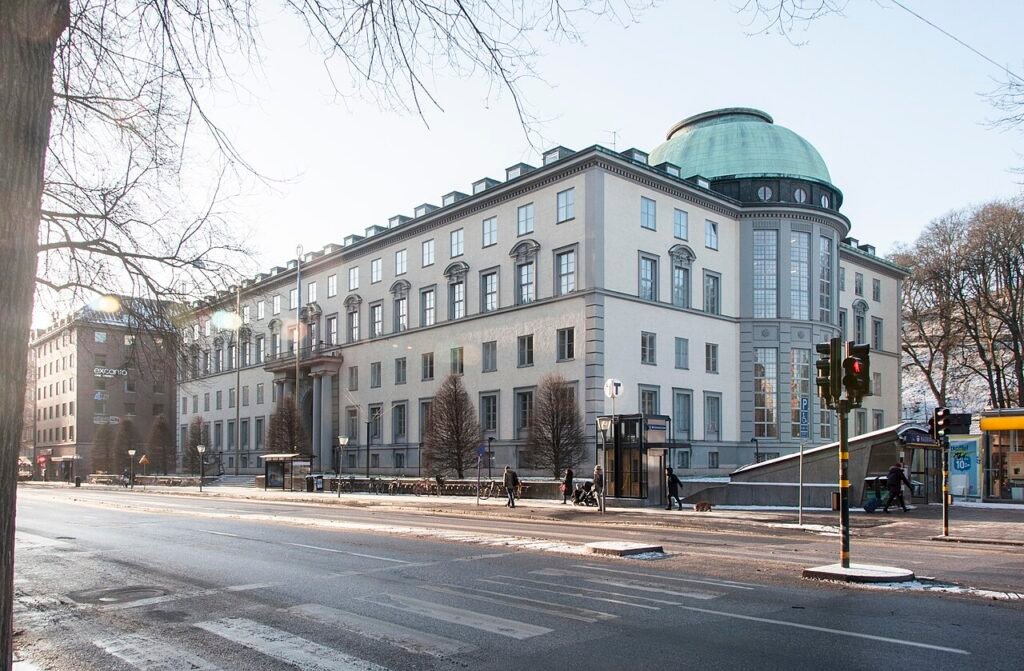
The Stockholm School of Economics PhD for 2027 comes with full funding built in. You don’t chase a separate scholarship after admission: every admitted student pays no tuition and receives a tax-free scholarship of SEK 26,000 a month, guaranteed for the whole programme. For the August 2027 intake, SSE is recruiting 17 PhD students across three programmes: Business Administration, Economics and Finance.
Applications open on 1 December 2026 and close on 15 January 2027 at 23:59 CET. Applying costs nothing.
I’m applying to funded PhD programmes in finance this cycle myself, so I read these pages closely. SSE stands out because it settles the funding question before you arrive. Many European programmes admit you first and leave funding for later. Here, the offer and the money come together. The catch, however, is the number of places. With only 17 seats across three programmes, your application has to be sharp.
Stockholm School of Economics PhD 2027 at a Glance
| Item | Details |
|---|---|
| Institution | Stockholm School of Economics (SSE), Sweden |
| Programmes | PhD in Business Administration, PhD in Economics, PhD in Finance |
| Places for 2027 | Business Administration: 8 · Economics: 5 · Finance: 4 (17 in total) |
| Funding | Tax-free scholarship of SEK 26,000 per month at admission, guaranteed throughout the programme |
| Tuition fees | None |
| Duration | Up to 5 years, full-time and residential |
| Language | English |
| Programme start | August 2027 |
| Application period | 1 December 2026 – 15 January 2027 (23:59 CET) |
| Application fee | Free |
| Results | Economics and Finance: March · Business Administration: April |
Is the Stockholm School of Economics PhD Fully Funded?
Yes. SSE charges no tuition fees for its PhD programmes. In addition, it pays every admitted student a scholarship and guarantees that funding for the full programme, provided you make satisfactory progress. At admission, the scholarship stands at SEK 26,000 per month, tax-free, although SSE notes that the amount may change in later years.
Two practical points follow from this. First, there’s no separate scholarship form. You apply to the PhD programme, and the funding comes with your offer. Second, the money is a scholarship rather than a salary. Gothenburg, which we covered here, employs its doctoral students on a monthly salary instead. The two models differ on paper, but the outcome for you is similar: no fees and a guaranteed monthly income while you study.
The Three SSE PhD Programmes Open for 2027
1. PhD in Business Administration (8 places)
Business Administration is SSE’s largest PhD intake. The programme runs five years (240 ECTS) and splits into two parts. The course component (90 ECTS) starts with four mandatory courses in your first semester. The thesis component (150 ECTS) follows under an SSE supervisor. In your second year you submit a thesis proposal, and from then on you work with a committee of professors until your public defence.
When you apply, you choose one of four specialisations, each tied to a department:
- Accounting
- Entrepreneurship, Innovation and Technology
- Management and Organization
- Marketing and Strategy
Some departments also advertise specific research themes for 2027. The Center for Market Studies, for example, has a funded position on market transformations and strategic marketing. The most detailed call, though, comes from the House of Innovation, which we cover below.
2. PhD in Economics (5 places)
The Economics PhD follows a North American model with an annual intake of five students. In year one, you take the core courses of the Stockholm Doctoral Course Program in Economics, Econometrics and Finance (SDPE), which SSE runs together with Stockholm University. After that, you move on to electives and your thesis. Overall, the structure is 60 ECTS of core courses, 45 ECTS of electives and a 135 ECTS thesis.
The department’s research strengths include applied econometrics, behavioural and experimental economics, macroeconomics and microeconomics. Many students also spend one or two semesters visiting leading universities in the US and Europe, and SSE belongs to the European Network for Training in Economic Research (ENTER).
As for careers, SSE lists recent graduates in tenure-track posts at Ludwig Maximilian University of Munich and Singapore Management University. Others went into policy roles at the European Central Bank and the Swedish Ministry of Finance, or joined Goldman Sachs.
3. PhD in Finance (4 places)
With four places, the Finance PhD is the smallest intake. It also follows a North American format: two years of demanding coursework, then independent research for your dissertation. Like Economics, it uses the SDPE core (60 ECTS), and it adds 45 ECTS of mandatory finance courses and a 135 ECTS thesis. SSE encourages you to teach from your second year, and completing that teaching earns you a fifth year in the programme.
Research areas include banking and financial intermediation, contract theory, empirical asset pricing and machine learning, financial econometrics, household finance, international finance, private equity and venture capital, and sustainable finance. According to SSE, its faculty bring experience from Duke, Harvard, NYU and the University of Chicago.
Graduates have moved on to Bocconi, Copenhagen Business School, HEC Montréal, London Business School and the University of Zurich. Outside academia, recent placements include the Federal Reserve Board, BlackRock and Goldman Sachs.
The three programmes compared
| Business Administration | Economics | Finance | |
|---|---|---|---|
| Places 2027 | 8 | 5 | 4 |
| Funding | SEK 26,000/month | SEK 26,000/month | SEK 26,000/month |
| Subject requirement | 90 ECTS business administration incl. 15 ECTS thesis | 90 ECTS economics incl. 15 ECTS thesis | 90 ECTS finance or economics incl. 15 ECTS thesis |
| GRE | Optional but strongly encouraged (GMAT also accepted) | Compulsory (no GMAT) | Compulsory (outstanding GMAT candidates may be considered) |
| References | At least 2 | 3 | 3 |
| Results | April | March | March |
House of Innovation PhD Positions for 2027
The House of Innovation and the Department of Entrepreneurship, Innovation and Technology recruit through the PhD in Business Administration. You can propose your own research idea or apply within one of seven focus areas. If you pick a focus area, use your statement of purpose to show how your interests fit it.
AI, technology and the future of work
- Agentic AI and the future of work: how people and AI agents work together, how expertise and responsibility shift, and how organisational design shapes productivity and employee experience. The team runs longitudinal studies and large-scale field experiments.
- AI governance (EMANAIRE Doctoral Network): an EU-funded MSCA position (project DC01) on how formal AI rules meet day-to-day practice inside organisations, mainly through comparative case studies.
- Digital infrastructure in space: how space data moves between agencies, firms, startups and investors, and how shared standards open room for new ventures.
Sustainability, science and family business
- Innovation within planetary boundaries: regenerative business models, nature and carbon markets, and sustainability policy, seen through a system dynamics lens. Candidates join both the House of Innovation and the House of Sustainable Society.
- Sustainable supply chain management: research with the Center for Transformative Innovation on moving whole industries and supply chains towards carbon neutrality.
- Science in the development of emerging industries: the science of science, research funding systems, and diversity and inequality in science. This area expects quantitative work, and an interest in machine learning helps.
- Entrepreneurship and innovation in family enterprises: family firms as investors, ownership and governance, succession, family offices, philanthropy and impact investing, with data from the Center for Family Enterprise.
Extra rules for the EMANAIRE position
EMANAIRE accepts applicants of any nationality, but it adds conditions on top of SSE’s normal entry rules. On your first day of employment, you must not hold a doctoral degree. You also must not have lived or worked mainly in Sweden for more than 12 months during the previous 36 months.
Stockholm School of Economics PhD Requirements 2027
Academic background
All three programmes ask for a university degree plus at least one year of master’s-level study, or the equivalent. On top of that, each sets its own subject requirement:
- Business Administration: at least three semesters (90 ECTS) of business administration courses, including a thesis of at least 15 ECTS. SSE grants exceptions only in special cases.
- Economics: at least three semesters (90 ECTS) of economics courses, including a thesis of at least 15 ECTS.
- Finance: at least three semesters (90 ECTS) of finance or economics courses, including a thesis of at least 15 ECTS. SSE may make exceptions for degrees in other quantitative fields and says it welcomes diverse backgrounds.
Applying with a bachelor’s degree or during your MSc
Economics and Finance take a more flexible view of the master’s year. SSE may consider strong bachelor’s graduates in economics (or finance, for the Finance PhD) who also have one to two years of advanced maths and statistics. It may also consider candidates with a strong four-year degree. Students in the first year of an MSc can apply to either programme, too.
GRE or GMAT
Test rules are where the three programmes differ most:
- Economics: every applicant, SSE students included, must take the GRE General Test. SSE won’t accept the GMAT instead.
- Finance: the GRE is compulsory for everyone, but SSE may consider outstanding candidates with GMAT scores.
- Business Administration: neither test is compulsory, yet SSE strongly encourages the GMAT or GRE.
None of the programmes sets a minimum score, and scores stay valid for five years. Your test provider must send the scores straight to SSE (GRE institution code 7016; GMAT code MFV-98-51) before the deadline. So if you’re aiming for Economics or Finance and haven’t sat the GRE yet, book a date that leaves time for official scores to arrive before 15 January.
English proficiency
You can skip the English test if you’re a native speaker or completed a university programme taught in English. That exemption covers many applicants from Cameroon, Nigeria, Ghana and other English-medium systems. Everyone else needs the TOEFL (SSE’s recommendation; code 8175) or the IELTS, sent directly by the test provider. Scores stay valid for two years, and SSE sets no minimum.
Documents for Your SSE PhD Application
- CV
- Passport copy (non-EU/EFTA applicants)
- Official transcripts and degree certificates, with official or certified translations for anything not in Swedish, Danish, Norwegian or English. If you haven’t finished your degree, upload an up-to-date academic record.
- Your most advanced thesis or essay, in English, in your field
- Statement of purpose in English, maximum 1,500 words
- Referees’ contact details: three for Economics and Finance, at least two for Business Administration
What your statement of purpose should cover
For Economics and Finance, SSE wants your plans for PhD study, your research interests and your career objectives. Business Administration asks for more detail. Your statement should cover your research interests and intended subject area, your previous research (topics, methods and theory), how well you handle research methods, possible PhD research questions, and your motivation for doctoral study.
How referees take part
You only enter your referees’ contact details in the portal. SSE then contacts them automatically. In Economics and Finance, they upload a letter of recommendation, while in Business Administration they complete a short evaluation. SSE accepts professional referees, but it prefers academics from your field, so choose people who know your research or quantitative work.
How to Apply to the Stockholm School of Economics PhD
- Pick your programme. For Business Administration, also choose your specialisation or House of Innovation focus area. Applying to more than one programme means a separate application for each.
- Book your tests early. Economics and Finance need the GRE, and you’ll need the TOEFL or IELTS if your degree wasn’t taught in English. Official scores must reach SSE by the deadline.
- Contact your referees in December, so nobody writes in a rush.
- Write a focused statement of purpose within the 1,500-word limit, following the points above for your programme.
- Submit through the SSE online portal between 1 December 2026 and 15 January 2027 at 23:59 CET. Drafts save as you go, but once you submit, you can’t make changes. SSE also ignores applications sent by email.
- Prepare for a possible short interview. SSE contacts some applicants with follow-up questions, and the interview also gives you a chance to ask about the programme.
Before you start, read the official admission page for your programme: Business Administration, Economics or Finance.
Important Dates
| Date | Milestone |
|---|---|
| 1 December 2026 | Application portal opens |
| 15 January 2027, 23:59 CET | Deadline for all three programmes; SSE accepts no late applications |
| March 2027 | Results for Economics and Finance |
| April 2027 | Results for Business Administration |
| August 2027 | Programmes start in Stockholm |
How Competitive Is the Stockholm School of Economics PhD?
SSE doesn’t publish an acceptance rate, so treat any figure you find online with caution. What it does publish is the number of places: 8, 5 and 4. It also states plainly that meeting the minimum requirements won’t guarantee you a seat, because places are limited and competition is high. The committee looks at the whole application: grades and courses, test scores, English, CV and motivation. SSE gives no individual feedback.
From my own applications this year, the statement of purpose and the writing sample matter more than most applicants expect. A committee filling four Finance seats wants to know whether you can do research. A thesis with real data and clear methods tells them far more than a list of certificates. So if your master’s thesis is your strongest work, polish its English before you upload it.
Other Funded PhDs With Similar Deadlines
SSE’s 15 January deadline falls in the same week as several other strong funded programmes, and you can adapt the same documents for each. In economics, look at the BGSE PhD in Economics in Bonn, which also closes on 15 January 2027. If you’re aiming for the US in finance, the Kellogg PhD in Finance closes earlier. Gothenburg, meanwhile, runs until 1 February 2027 and offers salaried positions.
Frequently Asked Questions
Is the Stockholm School of Economics PhD fully funded?
Yes. SSE charges no tuition and pays every admitted PhD student a tax-free scholarship of SEK 26,000 a month at admission. It guarantees that funding for the whole programme, provided you make satisfactory progress.
Do I need to apply separately for the SSE PhD scholarship?
No. Funding comes with admission, so you only apply to the PhD programme.
What is the deadline for the SSE PhD 2027?
All three programmes close on 15 January 2027 at 23:59 CET. The portal opens on 1 December 2026.
Is there an application fee?
No. Applying to SSE is free.
Is the GRE required?
Economics requires the GRE and won’t accept the GMAT. Finance also requires the GRE, although outstanding GMAT candidates may be considered. Business Administration only strongly encourages a GRE or GMAT score. None of them sets a minimum.
Do I need IELTS or TOEFL?
Not if you’re a native English speaker or completed a university programme taught in English. Otherwise, you’ll need the TOEFL (recommended) or IELTS, with no minimum score.
How many PhD places does SSE offer for 2027?
There are 17 places in total: 8 in Business Administration, 5 in Economics and 4 in Finance.
Can I apply with a bachelor’s degree only?
Possibly, in Economics and Finance. SSE may consider strong bachelor’s graduates in economics (or finance, for the Finance PhD) with one to two years of advanced maths and statistics, or a strong four-year degree. Business Administration, by contrast, asks for at least one year of master’s-level study.
Can I apply to the Finance PhD with a degree in engineering, maths or physics?
Possibly. The Finance PhD normally asks for 90 ECTS in finance or economics, but SSE may make exceptions for degrees in other quantitative fields.
Does SSE offer PhD positions in family business research?
Yes. The House of Innovation lists entrepreneurship and innovation in family enterprises as one of its seven focus areas for 2027, linked to the Center for Family Enterprise.
Is a PhD fully funded in Sweden generally?
Swedish PhDs usually come with funding, but the model varies. Gothenburg, for instance, employs doctoral students on a salary, while SSE pays a tax-free scholarship. Either way, check the funding terms of each programme you apply to.
Need Help With Your Application?
With only four or five places in Economics and Finance, preparation decides who gets in. At Prim Study Abroad, we help applicants build research-focused CVs, write statements of purpose that committees take seriously, and plan GRE and referee timelines. If you’re applying to SSE or other funded PhD programmes in business, economics or finance this cycle, reach out on WhatsApp at +39 393 062 9777.
Sources: Stockholm School of Economics official pages for the PhD programmes in Business Administration, Economics and Finance, their application and admission pages, and the House of Innovation 2027 PhD announcement (16 November 2026).